Last updated November 18, 2026


Free written scope consultation - allowances, timeline, and change-order rules on paper before a single trade is scheduled
Fence Installation Maintenance Schedule: What to Do and When
Stainless steel fasteners in a coastal South Florida environment still show surface oxidation within 36 months. If your fence went up with standard zinc-coated hardware, the fasteners are likely compromised before the fence itself shows any visible wear. That gap between what you can see and what’s actually failing is the whole reason a Miami Gardens fence needs a schedule built around heat, salt air, and a wet-dry cycle that never really stops. In this guide we’ll lay out a material-by-material calendar, the post-storm inspection protocol we use, the brand-name preservatives rated for this climate, and the annual cost by fence type so you can compare true ten-year ownership before you choose a material.
Quick Answer
A South Florida fence needs a light walk-through every 3 months, a hardware and fastener inspection every 6 months, and a material-specific deep treatment once a year (wood stain or sealant, vinyl and aluminum cleaning and lubrication). After any named storm, run the connection and plumb check within two weeks. Wood, vinyl, aluminum, and CBS block all fail on different timelines here, so the schedule changes with the material.
Styles & brands we work with
- Kitchen remodeling
- Bathroom remodeling
- Home additions & ADU
- Roofing
- Windows & doors
- Driveway & pavers
- Fence
Table of Contents
- Why Miami Gardens Fence Maintenance Looks Different
- The Material-Specific Maintenance Calendar
- The Hardware Inspection Sequence
- Wood Fence Maintenance: Products and Application
- The Post-Hurricane Inspection Protocol
- Annual Maintenance Cost by Fence Type
- Common Mistakes to Avoid
- When to Call a Professional
Why Miami Gardens Fence Maintenance Looks Different
Most fence maintenance advice is written for a temperate climate with four seasons and a few weeks of summer humidity. Miami Gardens runs humidity above 70 percent for most of the year, with UV indexes that hammer paint and wood grain and a rainy season that dumps water on a fence and then bakes it dry in the same afternoon. That wet-dry cycle is the real enemy. Wood swells, then shrinks, and every cycle opens micro-checks in the grain where moisture and mildew get a foothold.
The second factor is salt air. Even a few miles inland, chloride in the air accelerates corrosion on any fastener that isn’t stainless or hot-dip galvanized. In our experience across Miami Gardens, the fasteners fail first, the wood second, and the structure last. That ordering is why the schedule below puts hardware checks ahead of cosmetic tasks.
The third factor is code. Miami-Dade and Broward sit in the state’s High Velocity Hurricane Zone, which means fence posts, footings, and connections are held to a wind-load standard most of the country never deals with. A fence installed to HVHZ specs has real structural margin; a fence installed to generic specs does not. Maintenance is what keeps that margin intact. If you’re still deciding on materials, our Fence Installation in Miami Gardens page covers what the HVHZ standard actually requires of posts and footings.
The Material-Specific Maintenance Calendar
The single biggest mistake is treating all fences the same. Here’s the frequency each task actually requires to hold structural integrity, by material.
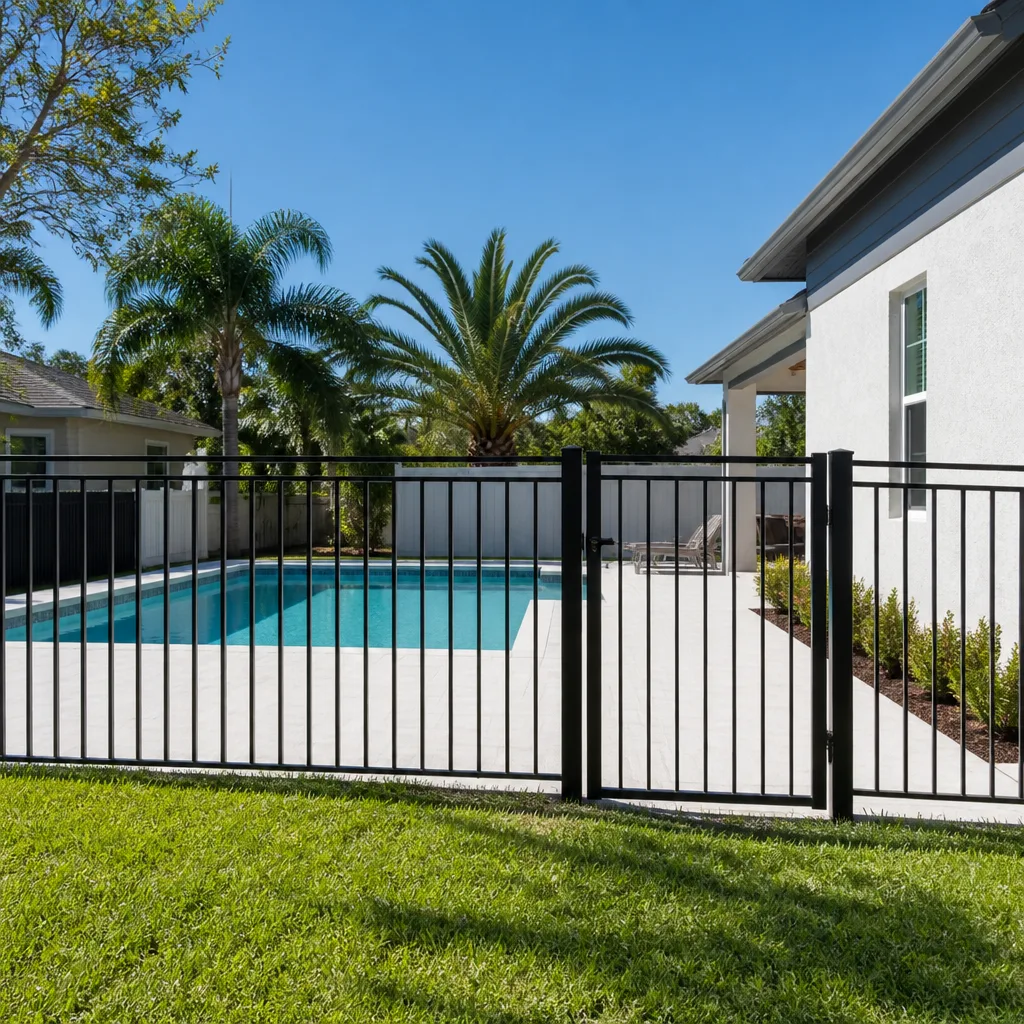
Aluminum
- Every 3 months: Rinse panels and posts with fresh water to remove salt film and pollen. No scrubbing needed.
- Every 6 months: Wipe hinges and latches, apply a dry-film lubricant (not grease, which traps grit).
- Every 12 months: Touch up any scratched powder coat with a matching aerosol so bare metal doesn’t pit.
Aluminum lasts longest here. Powder-coated aluminum in Miami Gardens typically holds its finish 10 to 15 years before a recoat is worth considering.
Vinyl (PVC)
- Every 3 months: Wash with a soft brush and mild soap; skip pressure washing, which can force water behind panel clips.
- Every 6 months: Check panel clips and post caps for cracking. UV makes vinyl brittle at the clip points first.
- Every 12 months: Inspect the bottom rail for soil contact and mildew staining; raise or clean as needed.
Vinyl doesn’t rot, but it does embrittle. Cheap vinyl fails at year 7 to 10 in full sun; a UV-stabilized product from a reputable maker lasts considerably longer.
Pressure-Treated Wood
- Every 3 months: Walk the line for loose pickets and check the base of each post for softness.
- Every 6 months: Inspect and tighten fasteners; replace any showing red rust.
- Every 12 to 18 months: Clean and reapply a penetrating stain or sealant. This is the task most homeowners skip, and it’s the one that determines whether the fence lasts 8 years or 20.
CBS Block (Masonry)
- Every 6 months: Inspect the stucco or paint surface for hairline cracks; seal any that open up before water gets behind the finish.
- Every 12 months: Check the wall cap and any metal gate hardware for corrosion.
- Every 5 to 7 years: Repaint or re-stucco as the finish wears.
CBS block is the most durable option in Miami Gardens and the least maintenance-hungry year to year, at the cost of the highest install price.
The Hardware Inspection Sequence
Check hardware in this order every six months. The sequence matters because a gate problem can mask a hinge problem, and a post-cap problem can hide moisture intrusion at the top of the post.
- Gate hinges. Open and close the gate slowly. Any sag, squeal, or hesitation points to a hinge that’s loosened or a post that’s shifted. Rust bleeding from the hinge pin means the coating has failed.
- Latch mechanisms. Test that the latch engages fully without forcing. A latch that needs a lift or a shove is a safety issue, especially for pool-area gates.
- Panel clips and brackets. On vinyl and aluminum, press each clip. Any that move or crack should be replaced before the next storm.
- Post caps. Lift or wiggle each cap. Loose caps let rain into the post top, which is where wood posts rot from the inside out.
- Fastener heads. Look for white chalky residue (zinc corrosion) or red-brown rust. Either means the fastener is on its way out.
Early corrosion shows as a dull, powdery film or a streak running down the panel below the screw head. Catching that at the six-month mark is a five-minute job. Catching it at year five usually means a post or gate rebuild.
Wood Fence Maintenance: Products and Application
Wood is where Miami Gardens homeowners lose the most money to skipped maintenance. The right product applied the right way buys years; the wrong product applied to a wet fence does nothing.
For this climate, a penetrating oil-based stain outperforms a film-forming surface coating. Film coatings crack under UV and trap moisture underneath, which is exactly the failure mode you’re trying to prevent. Two product lines we’ve seen hold up through South Florida’s wet-dry cycling are Armstrong Clark (their wood stain line) and Defy (their penetrating stains and sealants). Both are formulated to soak into the grain rather than sit on top of it. A film-forming solid-color latex is a poor match here unless the fence is fully sheltered.
Application without lifting the grain
- Clean first. Use a wood-safe cleaner (not chlorine bleach at full strength), then rinse thoroughly.
- Let it dry completely. Two to three dry days minimum. Stain applied to damp wood will fail within a season.
- Apply thin. Two light coats beat one heavy coat. Heavy application pools and dries unevenly, which is what lifts the grain.
- Back-brush immediately. A brush after the spray or roller pushes product into the grain and knocks down any raised fibers.
- Sand lightly between coats if the grain feels rough, using a fine grit, then wipe dust before the second coat.
Reapply every 12 to 18 months. If water beads on the surface after a rain, you’re still covered. If it soaks in and darkens the wood, it’s time.
The Post-Hurricane Inspection Protocol
Run this within two weeks of any named storm making landfall nearby. Doing it in the right order tells you quickly whether you have a repair or a rebuild.
- Walk the full line for lean. Any post visibly out of vertical is a priority call.
- Check the connections first. Post-to-rail brackets, hurricane straps or clips, and gate hardware. These take the wind load; if they’re bent or loosened, the fence has lost capacity.
- Measure post plumb without special equipment. Hold a level against the post face at two points (near the base and near the top) on two adjacent sides. Any bubble outside the center marks a post that has shifted. You can also eyeball it: sight down the fence line from one end. A single post out of line will stand out immediately.
- Check footing exposure. Soil washout around a post base is a red flag for footing movement, especially after heavy rain.
- Photograph and document. For an insurance claim, shoot wide shots of the full fence, then close-ups of every damaged connection, any leaning post with a level in frame, and the footing condition. Note the date and location. Take the photos before you make any temporary repairs.
A fence with more than a few shifted posts is usually a rebuild rather than a repair. If it comes to that, our Fence Installation in Miami Gardens page walks through the HVHZ connection details that keep a rebuild storm-ready.
Annual Maintenance Cost by Fence Type
Here’s the real comparison most guides skip: what it costs to keep each material at full structural integrity per year, and across ten years. These ranges reflect Miami Gardens market pricing for the work involved.
- Aluminum: $80 to $200/year (rinse, lubricate, occasional touch-up). Ten-year total: $800 to $2,000 on top of install.
- Vinyl: $100 to $250/year (wash, clip replacement, bottom-rail check). Ten-year total: $1,000 to $2,500.
- Pressure-treated wood: $300 to $700/year if you hire the clean-and-stain (roughly $1.50 to $3.00 per linear foot), or $150 to $300 in materials if you do it yourself. Ten-year total: $3,000 to $7,000 hired out.
- CBS block: $150 to $400/year amortized over the repaint cycle. Ten-year total: $1,500 to $4,000 including a mid-life repaint.
Add a storm-event budget of $100 to $500 in a typical year for hardware replacement and minor repairs. Comparing full ten-year ownership changes the install decision: a wood fence that installs cheaper than aluminum often costs more over the decade once maintenance is counted. If you’re weighing fence work against other exterior projects, our Driveway & Pavers in Miami Gardens page covers how the same UV and rain load affects hardscape materials.
Common Mistakes to Avoid
- Skipping stainless or hot-dip hardware to save money at install. Standard zinc-coated screws fail here before the wood does. The savings vanish at year three.
- Power-washing a vinyl fence. The pressure forces water behind panel clips and drives grit into joints. A garden hose and soft brush are all you need.
- Staining wood on a warm humid day. If the wood is damp or the humidity’s high, the stain won’t cure evenly and will lift the grain. Wait for a dry stretch.
- Ignoring the post caps. A loose cap lets water pool at the top of the post, and wood posts rot from the inside out. Tighten or replace caps every six months.
- Not photographing storm damage before temporary repairs. An insurance adjuster needs to see the condition as found. Photos taken after boarding up or re-securing a post weaken the claim.
- Treating pool-area gates like any other gate. Miami-Dade and Broward safety codes for pool barriers are strict, and a latch that fails inspection is a safety failure with consequences. Don’t patch a pool gate latch; replace it to spec.
- Assuming a fence that looks fine is structurally fine. The order of failure here is fasteners, then wood, then structure. What looks fine from the curb can be a fence held together by rusty screws.
When to Call a Professional
Some maintenance is a homeowner task. Some isn’t. Call us if you see more than one leaning post, a gate that no longer latches cleanly, footing washout after a storm, or visible rust on the structural connections. Any of those points to a repair bigger than a weekend fix. Wood that’s soft at the post base or panel rot you can push a thumb into also means replacement, not re-staining. And any pool-area gate that fails to self-latch should be handled by someone who knows the safety code as written, not as guessed. Rowan Construction Group Miami Gardens offers free estimates in Miami Gardens. Under Clause 1 of The Haven Standard, the price is written before anyone picks up a tool, and no change proceeds without a signed change order. Call (844) 320-5198.
See the difference
 Before
 After
 Before
 After
 Before
 After
Frequently Asked Questions
Every 12 to 18 months in Miami Gardens, using a penetrating oil-based stain. The wet-dry cycle here breaks down surface coatings faster than a temperate climate does, so annual application is the safe baseline. If water stops beading and starts soaking in, restain now regardless of the calendar. Call (844) 320-5198 for a fence repair estimate if you’re unsure what condition yours is in.
The connections: post-to-rail brackets, hurricane straps or clips, and gate hardware. Those carry the wind load, so a bent or loosened connection means the fence has lost capacity even if it still looks upright. Check connections before you check cosmetic damage. Call (844) 320-5198 to schedule a post-storm inspection and repair quote.
Sight down the fence line from one end. A single post out of plumb will stand out against the rest. With a level, hold it against two adjacent faces of the post; any bubble off center confirms movement. Call (844) 320-5198 for a free assessment if you spot one.
Not for long. In our experience here, zinc-coated hardware shows surface corrosion within two to three years and often needs replacing before the fence panels do. Stainless steel or hot-dip galvanized fasteners are the right spec for this climate from install onward. Call (844) 320-5198 for a written quote on re-fastening or repairing.
Yes, just less than wood. Vinyl needs a soft-brush wash every three months and a panel-clip check every six months, because UV makes vinyl brittle at the clip points first. Skipping this shortens the fence’s life significantly. Call (844) 320-5198 for a fence estimate if yours is showing cracks at the clips.
CBS block has the lowest year-to-year maintenance of any fence type here. It needs stucco crack inspection every six months and repainting every five to seven years, with no recurring finish work. The tradeoff is the highest install cost. Call (844) 320-5198 for a free written estimate on block or any other material.
The Bottom Line
The maintenance schedule that keeps a Miami Gardens fence at full structural integrity is built around what actually fails here: fasteners before wood, wood before structure. Check hardware every six months. Re-stain wood every 12 to 18 months with a product made for this climate. Run the post-storm connection and plumb check within two weeks of any named storm, with photos before temporary repairs. And when the ten-year math is done, the cheapest fence to install isn’t always the cheapest to own. Put the inspection on the calendar, keep the documentation, and the fence does its job for twenty years. If you’re planning a new fence or a rebuild, see our Home Additions & ADU in Miami Gardens page for how exterior site work fits a larger project, or start from the Rowan Construction Group Miami Gardens home page.
We offer free estimates in Miami Gardens, a written flat price with a written scope and a written warranty before any work starts, and a documented photo record on every visit as a standard deliverable. Have a competitor’s quote? We’ll review it line by line at no charge as your free second opinion. Call (844) 320-5198 to schedule yours.
Written by the team at Rowan Construction Group Miami Gardens.