Last updated November 18, 2026


Free written scope consultation - allowances, timeline, and change-order rules on paper before a single trade is scheduled
Fence Installation Warning Signs Every Homeowner Should Know
A verbal price with no line-item breakdown is not a quote. It’s an opening bid in a negotiation the homeowner doesn’t know they’re in. In our experience reviewing written estimates across Miami Gardens, the problems that ruin a fence job are visible long before the first post hole gets dug: they show up in the paperwork, the permitting, and the language of the contract. This guide translates the red flags our project managers catch during the estimate phase, so you can spot a bad deal before you write a deposit check. You’ll learn what a real itemized estimate looks like, how to verify a permit was actually pulled, and what the first 90 days after installation should tell you.
Quick Answer
Most fence installation problems are decided during the estimate and contract phase, not on installation day. A legitimate contractor gives you a written, line-item estimate showing linear footage, post spacing and depth, concrete volume, hardware grade, and permit fees as separate entries; requires a signed change order before any scope change; and pulls a permit you can verify yourself in the Miami-Dade online portal. If any of those three elements is missing, the risk to your budget is structural, not cosmetic.
Styles & brands we work with
- Kitchen remodeling
- Bathroom remodeling
- Home additions & ADU
- Roofing
- Windows & doors
- Driveway & pavers
- Fence
Table of Contents
- Why a Verbal Price Is a Warning Sign
- What a Properly Itemized Fence Estimate Contains
- The Signed Change Order Test
- Permit Avoidance and How to Verify a Miami-Dade Permit
- Material Substitution Language to Watch For
- First 90 Days: Post-Installation Warning Signs
- What a Miami-Dade Wind-Load Inspection Should Confirm
- Contractor Signals That Predict Trouble
Why a Verbal Price Is a Warning Sign
A number spoken aloud in your driveway is not a bid. It’s a number the contractor can revise at will once the job is underway, and the homeowner has nothing to hold them to. We’ve reviewed estimates in Miami Gardens where the difference between the verbal figure and the written scope was several thousand dollars once post depth, concrete, and hardware were itemized. The verbal price covered none of those clearly.
Watch for these signals during the estimate conversation:
- Price given before measurements. A fence quote requires running the full fence line, counting corners and gates, and checking grade. A number offered before the tape measure comes out is a guess dressed as a bid.
- No written scope. “Install approximately 150 feet of fence” is not a scope. It doesn’t state post spacing, post depth, or material grade.
- Pressure to sign on the spot. A contractor who needs a deposit today to “hold the price” is telling you the number isn’t firm.
- Refusal to put the warranty in writing. If the warranty is a verbal promise, it doesn’t exist.
Under Clause 1 of our Haven Standard, the price is written before anyone starts, on every trade. That principle applies whether you hire us or anyone else. A contractor who won’t put a flat, itemized price and written scope in front of you before work begins is asking you to accept risk they won’t document. That’s the first warning sign, and it’s the one that makes all the others easier to miss.
What a Properly Itemized Fence Estimate Contains
A legitimate fence estimate is a construction document, not a text message. In Miami Gardens, where wind-load requirements, permit fees, and coral-rock substrate all affect the line items, a proper estimate should be specific enough that a second contractor could price the same job from it. Here is what to look for, line by line:
- Linear footage by run. Not one total. Each straight run listed separately, with corners and gates counted.
- Post spacing. Typically 6 or 8 feet on center, stated explicitly. Tighter spacing costs more but resists wind better.
- Post depth. Stated in inches, not “set deep.” In South Florida’s sandy soils, depth drives stability.
- Concrete volume. Bags per post or cubic yards total. Some contractors skip concrete on cheaper quotes; you want to see it priced.
- Hardware grade. Gate hinges, latches, and fasteners specified by brand or grade. Cheap hinges fail first.
- Permit fees. Listed as a separate line, including the Miami-Dade building permit fee and any inspection fees. Bundled into a lump sum, they hide whether a permit was pulled at all.
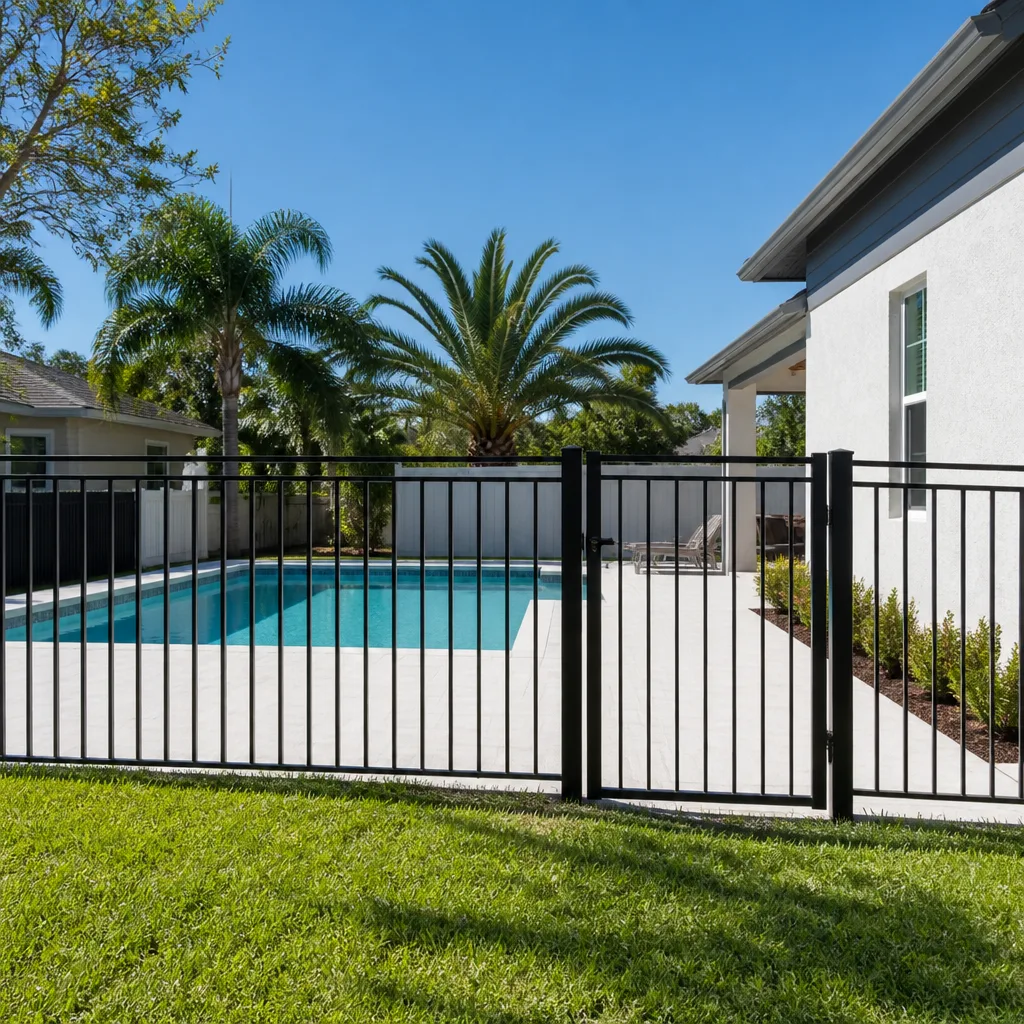
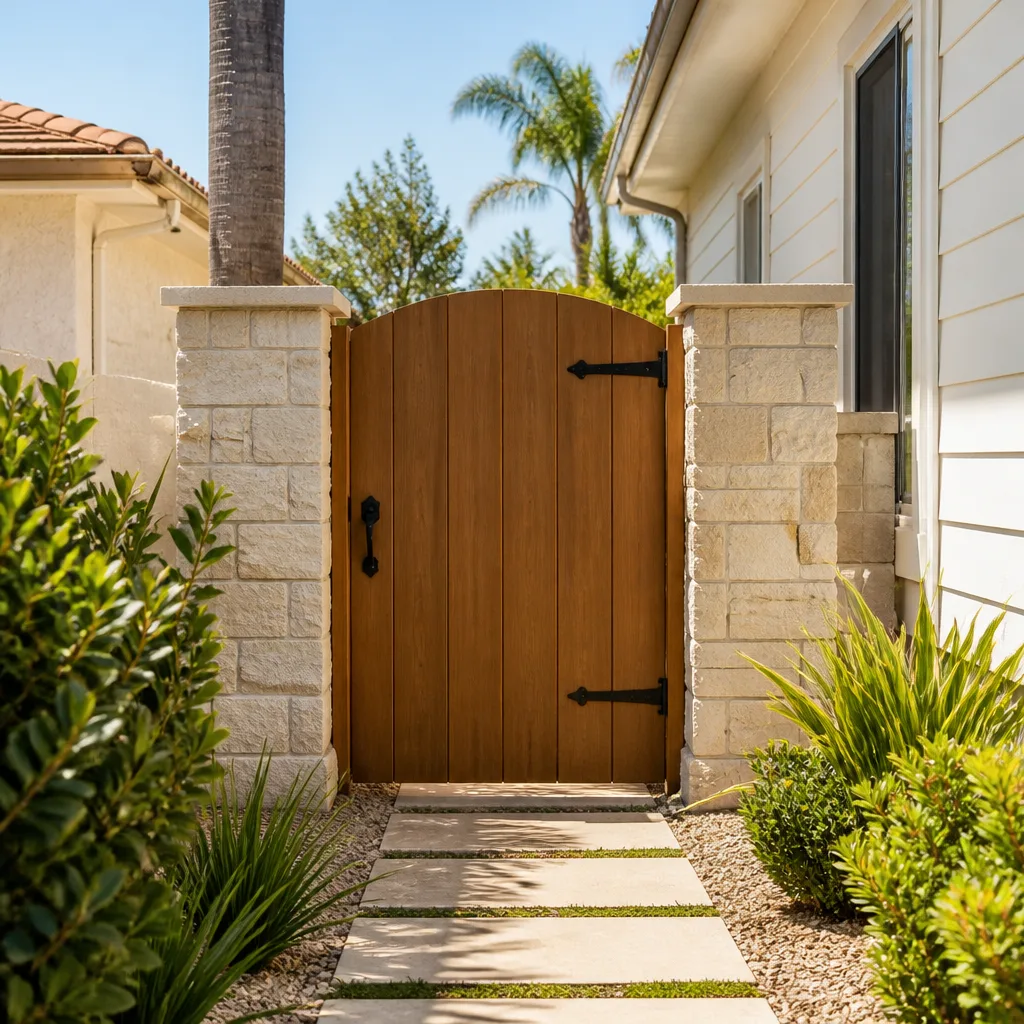
For a full breakdown of how these line items translate to a completed fence, see our Fence Installation in Miami Gardens page. When we quote a fence, we name the material brands we’re specifying, whether that’s Barrette ornamental panels or a Therma-Tru gate assembly, so the written number corresponds to a specific product rather than a category.
The Signed Change Order Test
Any contractor who resists the signed change-order requirement is a structural risk to your budget. A change order is a written document that states what changed, what it costs, and requires your signature before the work proceeds. It’s the single most effective protection a homeowner has against a fence quote that quietly grows before the job is finished.
The test is simple. Ask the contractor directly: “If something changes mid-job, will you get my signature on a written change order before you do the work?” Watch the answer. A contractor who says “we’ll work it out” or “we don’t need paperwork for small stuff” has just told you they reserve the right to bill for decisions made without your approval. A contractor who says yes immediately, and can show you their change-order form, has shown you their process.
This discipline is the reason our projects finish within a few percent of the agreed cost. Across more than 4,000 projects, the change order is what keeps the number honest from estimate through final walkthrough. If a contractor explains that change orders “slow things down,” ask who benefits from that speed. It isn’t you.
Permit Avoidance and How to Verify a Miami-Dade Permit
An unpermitted fence can create title and insurance problems years after installation. In Miami-Dade, a fence over a certain height, or one enclosing a pool, requires a building permit and at least one inspection. A contractor who offers to “skip the permit to save you money” is transferring the risk to you, permanently.
You can verify a permit was actually pulled. Here’s the process:
- Ask the contractor for the permit number in writing, on the estimate or a separate document.
- Go to the Miami-Dade County online permit portal and search by the permit number or your property address.
- Confirm the permit exists, is in the contractor’s name or yours as the property owner, and matches the scope of your fence.
- After installation, confirm the inspection was scheduled, passed, and recorded. A permit without a passed inspection is an open permit, which is a problem at sale.
Open permits surface during a title search. They can delay a closing, complicate an insurance renewal, and force a corrective inspection at your expense. In Miami Gardens, where many properties change hands after storm-damage repairs, an open fence permit is easy to miss until a buyer’s attorney flags it. If a contractor tells you permits aren’t needed for “this kind of fence,” get that in writing too. It’s useful documentation if the county disagrees.
Material Substitution Language to Watch For
Phrases like “or equivalent” in a fence contract allow cheaper materials to be installed without disclosure. The phrase sounds technical and harmless. In practice it hands the contractor the right to swap the material you approved for whatever is cheaper on the day of installation.
Watch for these substitution patterns in the written contract:
- “Or equivalent.” Ask for a written definition of equivalent, including brand, grade, and color. If the contractor can’t define it, the phrase is a loophole.
- “Materials subject to availability.” Acceptable in principle, but demand written approval before any substitution, at no change to the price.
- “Standard-grade hardware” with no brand. Gate hardware is where substitutions happen most often and where failures show up first.
- Panels described by category, not brand. “Vinyl privacy panels” could mean four or five manufacturers with very different lifespans.
The fix is straightforward. Require the contract to name the brand and model of every major material, and require written homeowner approval, at the original price, before any substitution. We name ours, whether that’s a Barrette aluminum panel, a ViewLux gate insert, or a Therma-Tru gate. When the brand is written, the number is honest; when it’s a category, the number is a ceiling, not a price.
First 90 Days: Post-Installation Warning Signs
The first 90 days after a fence goes in are the diagnostic window. Most installation errors show up in that period, and Miami Gardens’s climate accelerates them. Afternoon storms, sandy soil, and saturated ground after heavy rain put real load on a fence within weeks. Here’s what to inspect, and when:
- Days 1-7. Check for post lean. A small amount of settle is normal as concrete cures, but any post leaning more than a degree or two within the first week is a red flag. Check gate swing and latch alignment.
- Days 8-30. Inspect concrete at every post base. Cracks radiating from the post, or concrete pulling away from the soil, suggest too little concrete or the wrong mix for our soils. Confirm the quoted depth was achieved.
- Days 31-60. Watch posts after a heavy rain. Fences that wobble or shift after a real storm are telling you the post depth or concrete volume was short of spec.
- Days 61-90. Check hardware: hinges, latches, and gate sag. A gate that drags or won’t latch within 90 days was installed with inadequate hardware or undersized posts.
Put the observations in writing with dates and photos. If the contractor offered a written warranty, you now have documentation to invoke it. If the warranty was verbal, you have a problem worth escalating to a professional.
What a Miami-Dade Wind-Load Inspection Should Confirm
A Miami-Dade wind-load inspection confirms that the fence is engineered and installed to resist the wind pressures our region requires, and that the installed work matches the permitted design. It is not a visual check that the fence “looks solid.” The inspector should confirm four things:
- Post spacing and depth match the permit. If the permit called for 6-foot on-center and the posts are 8 feet apart, the fence doesn’t meet its design.
- Concrete volume per post matches spec. Inspector should confirm depth and concrete presence, not just that a post exists.
- Hardware and connections meet the wind-load rating. Gate hardware and panel connections are stress points in high wind; substituted hardware without a rating is a failure point.
- The inspection is recorded as passed. A scheduled inspection is not a passed inspection. Confirm the record in the portal.
In Miami Gardens, this inspection is your proof that the fence will hold up under a real storm, not just a calm-weather walkthrough. If a contractor explains why the inspection “isn’t really needed” for your fence, that’s the contractor telling you they don’t plan to pass one.
Contractor Signals That Predict Trouble
The paperwork tells the story, but the contractor’s behavior around it tells you what happens when something goes wrong. These signals are cheap to observe and expensive to ignore. In our experience, a contractor who fails even one of them during the estimate phase is likely to fail others during the job.
- No license number on the estimate. A license number should be printed on the estimate, the contract, and the page. If it isn’t, ask for it and verify it.
- No insurance or bond documentation offered. Lien risk on materials passes to the homeowner when a contractor isn’t properly insured and bonded.
- No written warranty. Ask for the warranty terms in writing before you sign. A verbal “we stand behind our work” is not a warranty.
- No written documentation of the visit. Every visit should produce something you keep: photos, notes, measurements. If the contractor doesn’t document a visit, you’re the only one keeping records.
- Reluctance to review another contractor’s estimate. A contractor with honest numbers is happy to sit down with a competitor’s quote and explain the differences line by line.
- No references from properties similar to yours. Fence work on a quarter-acre lot isn’t the same as a properly graded, permitted fence in a Miami Gardens neighborhood with coral-rock substrate near the surface.
Common Mistakes to Avoid
- Accepting a lump-sum price with no line items. It’s not a quote, it’s an opening bid. You can’t compare it to anything and you can’t dispute what it covered.
- Skipping the permit to save a few hundred dollars. An open permit can hold up a title search at sale and complicate an insurance renewal. The savings don’t survive the first real estate transaction.
- Signing a contract with “or equivalent” language. It allows cheaper materials to be installed without your written approval, often after the deposit is paid.
- Assuming a passed inspection happened without verifying it. In our experience, some homeowners find open fences permits only during a closing. Confirm the inspection record in the Miami-Dade portal.
- Not testing gates and latches until day 90. Gate sag and latch drift during the first month are early signals of undersized posts or substituted hardware.
- Choosing the lowest bid without comparing scope. A lower number that omits concrete, hardware grade, or permit fees isn’t a lower price once the change orders arrive.
- Ignoring soil and grading conditions. In parts of Miami Gardens, sandy soil and high water tables require deeper posts and more concrete. A contractor who quotes the same spec everywhere hasn’t looked at your yard.
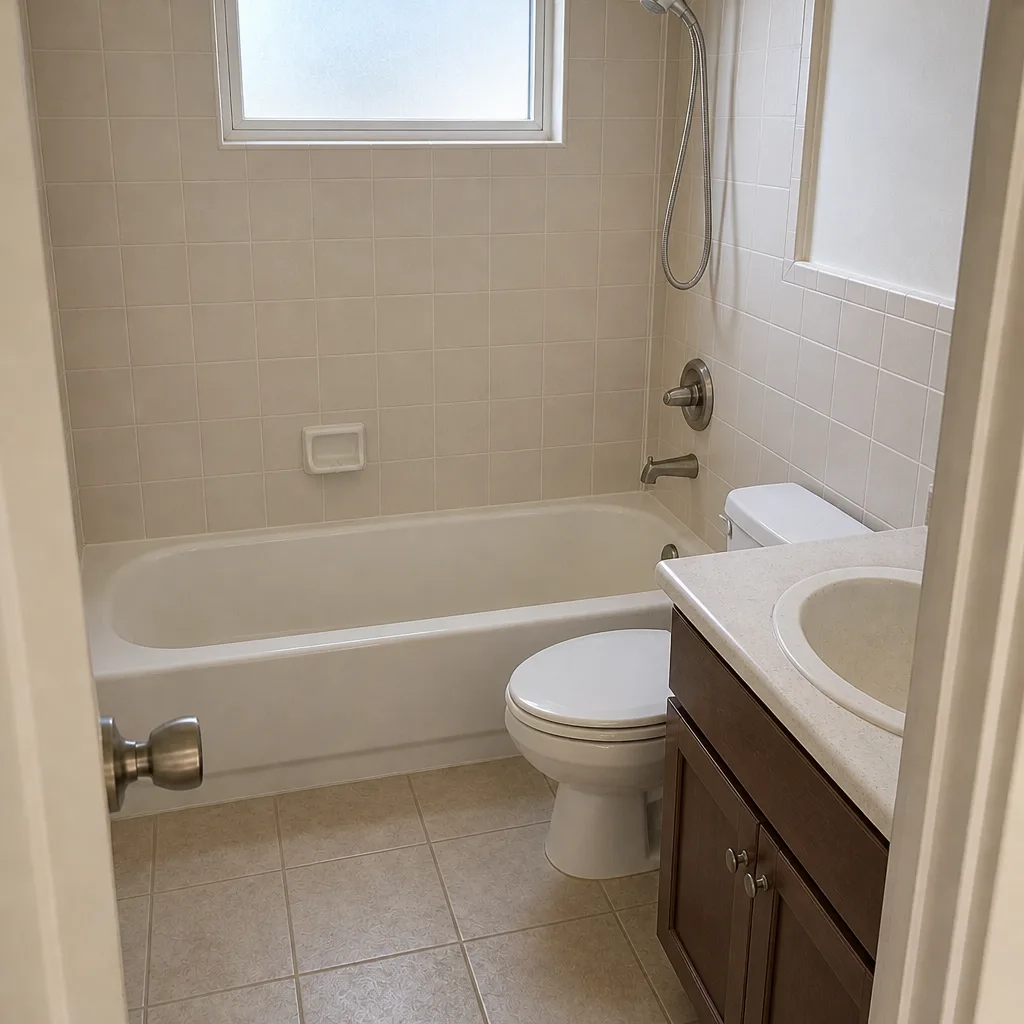
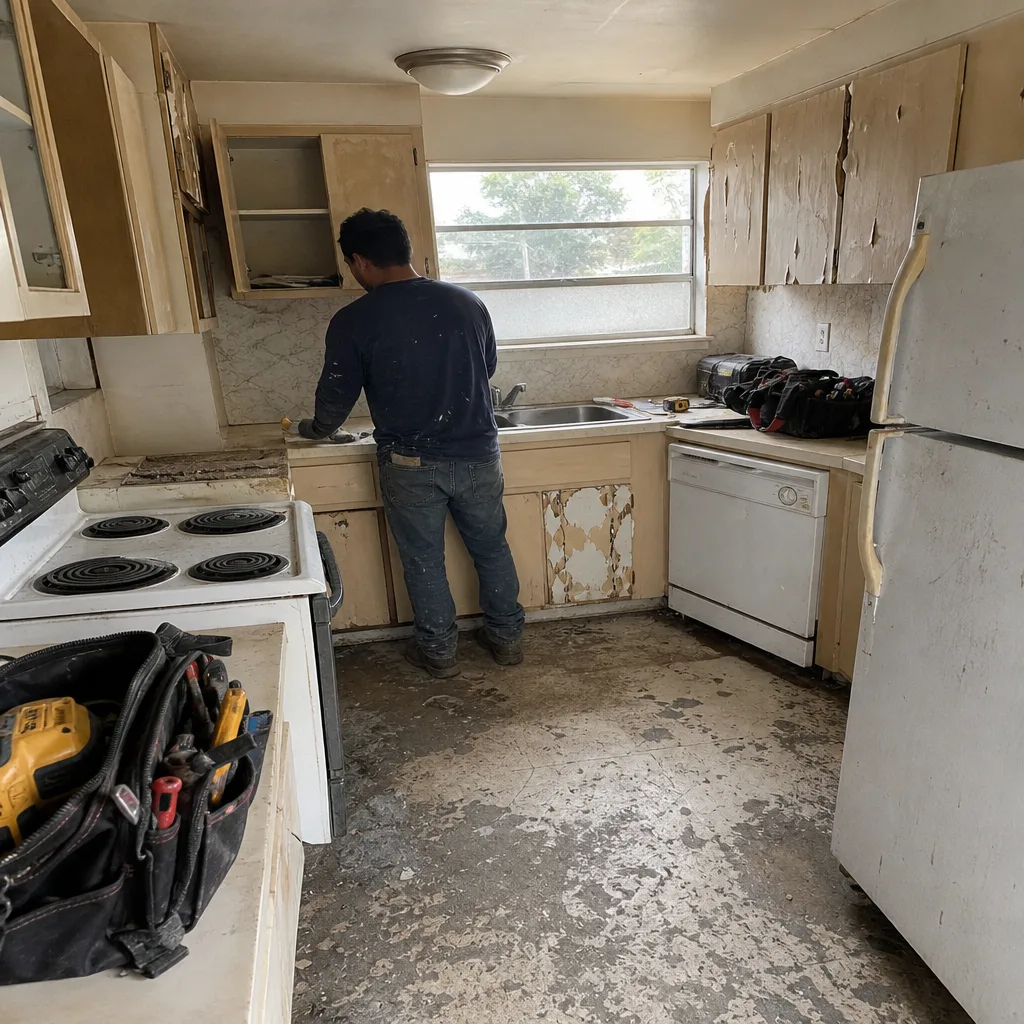
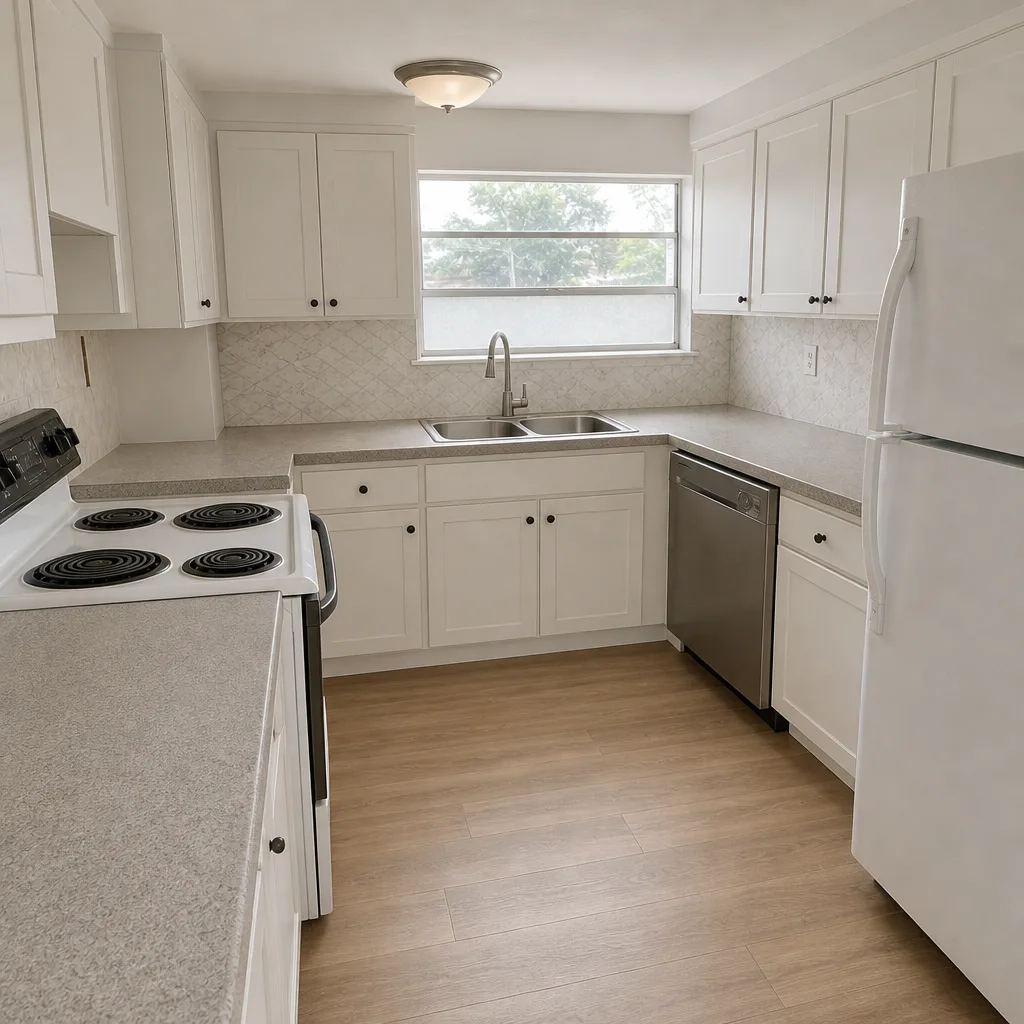
See the difference
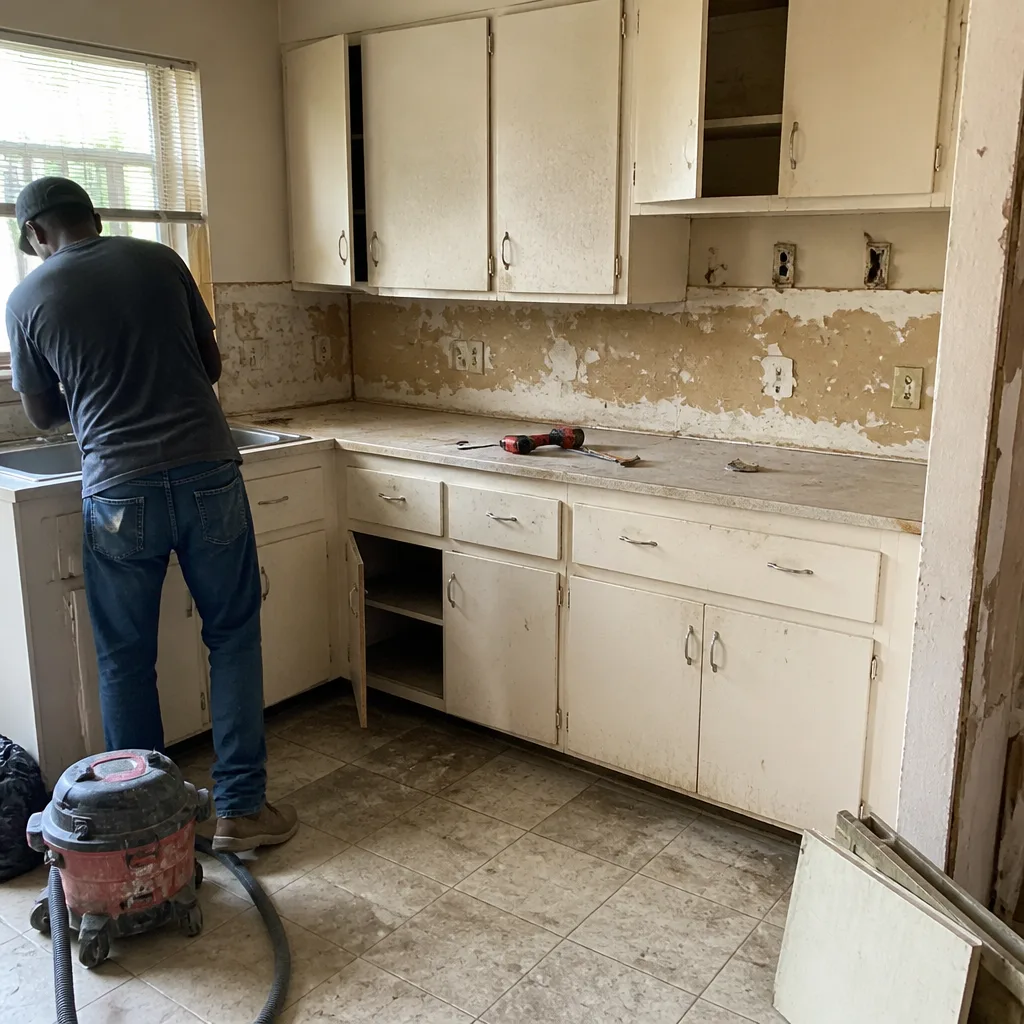 Before
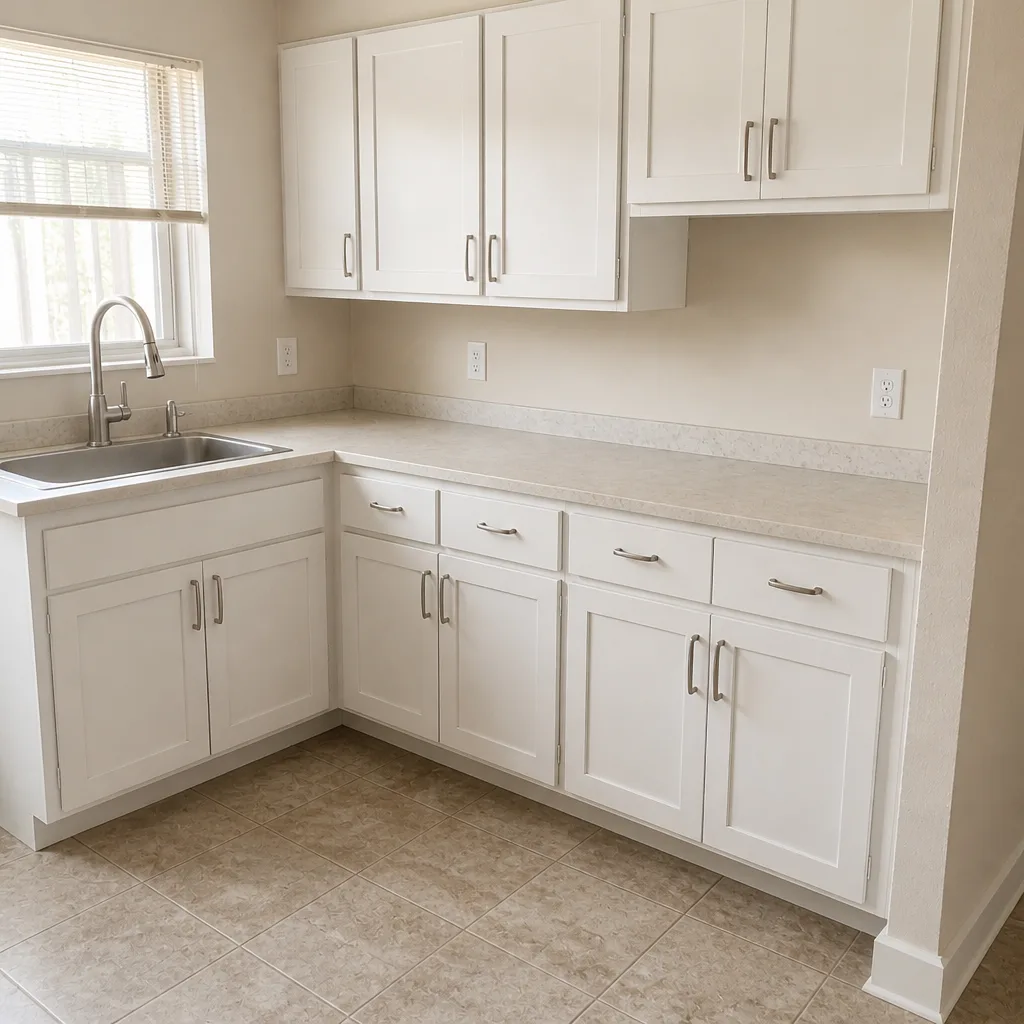 After
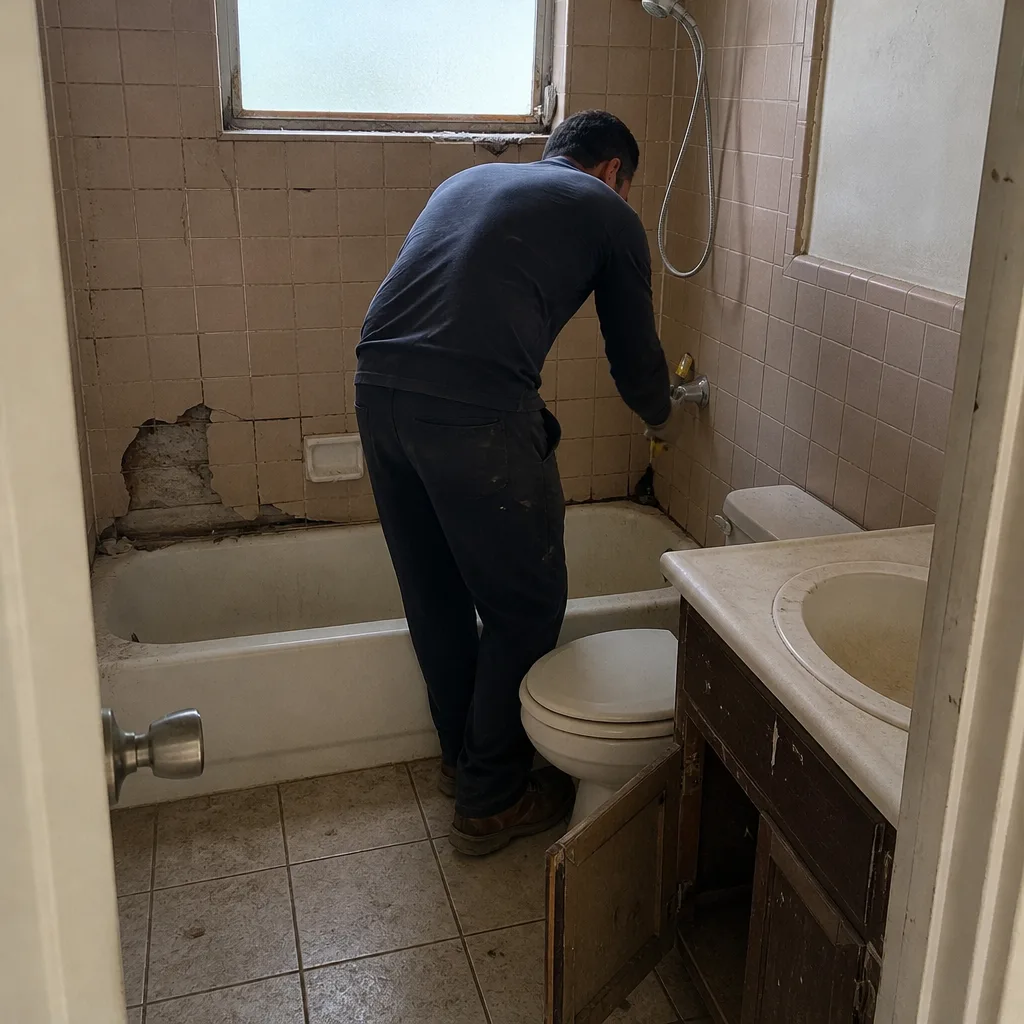 Before
 After
 Before
 After
When to Call a Professional
Call a professional if you’ve signed a contract that lacks a written scope, if you can’t confirm a permit was pulled, or if you’ve seen post lean, concrete cracking, or gate sag within the first 90 days. Each of these is fixable, but each gets more expensive the longer it’s left in place, and a fence that fails under a Miami Gardens storm is a safety issue, not just a repair bill. Fence work involves digging, setting concrete, and in the case of tall fences and gates, weight that can fall. A trained installer checks grade, substrate, and wind-load spec before digging; a homeowner with a shovel does not. Our technicians have up to 19 years of experience reading exactly these conditions. Rowan Construction Group Miami Gardens offers free estimates in Miami Gardens. Call (844) 320-5198 to schedule yours.
Frequently Asked Questions
Fence installation in Miami Gardens typically runs $28 to $65 per linear foot installed, depending on material. Pressure-treated wood lands near the lower end; aluminum and vinyl privacy fencing runs higher, and gates add $350 to $1,200 each depending on width and hardware. Permit fees are usually $150 to $400 and should appear as a separate line item, not bundled. Call (844) 320-5198 for an exact quote, estimates are free.
Yes, in most cases. Fences over a certain height, and any fence enclosing a pool, require a Miami-Dade building permit and inspection. The exact threshold depends on your property and zoning. A contractor should list the permit fee as a line item and give you the permit number so you can verify it in the county portal. If they offer to skip it, call us at (844) 320-5198 for a second look at what the permit actually requires.
Not if the contractor operates on signed change orders. No work should proceed on a change until a written change order is signed by the homeowner. If your contractor says “we’ll work it out” when you ask about mid-job changes, they’ve reserved the right to bill without your approval. Bring the quote to us and we’ll review it line by line at no charge. Call (844) 320-5198.
Ask for the permit number in writing, then look it up yourself in the Miami-Dade County online permit portal by number or by your property address. Confirm the scope matches your fence, then confirm the inspection was scheduled, passed, and recorded. An open permit shows up in a title search, so verify before the final payment. If you’re not sure what you’re looking at, call (844) 320-5198 and we’ll walk you through it.
It means the contractor can substitute a cheaper material without your written approval, as long as they consider it equivalent. In practice, that substitution happens after the deposit is paid. The fix is requiring the contract to name brand and model for every major material, with substitutions requiring your written approval at the original price. Call (844) 320-5198 for a free second opinion on any written estimate you’ve received.
A properly installed fence in Miami Gardens should last 15 to 25 years for aluminum and vinyl, and 10 to 15 years for pressure-treated wood, assuming the post depth and concrete volume match spec for our sandy soils. A fence that sags within the first year usually failed on post depth or concrete, not material. If yours is failing early, call (844) 320-5198 for a free estimate on what it would take to correct it.
The Bottom Line
The warning signs that a fence contractor will cause problems almost always show up in the estimate and contract, long before a shovel touches the ground. A real quote itemizes linear footage, post spacing and depth, concrete, hardware grade, and permit fees. A real contractor requires signed change orders, names the brands they’re using, and pulls a permit you can verify yourself in the Miami-Dade portal. The first 90 days are the diagnostic window: post lean, cracked concrete, and gate sag tell you what the paperwork didn’t. If a contractor resists any of these, the budget they’re protecting isn’t yours.
If you’re ready for a written, itemized estimate, or want a free second opinion on a quote you’ve already received, Rowan Construction Group Miami Gardens reviews it line by line at no charge. We’ll show you what the number covers, name the materials, and put the price in writing before any work starts, backed by our 365-Day Done Right Promise. Learn more about our Rowan Construction Group Miami Gardens home page, and see how fence work connects to our Driveway & Pavers in Miami Gardens and Home Additions & ADU in Miami Gardens services. Call (844) 320-5198 to schedule your free estimate.
Written by the team at Rowan Construction Group Miami Gardens.