Last updated November 18, 2026



Free written scope consultation - allowances, timeline, and change-order rules on paper before a single trade is scheduled
How Long Does Driveway & Pavers Take? Timelines and What to Expect
A 600-square-foot driveway can be physically installed in two days. The total project, including permit approval, demolition, base compaction, cure time, and final inspection, runs 3 to 5 weeks in Miami Gardens under normal conditions. That gap between the crew’s work and the calendar is where most contractor promises break down. Homeowners hear “two days” and plan around it. Then week three arrives and the driveway is still gravel. This guide separates every phase with its own realistic clock, so you can fact-check a schedule before you sign it and know which delays are normal and which are a contractor losing the thread.
Quick Answer
Driveway paver installation in Miami Gardens typically takes 3 to 5 weeks from signed contract to final inspection, or 5 to 7 weeks when a permit slows at Miami-Dade. The installation itself, the days the crew is actually laying pavers, is only 1 to 3 days for most residential driveways. Everything else on the calendar is permit review, demolition, haul-away, base preparation, and a mandatory cure window before the base can carry the pavers.
Styles & brands we work with
- Kitchen remodeling
- Bathroom remodeling
- Home additions & ADU
- Roofing
- Windows & doors
- Driveway & pavers
- Fence
Table of Contents
- The Phase-by-Phase Timeline for Driveway Pavers
- What Weather Windows Actually Cost You in Miami Gardens
- How Crew Size Changes the Installation Day Count
- What a Signed Project Schedule Should Look Like
- The Two Decisions That Add the Most Time
- How to Fact-Check a Contractor’s Schedule
- Common Mistakes to Avoid
- When to Call a Professional
The Phase-by-Phase Timeline for Driveway Pavers
Every phase has a minimum, the fastest it can physically go, and a realistic range, what it usually takes in Miami Gardens once the Building Department and the haul-away schedule get involved. Plan around the realistic number, not the minimum.
- Permit submission and review: 5 to 15 business days at Miami-Dade. Minimum is a few days for a clean submittal. Realistic is 10 to 15 during peak spring and fall permit season. Hardscape that changes the right-of-way footprint, swale, or driveway apron triggers a right-of-way review and takes the longer end.
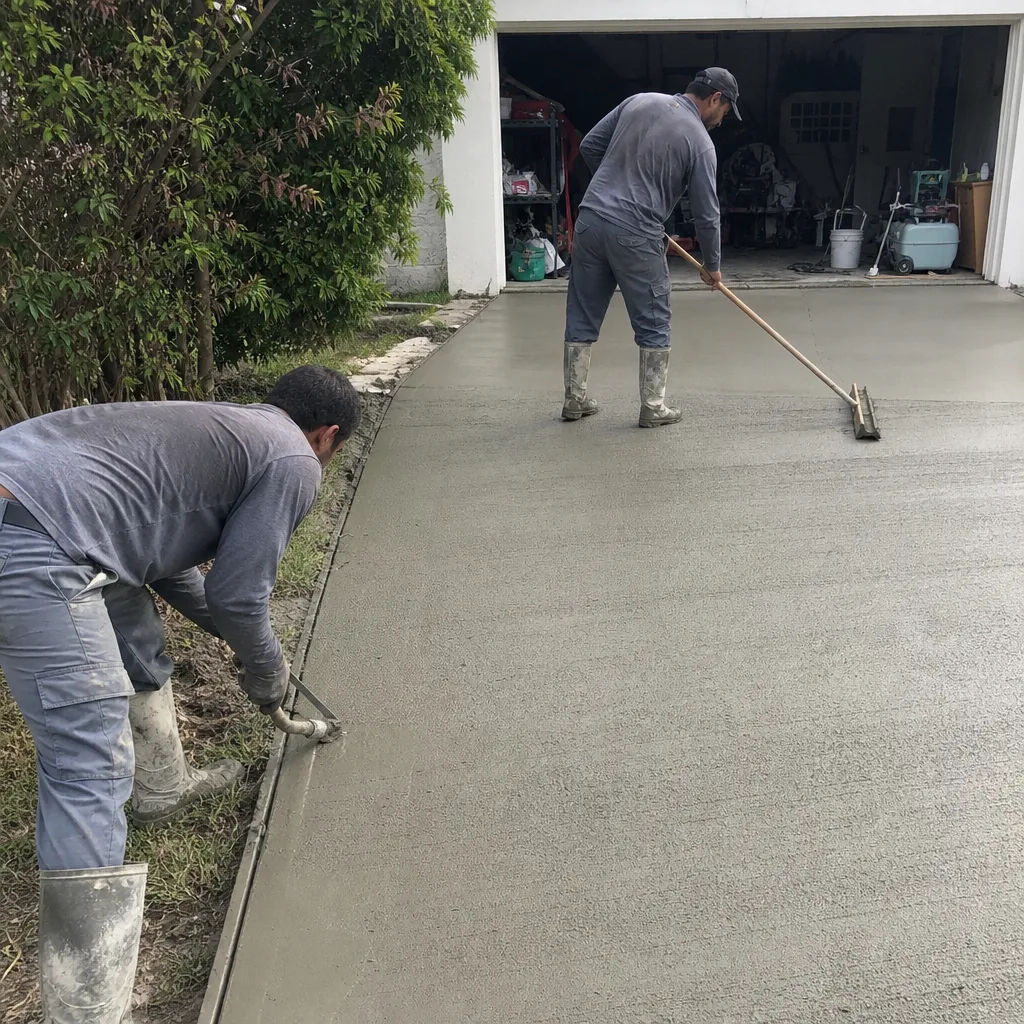
- Demolition and haul-away: 1 to 2 days. Concrete breaks fast; getting it off site is the variable. A full truck of broken slab needs a place to go, and Miami-Dade recycling yards can queue the whole morning.
- Base preparation and compaction: 1 to 2 days, then a 24-hour cure before the base carries pavers. This is the phase homeowners most often leave out of their plan. Sub-base and base course are graded, compacted in lifts, then allowed to set.
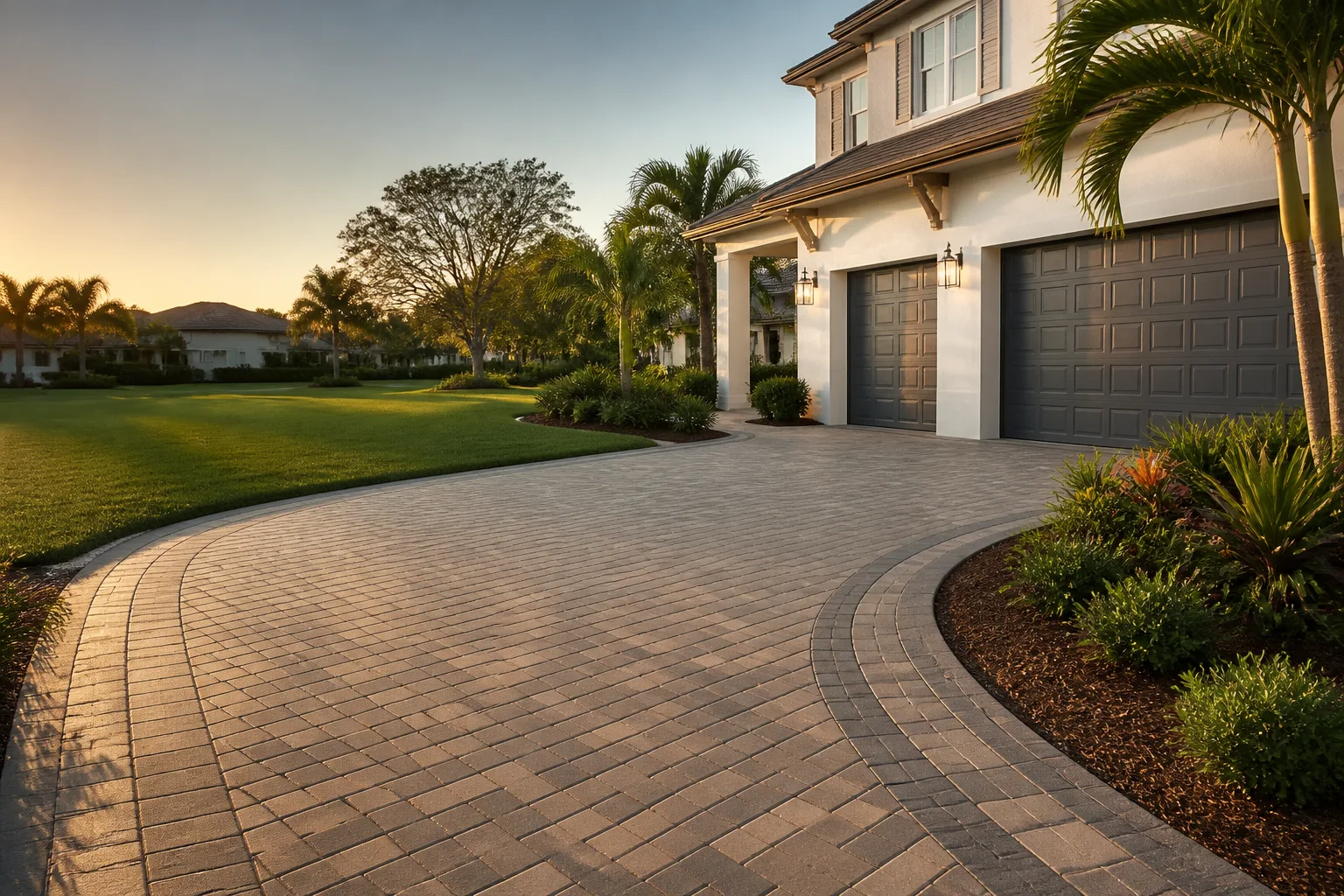
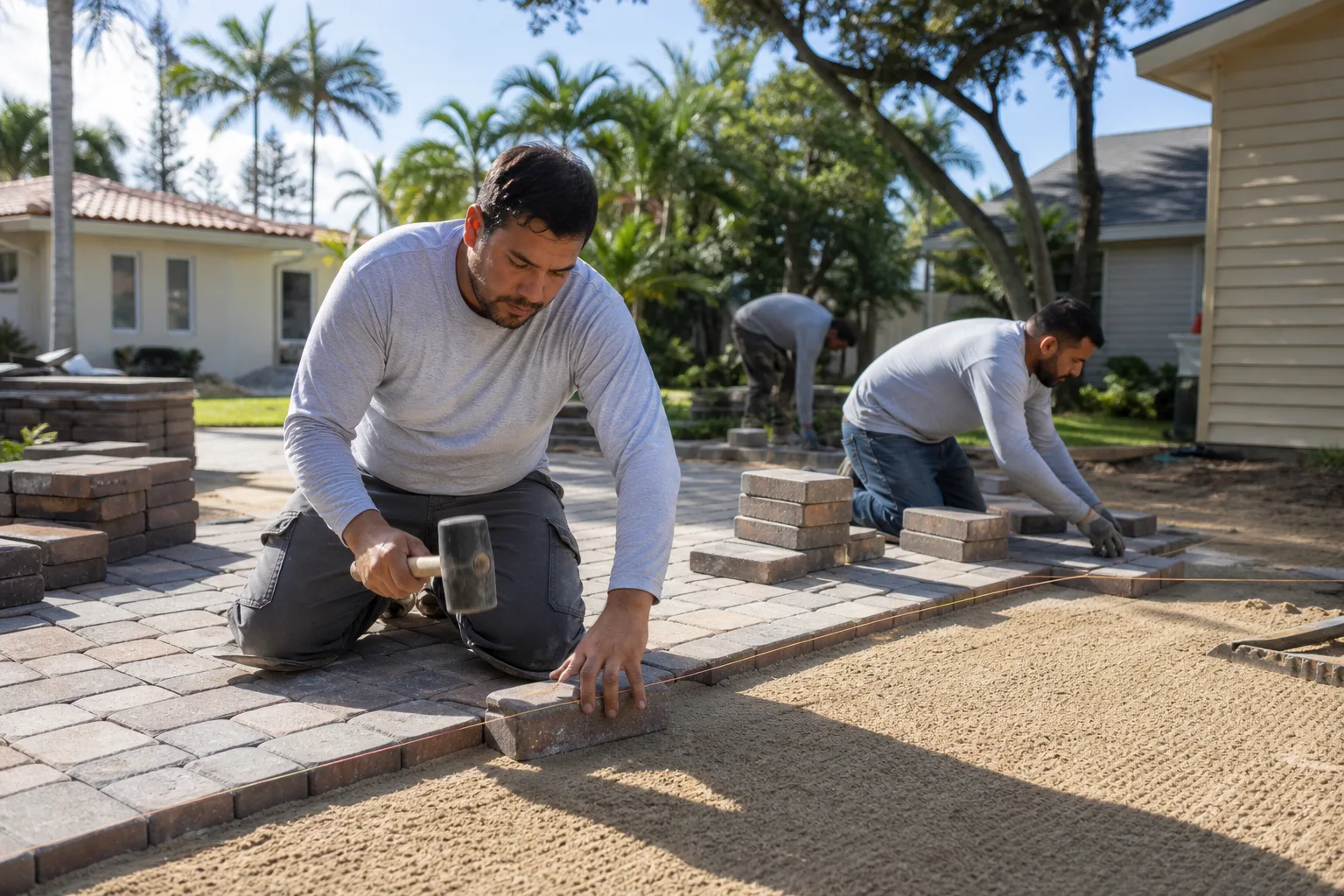
- Paver installation: 1 to 3 days depending on square footage and pattern. An interlocking herringbone runs slower than a running bond. Edge restraints, sand, and compaction finish the phase.
- Final inspection and sign-off: 2 to 5 business days to schedule. The physical inspection is quick; the wait is the calendar opening.
Add those ranges and a 3-to-5-week total appears, with the long end showing up when the permit sits. Our team at Rowan Construction Group has watched this sequence play out across more than 4,000 projects since 2007, and the phase that blows up a schedule is almost never the crew’s speed. It’s the paperwork and the concrete truck timing. If you want to see how this fits a full hardscape plan, our Driveway & Pavers in Miami Gardens page walks through materials and layout.
What Weather Windows Actually Cost You in Miami Gardens
Miami Gardens gets its heaviest rain from June through October. A wet base is un-compactable. Water in the sub-base means the vibratory plate can’t achieve the density the pavers need, so the crew must wait for the base to dry before compacting. A single afternoon of hard June rain can cost two or three calendar days, not two hours. That’s the real cost of a weather delay: the base dries slowly in the subtropical humidity, and the schedule shifts day by day.
The windows that actually matter for scheduling are narrower than “the wet season.”
- Dry-season builds (November through April): the reliable window. Permit queues can be longer in spring, but base prep and installation move fast.
- Early-summer builds (May through June): the race. Crews try to finish base work and installation before the afternoon thunderstorms settle in, and a well-run schedule front-loads compaction into the morning.
- Peak wet season (August through October): the patience window. Build in extra buffer days for weather, and expect the contractor to hold off on final base compaction until a genuinely dry stretch.
If a contractor hands you a schedule with zero weather buffer during August in Miami Gardens, the schedule isn’t realistic. The good ones pad the calendar by a few days in wet months and tell you why. We’ve seen driveways in the Carol City area get pushed a full week simply because the base couldn’t dry after a stalled front, and that’s the correct call, not a failure. Under Clause 1 of The Haven Standard, the written price holds regardless, so weather shifts the date, not the number.
How Crew Size Changes the Installation Day Count
Installation speed is mostly a function of crew size and square footage. A realistic production rate for a residential paver crew is 200 to 300 square feet per crew-day. That’s the number to hold a contractor to when they quote you a day count.
- Two-person crew: roughly 200 square feet per day. A 600-square-foot driveway takes about three installation days.
- Three-person crew: 250 to 300 square feet per day. The same driveway takes two to two and a half days.
- Four-person crew with a dedicated cutter and loader: 300-plus square feet per day on a simple pattern, fewer on intricate cuts around curves and planters.
Pattern complexity and site access move the number as much as headcount. A circular or fan pattern near the garage apron needs more cuts and slows the crew. A driveway with tight side-yard access where the paver pallets can’t be staged close to the work also runs slower. This is why one contractor’s “two days” and another’s “four days” can both be honest, and why the production rate is the number worth asking for. Crew size is also a signal of how the whole project will be run, not just the installation days. A contractor who can’t tell you how many people will be on site is a contractor who hasn’t planned the job. We ask for a written production estimate on every project for exactly this reason.
What a Signed Project Schedule Should Look Like
A schedule worth signing separates the phases, names the milestone dates, and says who owns each one. Vague timelines (“completed within a few weeks”) leave the homeowner with no leverage when a phase slips. A signed schedule turns the calendar into a document.
Here’s what a written project schedule should contain in Miami Gardens:
- Permit submission date and expected approval window: named, with a note on whether right-of-way review is triggered.
- Demo date and haul-away plan: which yard takes the concrete, and what happens if the haul is delayed.
- Base prep and compaction dates: including the 24-hour cure window stated explicitly.
- Installation start and estimated completion: with crew size and expected square footage per day.
- Inspection request date: and who submits the request to Miami-Dade.
The milestones that should trigger a written update from the contractor are permit approval, demo completion, base compaction, and inspection scheduling. If any of those four slips by more than a couple of days, you should hear it in writing before the crew shows up, not after. Under the Haven Standard, no change proceeds without a signed change order, and that same discipline applies to schedule changes. A schedule is only useful if it’s a document you both hold.
The Two Decisions That Add the Most Time
Two homeowner decisions account for most self-inflicted delays on paver projects. Both tend to happen at the wrong moment.
Changing the paver pattern after demolition. The pattern is decided once you see the empty subgrade, and that’s too late. If you demo the old driveway and only then decide a herringbone would look better than the running bond you originally picked, the change costs pallet reorders, more cuts, and up to several extra installation days. Decide the pattern and lay direction before demo, when you can still go back to the supplier without a restocking problem. The change order discipline protects the price, but it can’t give you back lost calendar days.
Selecting a paver that isn’t in local stock. Miami Gardens projects pull from Belgard and Techo-Bloc lines that are generally stocked throughout South Florida, but niche colors, specialty shapes, and premium finishes often have to be ordered. A special-order paver can add one to three weeks to the lead time, and it sits on the calendar before installation even begins. Ask your contractor for the stock status and lead time of the exact paver and color you want, in writing, before the permit is submitted. If a paver is out of stock, the honest answer is a lead-time estimate, not a promise it’ll be there.
How to Fact-Check a Contractor’s Schedule
You don’t need to know how to lay pavers to spot an unrealistic schedule. You need three numbers and one question.
- The square footage of the driveway. Get it from the plan or the quote.
- The production rate the contractor is planning. Ask directly: “How many square feet per crew-day, and how many people on the crew?”
- The installation days that math produces. Divide square footage by production rate and compare with the schedule.
Then ask the fourth question: “How many days of buffer are in this schedule for permit and weather?” A contractor with a plan answers all four in a minute. A contractor guessing gets vague. That one conversation will tell you more than any review. It’s the discipline behind our Rowan Construction Group Miami Gardens home approach and the way we price every trade, from driveways to additions.
Common Mistakes to Avoid
- Confusing installation days with project days. A two-day install on a five-week project isn’t a two-day project. Plan your parking, your gate access, and your patience around the full calendar, not the crew’s three-day stretch.
- Not building a wet-season buffer into the plan. A schedule with no rain buffer in September in Miami Gardens isn’t tight, it’s fiction. Ask how the contractor handles a wet base.
- Choosing the paver after demo. Pattern and color should be locked in before demolition starts, or you’ll be waiting on a reorder while your driveway sits as bare gravel.
- Failing to confirm local stock and lead time. Ask for the stock status of your exact paver and color in writing before the permit goes in. A special order can add weeks that never show up on the contractor’s “two-day install” line.
- Signing a schedule with no milestone dates. “A few weeks” isn’t a schedule. Permit approval, demo, base compaction, and inspection each get their own date and their own written update.
- Assuming the permit is fast. Miami-Dade review runs 5 to 15 business days, longer with right-of-way review. The permit is often the single longest phase of the project, and it’s out of the contractor’s hands, but a contractor who handles submittal cleanly saves days.
- Letting a change happen without a signed change order. Verbal “while we’re at it” requests mid-project are how schedules and budgets slip. Under the Haven Standard, no change proceeds until the change order is signed.
When to Call a Professional
Call a professional before you tear out a driveway, not after. The phases that break schedules, permit review, base compaction, and drainage, are the ones that go wrong when a homeowner takes on the project piecemeal. If your existing driveway is settling or puddling near the garage apron, if you’re changing the grade or widening the driveway into the right-of-way, or if a contractor has handed you a schedule that doesn’t separate install days from total project days, a professional estimate will tell you the real calendar and the written price before anyone touches a tool. Rowan Construction Group Miami Gardens offers free estimates in Miami Gardens, with a flat written price and written scope before work starts. Call (844) 320-5198 to schedule yours, and bring a competitor’s quote if you have one for a free second opinion, reviewed line by line at no charge.
See the difference
 Before
 After
 Before
 After
 Before
 After
Frequently Asked Questions
The installation can, yes. A 600-square-foot driveway with a two- or three-person crew lays in one to three days. The total project is 3 to 5 weeks in Miami Gardens once permit review, demolition, base compaction, cure time, and final inspection are counted. If a contractor quotes only the install days, ask for the full calendar in writing.
Permit review at Miami-Dade Building Department runs 5 to 15 business days for a clean residential driveway submittal. The long end applies during peak season or when right-of-way review is triggered by widening the driveway or changing the apron. The permit is usually the single longest phase of the project.
Rain delays the base, not the pavers. You cannot compact a wet sub-base or base course, and in Miami Gardens humidity the base takes time to dry. A hard afternoon rain in June or September can cost two or three calendar days. Ask your contractor how the schedule accounts for weather in the wet months.
A realistic range is 200 to 300 square feet per crew-day. That assumes a two- to three-person crew on a standard pattern. Complex cuts, curves, and tight site access slow the rate. Divide your square footage by the production rate to sanity-check the installation days in any schedule.
The three usual culprits are permit review, base drying after rain, and a paver that wasn’t in local stock. None of these are the crew’s speed. A written schedule with milestone dates and a note on lead times will show you which phase is holding things up, and that’s the information you need before you ask the contractor why.
You can up to demolition, and after that it costs time and, if pallets are already ordered or cut, money. Decide pattern, color, and paver before demo. Any change after work starts should run through a signed change order, not a verbal request. Call (844) 320-5198 for an exact quote on your Miami Gardens project, and estimates are free.
The Bottom Line
Driveway paver installation in Miami Gardens is a 3-to-5-week project disguised as a two-day installation. The build speed is real, but permit review at Miami-Dade, concrete demolition and haul-away, mandatory base cure time, and weather windows in the wet months set the calendar. The number to hold a contractor to is 200 to 300 square feet per crew-day, and the document that protects you is a written schedule with named milestone dates. Lock in pattern and stock before demo, build in a wet-season buffer, and require a signed change order for any mid-project shift. That discipline is the difference between a project that finishes on schedule and one that drifts.
Our technicians have up to 19 years of experience, and every Rowan Construction Group Miami Gardens project comes with a flat written price, a written scope, and the 365-Day Done Right Promise. If you’re planning a driveway or any hardscape work alongside a Fence Installation in Miami Gardens or a Home Additions & ADU in Miami Gardens project, call (844) 320-5198 for a free estimate and ask for the schedule in writing.
Written by the team at Rowan Construction Group Miami Gardens.