Last updated November 18, 2026

Free written scope consultation - allowances, timeline, and change-order rules on paper before a single trade is scheduled
How Long Does Windows & Doors Take? Timelines and What to Expect
PGT and CGI impact windows – the two most common compliant brands in Miami Gardens – run 6 – 10 week manufacturing lead times for custom sizes, which describes most replacement windows in older homes. That number rarely comes up at the first sales visit. A contractor who quotes a three-week job without asking for your rough opening dimensions hasn’t started the real schedule yet. This guide lays out every phase of a window and door replacement in Miami Gardens – measurement, permit review, manufacturing, installation, inspection – so you can tell a realistic timeline from a sales pitch, and ask the right questions before you sign anything.
Quick Answer
A full window replacement in Miami Gardens typically takes 8 – 16 weeks from signing to final inspection: about 1 week for measurement and product selection, 10 – 15 business days for Miami-Dade permit review, 4 – 10 weeks for manufacturing (depending on brand and whether your sizes are stock or custom), 1 – 3 days for installation, and 1 – 5 days to schedule the inspector. The installation itself is fast; the compliance and manufacturing pipeline is what fills the calendar.
Styles & brands we work with
- Kitchen remodeling
- Bathroom remodeling
- Home additions & ADU
- Roofing
- Windows & doors
- Driveway & pavers
- Fence
Table of Contents
- The Phase-by-Phase Window Replacement Timeline
- Stock vs. Custom Sizing: The Four-Week Variable
- Miami-Dade Permits and Inspection Hold Points
- Manufacturing Lead Times by Brand and Product Line
- What Happens During Installation
- How a Multi-Window Project Gets Sequenced
- Written Schedule Questions to Ask Before Signing
- Doors Are a Different Schedule
The Phase-by-Phase Window Replacement Timeline
Every compliant window replacement in Miami-Dade County runs through the same five phases. The durations below are what we see on jobs in Miami Gardens, from the Palmetto Expressway corridor to the neighborhoods around Bunche Park and Norland.
- Measurement and product selection (about 1 week). A technician measures each rough opening – the framed hole in the wall the window unit sits into – and confirms which product line meets the required design pressure rating for your home’s wind zone. Product selection means picking frames, glass packages, and hardware. Choosing in a week is realistic; deciding by committee over three weeks is not unusual.
- Permit application and Miami-Dade review (10 – 15 business days). Miami-Dade County processes window and door permits through the Building Department, and impact products must carry a valid Notice of Acceptance, or NOA. That is the county-issued document confirming a product passed Miami-Dade’s wind-borne debris testing. If your contractor’s product doesn’t have an NOA for your application, the permit stalls before review even starts.
- Manufacturing (4 – 10 weeks). Stock sizes ship the fastest. Custom sizes go into a production queue. PGT and CGI are the two brands we see most in Miami Gardens, and their custom lead times both land in the 6 – 10 week range depending on the product line and time of year.
- Installation (1 – 3 days). A typical single-family home with 10 – 15 openings takes one to two days. Larger homes, second-story work, or full door replacements stretch it to three.
- Inspection (1 – 5 days to schedule). The county inspector signs off, and the permit closes. Scheduling is the homeowner’s or contractor’s responsibility – confirm in writing who owns that task.
Stock vs. Custom Sizing: The Four-Week Variable
The single biggest schedule lever you control is whether your window openings match a manufacturer’s standard rough opening dimensions. Stock windows – sizes the factory builds in volume – can cut four weeks or more off the manufacturing phase. In Miami Gardens, homes built in the 1950s through the 1980s often have irregular openings: jalousie-to-slider conversions, block-wall construction with inconsistent framing, or past renovations that changed opening sizes without documentation.
How you find out which category you fall into:
- Measure the rough opening, not the window. The rough opening is the framed hole measured between the studs, typically ½ inch larger than the window unit on each side. Measure width and height at three points and use the smallest number.
- Compare to the manufacturer’s stock size chart. PGT and CGI both publish standard size ranges. If your openings are within an inch of a stock size, the factory can often build to fit without a full custom run.
- Expect custom when openings are non-standard. Block homes in Miami Gardens with mixed window types from old additions almost always require custom units. Budget the extra four to six weeks.
- Ask whether a filler or buck frame can bridge the gap. An extension frame can adapt a slightly smaller stock window to a larger opening, sometimes saving the custom lead time. It changes the look slightly, so decide whether that trade-off is worth a month of your schedule.
The honest answer here depends entirely on measurement. A contractor who quotes a firm date without measuring has guessed. Under Rowan Construction Group Miami Gardens home practice, the written price and schedule are delivered after measurement, not before.
Miami-Dade Permits and Inspection Hold Points
Miami-Dade County does not treat window replacement as a cosmetic upgrade. Because of the hurricane risk, every replacement window and exterior door in the county needs a permit, and the inspection process has two distinct hold points that affect your schedule.
- Rough-in inspection (if applicable). For new construction or additions, an inspector verifies framing and the opening before product goes in. Straight replacement of like-for-like units in existing openings typically skips this stage, which is one reason replacement moves faster than new construction.
- Final inspection. The inspector verifies that the installed product matches the permitted NOA number, that anchors and fasteners meet the manufacturer’s installation instructions, and that flashing and sealing are present. A failed inspection for a mismatched product or missing anchor specification adds one to two weeks: the correction, then a re-inspection slot.
Two failures we see on remediation jobs in Miami Gardens: a crew installing a product line different from what was permitted, and header flashing installed without the required overlap. Both are caught at final inspection, and both cost the homeowner time. A written scope that names the exact product and NOA number before work starts is your protection. Under Clause 1 of The Haven Standard, the price is written before anyone starts – the same discipline applies to naming the product on the permit.
Worth noting for planning: Miami-Dade’s permitting portal allows status tracking, so ask your contractor for the permit number and follow the review yourself. A permit sitting in “waiting on additional information” status is a schedule problem you can spot early.
Manufacturing Lead Times by Brand and Product Line
Lead times move. The ranges below are what we plan against in Miami Gardens when quoting a schedule; treat them as planning numbers, not promises.
- PGT (WinGuard impact line): 6 – 10 weeks for custom sizes, 4 – 6 weeks for stock sizes. WinGuard is the most common impact product line we see in Miami Gardens replacement work.
- CGI: 6 – 9 weeks custom, similar stock timeline. CGI’s Sentinel and Estate lines both carry Miami-Dade NOAs for residential applications.
- Entry and patio doors: door lead times run 1 – 2 weeks longer than windows in the same product family because of hardware and finish options.
- Non-impact interior doors: 1 – 2 weeks. Interior door replacement doesn’t need a county permit, which is why a whole-home interior door job can finish in under a month.
Time of year matters. Lead times stretch in the late spring and early summer as storm season approaches and homeowners rush to complete impact upgrades before June. Ordering in the fall or early winter typically lands on the shorter end of every range. If your project has flexibility, the calendar is a cost lever as much as a schedule lever.
If your project extends beyond windows into an addition or enclosed patio, the sequencing compounds – the Home Additions & ADU in Miami Gardens timeline has its own permit and inspection stages that overlap with window and door delivery.
What Happens During Installation
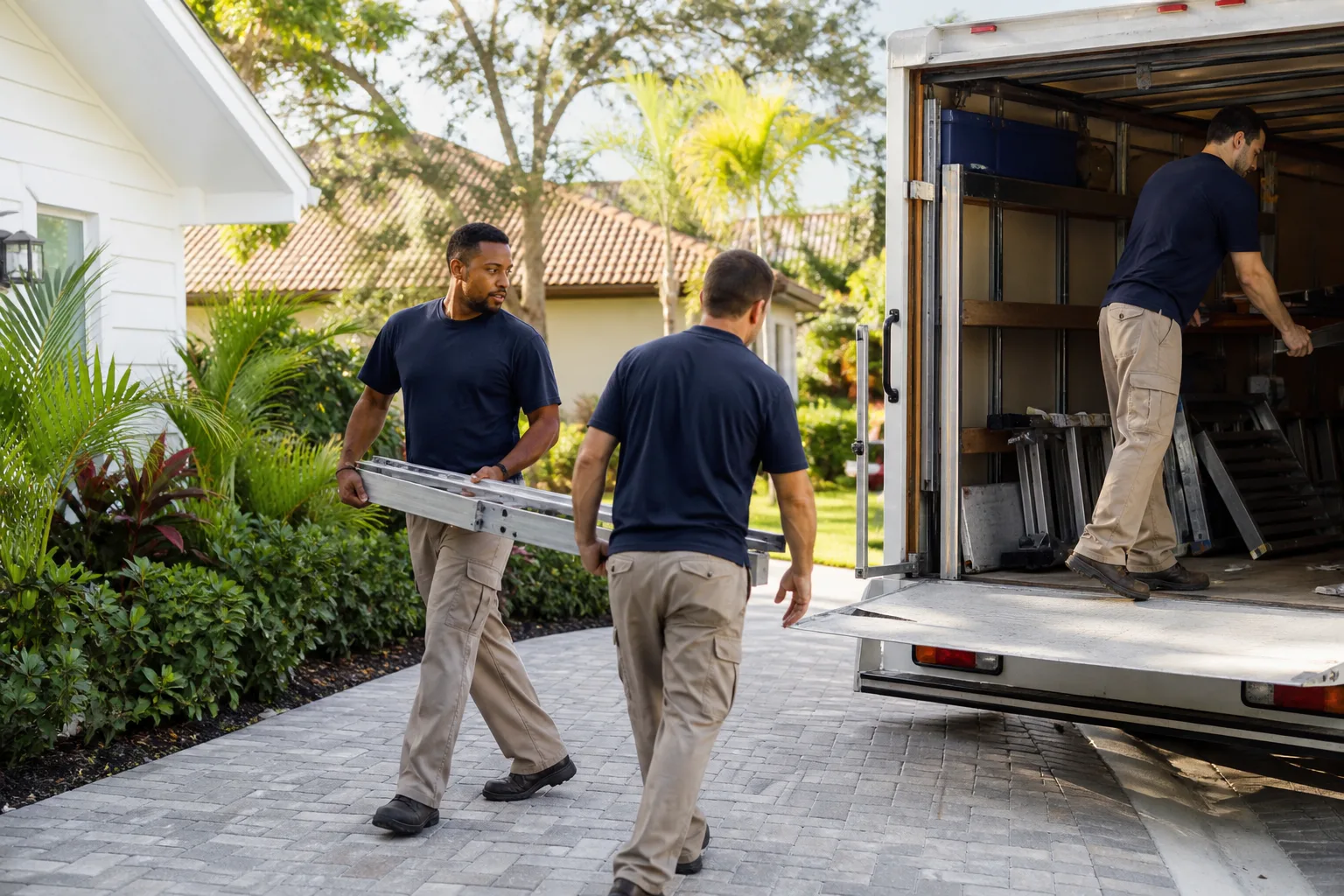
Installation is the shortest phase and the most disruptive day or two of the project. A two-person crew removes old units, sets new ones, flashes and seals the perimeter, and cleans up. For a 12-window home, plan on one full day for removal and setting, and a half day for trim, sealant, and cleanup.
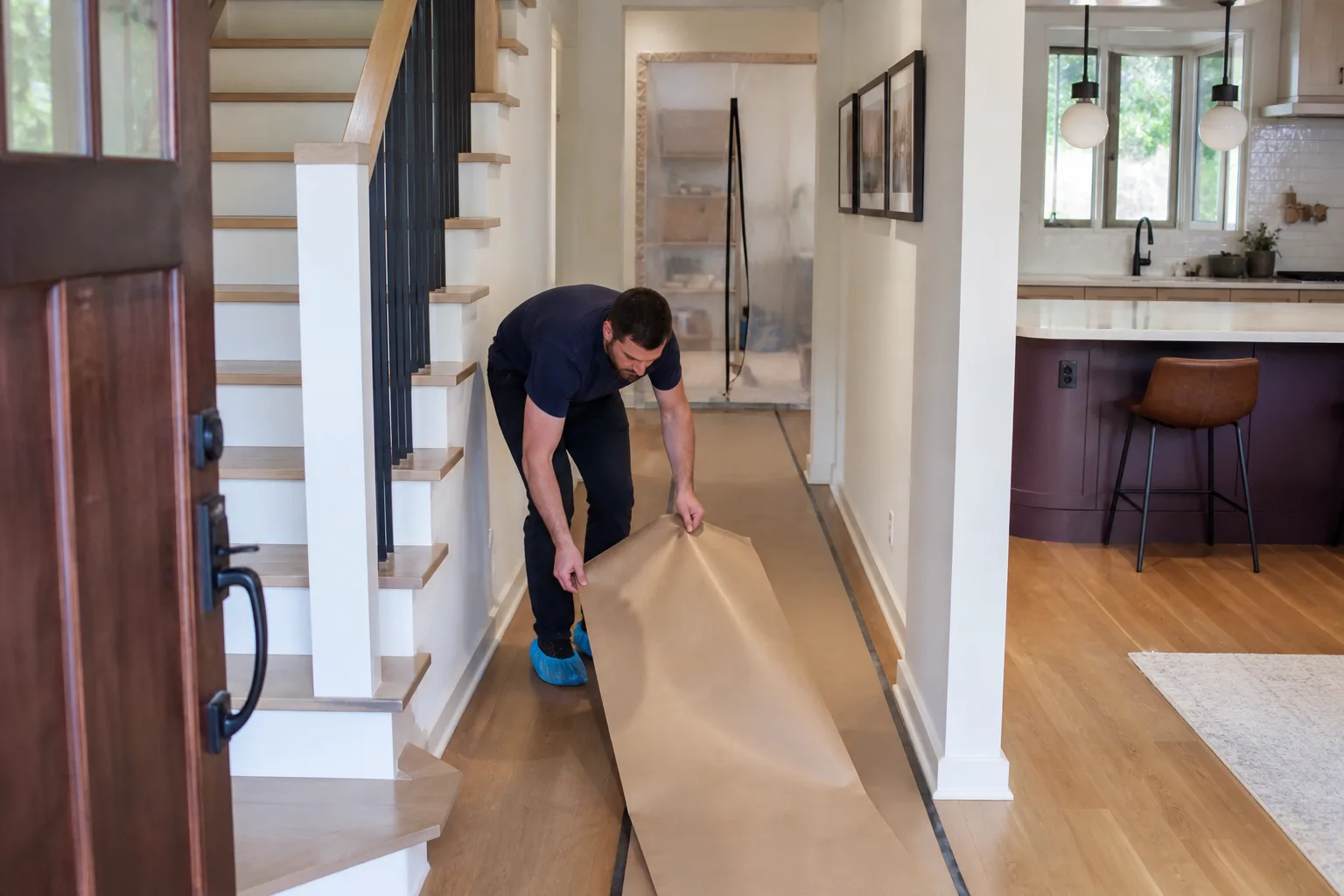
- Site protection (morning of day one). Furniture moved or covered, floors protected. Photography of existing conditions before work starts – a documented photo record of what was found is a standard deliverable, not an upgrade.
- Removal and setting. Old units come out, openings get inspected for rot or water damage, new units go in and get anchored per the manufacturer’s instructions.
- Flashing and sealing. The perimeter gets flashing tape and sealant. This is the step that determines whether the window leaks in a Miami Gardens summer downpour, so watch that it happens thoroughly.
- Trim, interior finish, cleanup. Interior trim goes back, drywall touch-ups are made, and the site is cleaned.
You don’t need to be home for the whole installation, but you do need to be reachable. Any surprise – rot under a sill, a mismatched opening – is a change, and under our practice no work proceeds on a change until the change order is signed. That’s the discipline that keeps the final invoice within a few percent of the written quote.
How a Multi-Window Project Gets Sequenced
Here’s a detail most timelines skip: on a whole-home window project, all windows are typically installed before any are inspected. The county inspection covers the entire permit as one scope, not per-window. That means the home sits with new units in place for a few days to a couple of weeks before the final inspection closes the permit.
The practical consequence: if you’re replacing windows on a home where you’re also doing interior work, sequence the window installation early enough that the interior crew isn’t waiting on the inspection. If you’re living in the home during the work, plan for the days between installation and inspection as normal living days – the windows work, they’re just not yet “closed out” on paper.
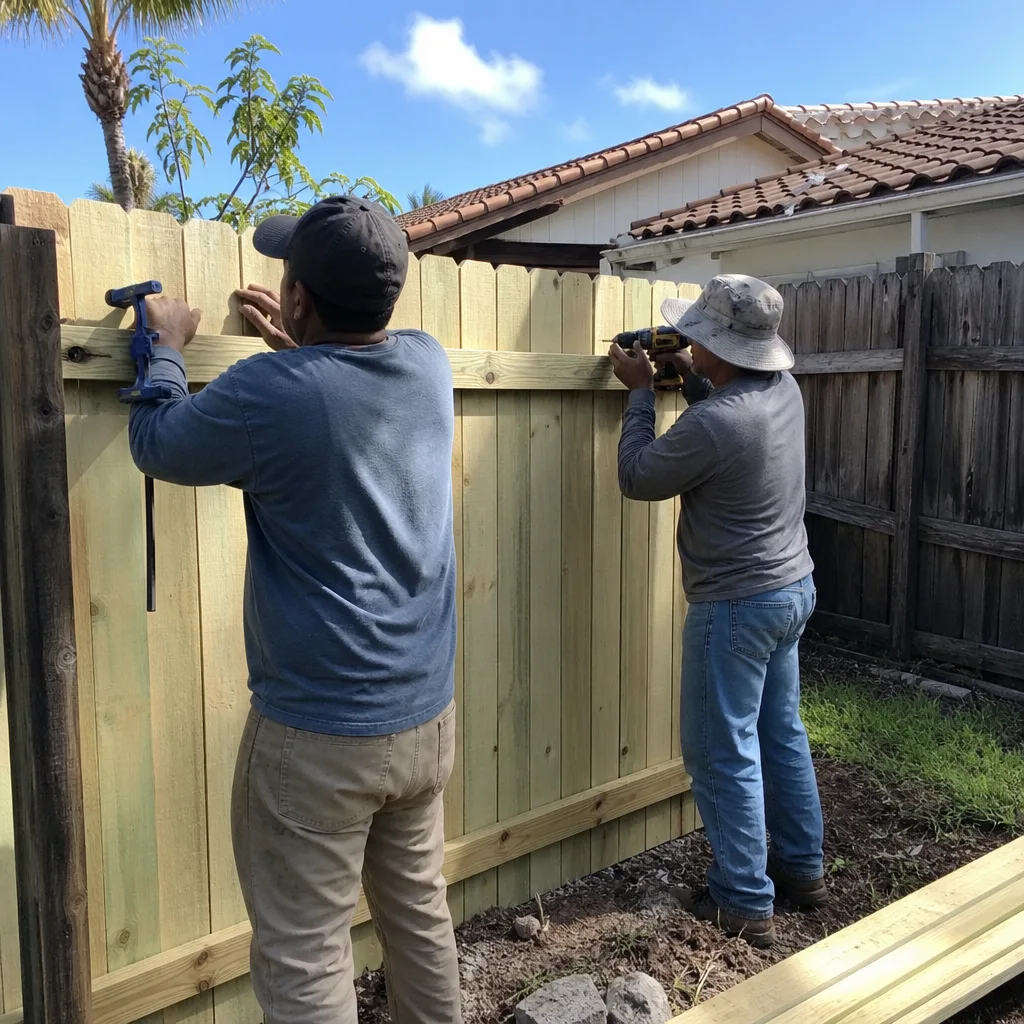
For homes in Miami Gardens also getting exterior updates, the sequencing gets more complex. Paver driveways, fences, and windows compete for the same driveway access. A Driveway & Pavers in Miami Gardens project needs the driveway clear for materials; a window crew needs it for a truck and staging. Stagger the starts so materials don’t sit on fresh pavers. Similarly, a Fence Installation in Miami Gardens project can be scheduled during the window manufacturing wait, so the two don’t collide at the end.
Written Schedule Questions to Ask Before Signing
Schedule promises are worth exactly what’s written down. These are the questions we recommend asking any contractor, in writing, before signing a window or door contract in Miami Gardens:
- “What is the manufacturing lead time for my specific product line and sizes, in writing?” A generic “4 – 6 weeks” answer that doesn’t name the product line is a guess.
- “What is the permit submission date, and who submits?” If the contractor submits after you sign, the 10 – 15 business day review clock starts then, not at signing.
- “Who schedules the final inspection, and what is the expected delay?” Confirm the contractor owns this step, or you’ll be the one chasing the county.
- “What is the product NOA number, and is it named on the permit?” A NOA not on the permit is a failed inspection waiting to happen.
- “If the product ships late, what happens to my schedule?” A contractor who has no answer to this has no schedule control.
- “Is the price fixed, and what triggers a change order?” Rot, hidden damage, or a scope change should be the only change triggers, and every change should need your signature.
These aren’t adversarial questions. A contractor with a real process answers them in one email. If a contractor can’t, that tells you about the schedule before the first window is ordered.
Doors Are a Different Schedule
Entry and patio doors deserve their own timeline note because homeowners often bundle them into a window project and then wonder why the whole job slipped. Doors run one to two weeks longer than windows in the same product family, and they carry additional permit requirements: a door in a wind-borne debris region needs its own NOA with the correct design pressure rating, and door hardware and finish options add lead time independent of the glass and frame.
In Miami Gardens, patio door replacements frequently involve a step-down or level threshold change, which can mean the threshold detail needs to be shown on the permit drawings. That’s still a permit item, not a surprise, as long as it’s identified at measurement. Bundle doors into the window order only after you’ve confirmed the door lead time independently – it’s the item most likely to move the final inspection date.
Common Mistakes to Avoid
- Accepting a three-week quote without a measurement visit. No one can quote a schedule for a Miami Gardens window job without rough opening dimensions. Three weeks is a sales number, not a plan.
- Ordering custom sizes before the permit is submitted. If the permit review changes a product spec, you’ve paid for units you may not be able to install.
- Skipping the NOA check. A product without a Miami-Dade NOA can’t pass inspection. Ask for the NOA number before signing, not after the units arrive.
- Scheduling other trades during the window wait. Interior work, painting, and flooring should follow the window installation, not overlap with it, or you’ll be repainting trim.
- Assuming installation and inspection are the same day. They aren’t. The inspection is a separate appointment, and scheduling it can take up to a week.
- Taking a verbal start date. A start date without a written manufacturing lead time behind it is a guess. Ask for both on paper.
- Ignoring storm-season lead times. A July order in Miami Gardens can sit longer in the queue than a November order, and that’s not the contractor’s fault – but it is something a written schedule should anticipate.
See the difference
 Before
 After
 Before
 After
 Before
 After
When to Call a Professional
Replacing a single window in a Miami Gardens home may seem like a weekend project, but impact-rated units require permit approval, proper flashing, and correct anchoring to pass inspection and hold against wind. The failure mode is a leaking window after the first summer storm, which usually means redoing the install. Call a professional for: any full-window replacement needing a permit, any exterior door with an NOA requirement, second-story or height work, or any situation where you’ve discovered rot, soft framing, or water damage behind the existing window. Rowan Construction Group Miami Gardens offers free estimates in Miami Gardens – call (844) 320-5198. The quote is a flat written price with a written scope and a written warranty, delivered before any work starts, and we review any competitor’s written estimate line by line at no charge.
Frequently Asked Questions
Expect 8 – 16 weeks from signing to final inspection. Installation is only 1 – 3 days of that; permit review (10 – 15 business days), manufacturing lead time (4 – 10 weeks), and inspection scheduling (1 – 5 days) account for the rest. Call (844) 320-5198 for a written schedule for your specific openings.
Yes. Miami-Dade County requires a permit for every replacement window and exterior door, and the product must carry a valid NOA. A contractor who says “you don’t need a permit for a like-for-like swap” is either misinformed or cutting a corner you’ll pay for later.
For a small job – three to five openings – installation can finish in one day. A 12-window home typically takes two days, and larger homes with second-story work or door replacements stretch to three. The single-day timeline applies to installation only, not the whole project.
Custom sizes add roughly four to six weeks to the manufacturing phase compared to stock. Most Miami Gardens homes built before 1990 have at least some non-standard openings, so budget for custom unless measurement confirms stock sizing. Call (844) 320-5198 for a measurement-based answer rather than a guess.
Start date changes usually trace to manufacturing lead times shifting after the order was placed, or a permit sitting in review longer than quoted. A written lead time from the manufacturer, provided at signing, is the best protection. If your contractor can’t show you one, ask why.
It shouldn’t, except for documented conditions: rot, hidden damage, or a scope change you approve. Our practice is a flat written price with a written scope, and no change proceeds until a change order is signed. Call (844) 320-5198 for a fixed-price quote before any work starts.
The Bottom Line
Window and door replacement in Miami Gardens takes longer than the three-week quotes you’ll hear at the kitchen table, and the gap is structural: Miami-Dade permit review, NOA compliance, and 6 – 10 week manufacturing lead times for custom impact products are built into every compliant job. The install itself is a day or three. Count 8 – 16 weeks total, plan for the longer end if your openings are non-standard, order in the off-season when you can, and put every schedule commitment in writing. A contractor who shows you the lead time and the permit path, not just the price, is the one whose calendar you can trust. Call (844) 320-5198 for a free estimate and a written schedule for your home.
Written by the team at Rowan Construction Group Miami Gardens.