Last updated November 18, 2026


Free written scope consultation - allowances, timeline, and change-order rules on paper before a single trade is scheduled
DIY vs Professional Construction: The Miami Gardens Homeowner’s Decision Guide
Florida Statute 489.103 lets a homeowner act as their own general contractor on a primary residence. The same statute requires licensed subcontractors for electrical, plumbing, mechanical, and roofing work. That means a Miami Gardens homeowner who wires their own addition has committed a first-degree misdemeanor even if every connection is perfect. The line between what you can legally do yourself and what you can’t isn’t drawn by skill. It’s drawn by statute, permit eligibility, and insurance exposure. This guide maps those boundaries first, then puts real Miami Gardens dollars against three common scopes so you can see where DIY pays and where it costs more after the rework.
Quick Answer
In Miami Gardens, you can legally self-perform cosmetic and finish work with no license: interior painting, tile setting, cabinet installation, landscaping, and small concrete flatwork. You cannot legally self-perform electrical, plumbing, mechanical, or roofing work regardless of your skill, and unpermitted work can void your homeowner’s coverage under the standard faulty-workmanship exclusion. The smart play for most Miami Gardens owners is a hybrid: you manage demolition and cleanup, licensed subs handle the trades, and you keep 15 – 25% of the all-contractor price.
Styles & brands we work with
- Kitchen remodeling
- Bathroom remodeling
- Home additions & ADU
- Roofing
- Windows & doors
- Driveway & pavers
- Fence
Table of Contents
- What the Florida Owner-Builder Exemption Actually Permits
- Which Scopes You Can Legally Self-Perform in Miami-Dade
- DIY vs. Pro: Three Real Cost Comparisons
- The Insurance Consequence of Unpermitted Work
- How to Structure a Legal, Insured Hybrid Project
- Permits, Inspections, and the Miami Gardens Process
- Common Mistakes to Avoid
- When to Call a Professional
What the Florida Owner-Builder Exemption Actually Permits
Florida Statute 489.103(7) is the provision that gets quoted at kitchen tables across Miami Gardens, usually without the fine print. It allows a property owner to build or improve a single-family residence on land they own and occupy as their primary residence, without holding a contractor’s license. Read plainly, it sounds like a green light for the whole project. It isn’t.
The same statute carves out the specialty trades. Electrical, plumbing, mechanical (HVAC), and roofing work must be performed by a licensee, full stop. Your exemption as an owner-builder doesn’t transfer to a trade that requires a license, and it doesn’t authorize you to hire an unlicensed person to do that trade on your behalf either. Hire an unlicensed electrician to wire your garage addition and you’ve both broken the law, and your “savings” evaporate the moment an inspector asks for the licensed contractor’s signature on the permit application.
There’s a second layer most owners don’t learn until they’re deep in the process. When you pull permits as an owner-builder, the Florida Department of Business and Professional Regulation requires a disclosure statement signed and notarized, acknowledging that you accept the risk of the work personally. It is not a formality. It’s a recorded declaration that you, not a contractor, are legally responsible for code compliance, worker safety, and any defect. If the roof leaks two years later, you cannot point at a contractor’s license or bond. You are the licensee in the eyes of the state.
We’ve seen this play out specifically on homeowner-pulled permits in the older housing stock around Norwood and Miami Gardens Drive, where a simple re-roof turns into a decking replacement because the inspector requires it mid-project. The owner-builder who pulled the permit now owns that cost and the timeline, with no contractor’s warranty standing behind it. That’s the trade the statute is making: flexibility in exchange for total liability.
Which Scopes You Can Legally Self-Perform in Miami-Dade
Strip away the marketing and the legal line in Miami-Dade County is actually clear. Some scopes are owner-performable with no license and no permit, some need a permit but no specialty license, and some are reserved for licensed trades. The table below sorts the work you’ll realistically consider in a Miami Gardens home.
Owner-performable, no license required
- Interior and exterior painting (single-family, owner-occupied)
- Ceramic and porcelain tile setting on floors and interior walls
- Cabinet installation and refacing
- Landscaping, sod, mulch, and planting
- Concrete flatwork under 400 sq ft (a patio slab, a small walkway) with no structural element
- Interior trim, baseboard, and door casing
- Drywall patching and repair
Permit required, no specialty license
- Fence installation (check height and setback rules before you dig)
- Driveway replacement and paver patios (impervious-surface rules apply)
- Concrete flatwork over 400 sq ft
- Non-structural interior demolition
Licensed trade required, no exceptions
- Any electrical work beyond swapping a fixture on an existing circuit
- Any plumbing work beyond replacing a faucet or a toilet on an existing connection
- HVAC installation, replacement, or refrigerant work
- Roofing, including tear-off, decking, underlayment, and flashing
- Structural modifications, additions, and any load-bearing change
The roofing line is the one that trips up the most confident DIYers in Miami Gardens. Even if you’ve shingled a shed, a permitted residential roof in Miami-Dade sits under the High-Velocity Hurricane Zone provisions of the Florida Building Code. The nailing pattern, the secondary water barrier, and the product approvals are all prescriptive, and the inspector will check them. That’s a licensed roofer’s scope by law, and it’s also where the wind-uplift math lives.
DIY vs. Pro: Three Real Cost Comparisons
Skill is only half the equation. The other half is whether DIY actually saves money once you account for material waste, tool rental, permit fees, and the chance of a rework. Here are three common Miami Gardens scopes with realistic 2026 labor and material rates. Prices are ranges, and they move with the season and the supplier.
1. Bathroom tile (a 5′ x 8′ tub surround, roughly 45 sq ft)
- DIY material cost: $550 – $900 for porcelain tile, thin-set, waterproofing membrane, grout, and trim, assuming no waste.
- Professional installed cost: $1,600 – $2,800, including membrane, setting, grout, and cleanup.
- The hidden DIY cost: a failed shower pan or a missing membrane in a Miami Gardens bathroom shows up as a soft spot in the subfloor and a water stain on the ceiling below within a year or two. Repairs run $900 – $1,800 once the floor comes up.
- Verdict: DIY saves $700 – $1,900 if the waterproofing is right. One failed pan erases the savings and adds a drywall repair.
2. Interior door replacement (six pre-hung doors)
- DIY material cost: $900 – $1,500 for pre-hung hollow-core or solid-core doors depending on grade.
- Professional installed cost: $2,100 – $3,600.
- The hidden DIY cost: pre-hung doors rarely fit an existing opening without shimming and casing adjustments, and in older Miami Gardens homes the walls are out of plumb by a quarter-inch more often than not. A pro can hang six doors in a day; a first-time homeowner can burn three weekends and buy a second set of slab doors after the first ones are cut short.
- Verdict: DIY saves real money here if you have a level, a shim kit, and patience. This is one of the best scopes to keep.
3. Drywall repair (two water-damaged ceiling sections, roughly 60 sq ft)
- DIY material cost: $120 – $250 for drywall, joint compound, tape, texture, and paint.
- Professional cost: $600 – $1,200, including matching the existing orange-peel or knock-down texture.
- The hidden DIY cost: texture matching is a skill, and a visible patch over a Miami Gardens living room reads loud. A pro who does it for a living gets it to disappear.
- Verdict: DIY saves $400 – $900 in money but costs you a visible seam in a high-visibility room. Worth doing yourself only if the ceiling is in a closet or a secondary bath.
The pattern holds across all three: DIY pays best on finish work that a homeowner can see and judge in one afternoon, and costs most on work behind a wall where a failure is expensive and hard to detect. Drywall repairs and door hangs are good DIY candidates. Waterproofing and anything that carries a permit are not.
The Insurance Consequence of Unpermitted Work
This is the part of the DIY-versus-pro decision that doesn’t show up on a Home Depot receipt. When you file a homeowner’s claim, the adjuster isn’t just looking at the damage. They’re looking at whether the damaged component was installed under permit, and whether the installer was licensed. Two policy provisions matter, and most Miami Gardens homeowners have never read either.
The faulty-workmanship exclusion. Standard HO-3 policies exclude loss caused by faulty workmanship, repair, or construction. If your shower fails because you skipped the waterproofing membrane, the adjuster classifies it as defective work by the insured. The water damage that follows is typically excluded as well, because it’s the result of the excluded cause.
The ordinance-or-law coverage gap. This is the one that catches homeowners on additions. If your coverage doesn’t include the “ordinance or law” endorsement at adequate limits, upgrading a non-compliant structure to code isn’t covered. Miami-Dade code enforcement can require the entire affected system to be brought up to current hurricane-zone standards, not just the damaged piece, and the gap between replacement cost and code-upgrade cost comes out of your pocket.
How carriers find out. They ask. The claims process routinely pulls the permit history for the affected scope from the county’s online system. No permit on the record means an unsupported improvement. Your carrier may accept it, deny the claim, or renew the policy with an exclusion attached to that component.
There’s a second consequence: the Florida owner-builder exemption specifically warns in the DBPR disclosure that selling the home within one year of the owner-builder permit can create personal liability for latent defects. A buyer’s inspector will spot unpermitted work; a title search and permit history will confirm it. That disclosure form you signed becomes evidence. We’ve sat with sellers in Miami Gardens who discovered this at the closing table, three weeks before a move, with no time to do anything but accept a price reduction.
How to Structure a Legal, Insured Hybrid Project
Most of the value in this guide lives in the hybrid model, and it’s the arrangement we recommend most often when a Miami Gardens homeowner asks whether to hire a general contractor or run the project themselves. The hybrid keeps the legal boundary intact, keeps the insurance policy intact, and reduces the total cost by 15 – 25% versus a fully managed project. Here’s the structure.
- Pull the permits correctly. If you’re not the primary-residence owner-builder, the licensed contractor pulls them. If you are running the project as owner-builder, you sign the DBPR disclosure and accept the liability in writing – that’s the trade.
- Owner-performable scope stays with you. Demolition, hauling, cleanup, painting, cabinet installation, landscaping, and the finish work you can judge in an afternoon. Budget these hours honestly; a bathroom demo is one long weekend, not one afternoon.
- Licensed specialty trades stay with licensed pros. Electrical, plumbing, HVAC, and roofing. No exceptions, no unlicensed friend-of-a-friend, no cash deal that undercuts the permit.
- Document everything. Photograph every wall you open, every wire you expose, and every drain you move before it’s closed up. When a question comes up at sale or claim time, the photo record answers it faster than any invoice.
- Sequence the trades before they’re on site. Electrician, then plumber, then the inspector for rough-in, then drywall, then paint, then tile. Out-of-sequence trades cost more in remobilization than the labor rate difference.
- Get the written price up front on each trade. A licensed sub who won’t put a number on paper before starting is a sub who will invent a number later.
That last point is where the hybrid model earns its keep. Our standing discipline is a flat written price and a written scope on every trade before any work begins, with a signed change order required before any change proceeds – that’s the discipline that has kept our projects within a few percent of the agreed cost across 4,000-plus jobs. When we review a homeowner’s competing estimate as part of our Free Second Opinion, the first thing we look for is whether the scope is written down at all.
The other thing to know about the hybrid is that “cost reduction” isn’t the same as “cheapest path.” The hybrid works because you’re not paying a general contractor’s markup on the labor you’re doing yourself, and because you’re not paying to redo the electrical work after an inspection fails. Both of those are real dollar savings, and neither requires you to fake a license you don’t have.
Permits, Inspections, and the Miami Gardens Process
Permit requirements in Miami Gardens run through the city’s Building Department, and the inspection sequence is the part homeowners underestimate. The Department of Buildings in Florida estimates that roughly a third of all construction projects in the state involve unpermitted work. Carriers, inspectors, and buyers all get to that number eventually.
The sequence for a typical permitted scope runs like this: permit application, plan review, permit issued, rough-in inspection, rough-in sign-off, cover inspection (drywall, insulation, framing), final inspection, certificate of occupancy or final approval. Every step has a scheduling window, and the trades have to line up behind them. A homeowner running a hybrid who doesn’t know the sequence will lose a week or two per misstep. A homeowner who knows it will lose nothing.
Two local factors matter in Miami Gardens specifically. First, anything touching the building envelope – a new window or door, a roof, an addition – has to comply with the High-Velocity Hurricane Zone provisions of the Florida Building Code, which include product approval numbers on the plans and specific installation methods the inspector will check. Second, impervious surface: pavers, driveways, and added concrete count toward your lot’s impervious-area ratio, and the city may require a stormwater calculation on larger additions. If you’re installing a driveway on a corner lot, check that cap before you order Driveway & Pavers in Miami Gardens materials – the permitting step happens first.
A permitted job costs 3 – 8% more on the front end (permit fees, plan review, the extra inspection visit) and saves far more at resale. A missing permit on the record is one of the first things a buyer’s inspector surfaces, and it stalls the closing or knocks down the price. Pull the permit. Every time.
Common Mistakes to Avoid
- Treating the owner-builder exemption as a general contractor’s license. It isn’t. It exempts you from the license requirement to build your own primary residence; it does not let you hire unlicensed subs for the trades that require a license, and it does not shift the liability off your shoulders.
- Skipping permits on “cosmetic” work that touches a system. Moving a vanity outlet, swapping a water heater, or adding a mini-split is not cosmetic in the code’s eyes. These all require a licensed trade and a permit in Miami-Dade.
- Hiring a “handyman” for electrical or plumbing. The rate is tempting and the permit is absent. When the shower fails or the panel overheats, the insurance claim goes sideways, and the handyman has no license for the state to suspend.
- Assuming the hourly rate is the project cost. The Miami Gardens bathroom tile job that takes a pro two days takes a first-timer six, plus three tile-cutting trips, a tool rental, and a material waste factor. Run the number in hours, not just in dollars.
- Forgetting the HOA or neighborhood restrictions. Many Miami Gardens communities restrict fence height, color, and setbacks on top of the city code. A fence that fails the HOA review comes down at your expense – check both layers before you install a fence.
- Not documenting what’s behind the wall before you close it. Photos of the exposed plumbing and electrical are the difference between a quick answer at claim time and a contested one.
- Selling within a year of an owner-builder permit without reading the DBPR disclosure you signed. The personal-liability warning on that form is not decorative.
When to Call a Professional
Call a professional for anything on the licensed-trade list – electrical, plumbing, mechanical, and roofing – no matter how confident you are. Call for any scope that touches the building envelope, because the hurricane-zone code requirements are prescriptive and the insurer will ask. Call for any structural change, any addition, or any ADU, because the plan review, the impervious-surface calculation, and the inspection sequence are not a learning project. And call when the calendar matters more than the savings, because a pro who does the work every week will finish a Miami Gardens bathroom in the time you spend finding the right trowel. If you’re weighing an addition or an ADU against a remodel, Home Additions & ADU in Miami Gardens walks through the permit path in more detail. Rowan Construction Group Miami Gardens offers free estimates in Miami Gardens – call (844) 320-5198 to schedule one, and bring any written quote you already have for a free line-by-line second opinion.
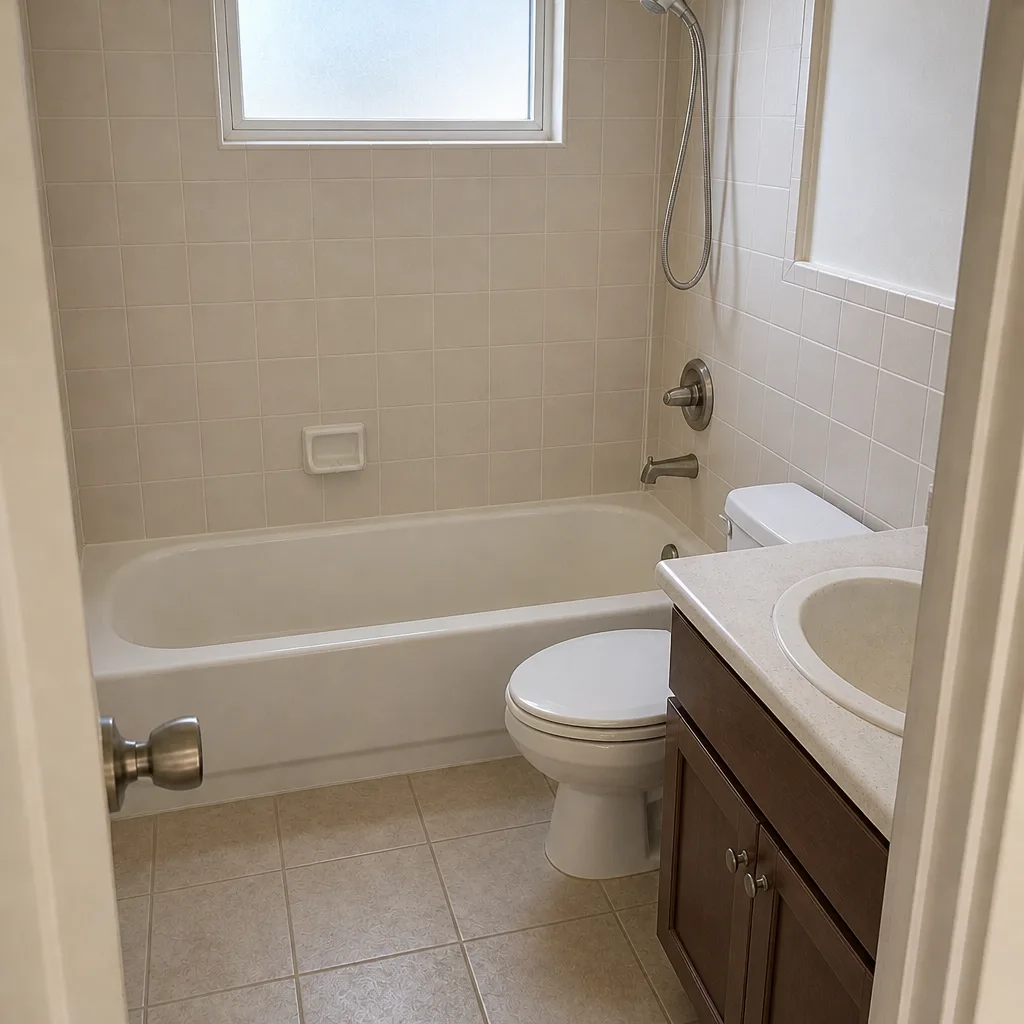
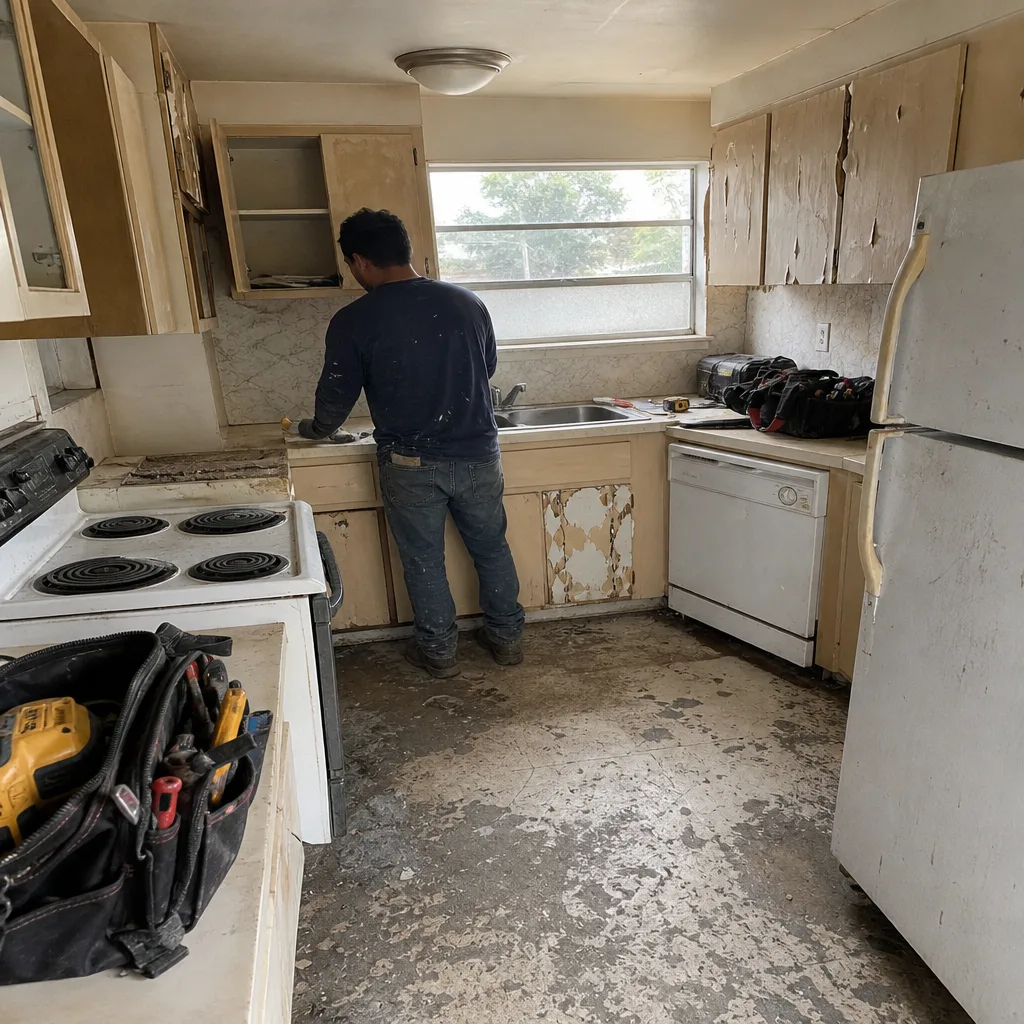
See the difference
 Before
 After
 Before
 After
 Before
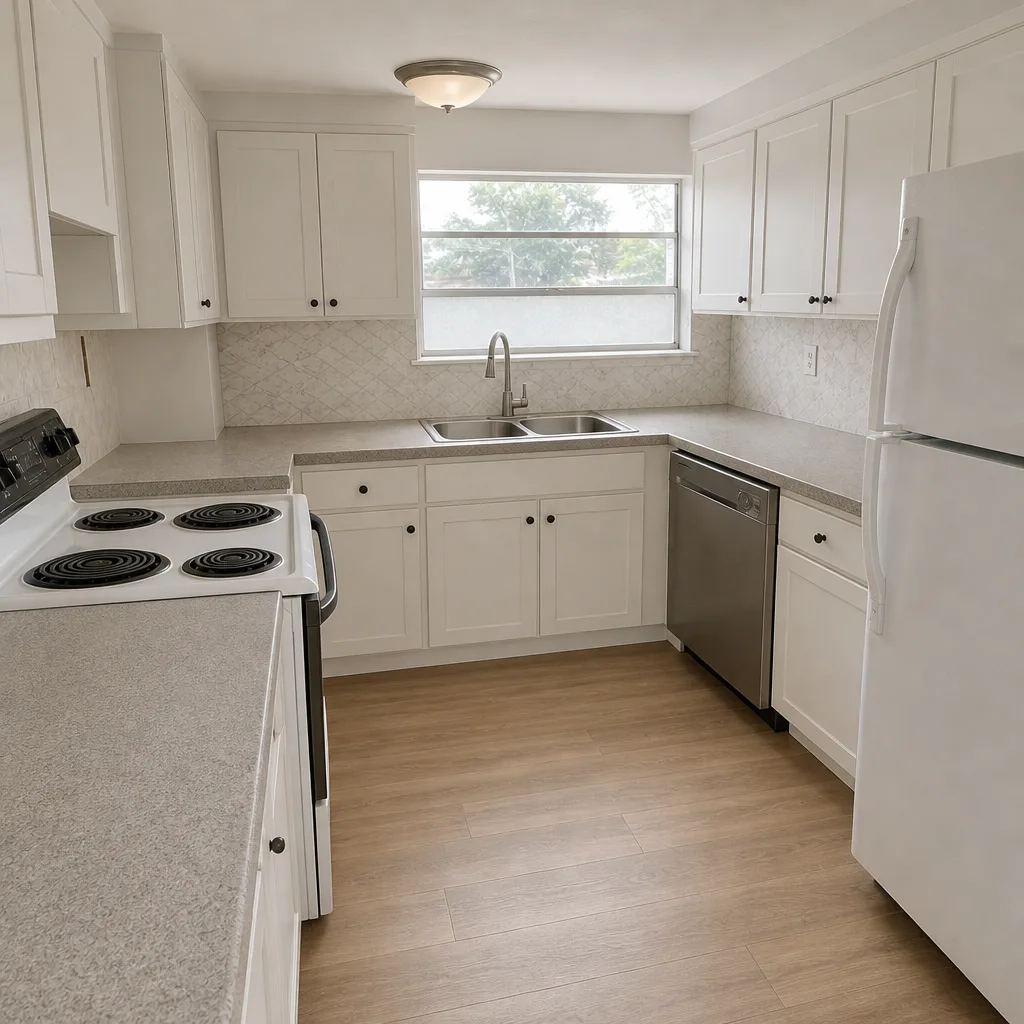 After
Frequently Asked Questions

Yes, if the property is your primary residence and you own it, Florida Statute 489.103(7) allows you to pull owner-builder permits and manage the project yourself. The exemption does not cover electrical, plumbing, mechanical, or roofing work, which must be performed by a licensed trade, and you’ll sign a notarized DBPR disclosure accepting the liability. Call (844) 320-5198 if you’d like a free review of a project scope before you pull the permit.
It’s a notarized statement that you, as the owner-builder, accept legal responsibility for code compliance, worker safety, and any construction defect on the permitted scope. It’s filed with the permit and it can be pulled by an insurer or a buyer later. If you’re not prepared to carry that liability personally, hire a licensed contractor rather than sign it.
The claim can be denied under the faulty-workmanship exclusion, and code-upgrade coverage can fall short under the ordinance-or-law gap. Carriers pull the permit history during the claims process, and unpermitted improvements are typically excluded from coverage on renewal. The dollar exposure is the full cost of the repair plus the code-upgrade difference.
Yes. Tile setting on floors and interior walls is an owner-performable scope with no license requirement on a primary residence, provided no structural change is involved. The risk is not legal, it’s the waterproofing behind a shower – a failed membrane causes water damage the insurer may exclude as faulty workmanship. Call (844) 320-5198 for a free estimate if you’d rather not carry that risk.
Use the hybrid model: keep demolition, cleanup, hauling, painting, cabinet installation, and landscaping in your own hands, and hire licensed subs for the trade work and the permits. That structure typically saves 15 – 25% compared to a fully managed project because you’re not paying a general contractor’s markup on your own labor. Our Free Second Opinion reviews any competing estimate line by line at no charge – call (844) 320-5198.
Usually yes for both, and both are subject to local rules beyond the permit itself – fence height and setback, and impervious-surface limits for driveways and pavers. Confirm the rules before you order materials. Fence Installation in Miami Gardens covers the height and setback requirements in more detail. Call (844) 320-5198 for a free estimate on either scope.
The Bottom Line
The DIY-versus-hire question in Miami Gardens isn’t really a skill question. Electrical, plumbing, mechanical, and roofing work is off-limits to self-performance by Florida statute, full stop, and unpermitted work behind a wall is an insurance claim waiting to be denied under the faulty-workmanship exclusion. Where DIY genuinely pays is on finish work you can see and judge in an afternoon: door hangs, cabinet installation, painting, tile setting on a floor. Everything else is worth the licensed trade – and the hybrid model, with you running demo and cleanup and licensed subs handling the trades, is the path that stays legal, stays insured, and cuts 15 – 25% off the managed-project cost. If the scope touches a system, call.
Rowan Construction Group Miami Gardens works the seven residential trades under a written price before any work begins, backed by the 365-Day Done Right Promise and a documented photo record on every visit. Our technicians have up to 19 years of experience. We answer calls with a live person around the clock, and we’ll review any written estimate you already have at no charge as a Free Second Opinion. For a free, no-pressure estimate on a Miami Gardens project, call (844) 320-5198 or start at the Rowan Construction Group Miami Gardens home page.
Written by the team at Rowan Construction Group Miami Gardens.