Last updated November 18, 2026

Free written scope consultation - allowances, timeline, and change-order rules on paper before a single trade is scheduled
DIY vs Professional Home Additions & ADU: What’s Safe to Do Yourself
Florida’s owner-builder exemption lets a homeowner pull their own permit for an addition or ADU. That same exemption makes the homeowner personally liable for code compliance and restricts resale within one year of completion. It’s a trade most people don’t see coming until the closing table. In Miami Gardens, where single-story block homes on generous lots invite additions and back-lot ADUs, the DIY-or-hire question is less about skill with a nail gun and more about who signs the permit, who carries the liability, and who the lender will accept. This guide walks through Florida Statute 489.103, the tasks that are genuinely safe to do yourself, the ones that create financial exposure, and the paperwork that protects you when you hire licensed trades as your own general contractor.
Quick Answer
In Florida, the safe DIY zone on an addition or ADU is narrow: interior non-load-bearing partitions, finish carpentry, painting, cabinet installation, and tile work after the rough-in inspection is signed. Foundation, structural framing, roof-to-structure connections, electrical panel work, and plumbing rough-in belong to licensed professionals, and crossing that line can void insurance, block a resale, and pull a lender’s construction loan off the table. The decision isn’t about whether you can swing a hammer; it’s about whether the legal and financial structure around the project supports you doing it.
Styles & brands we work with
- Kitchen remodeling
- Bathroom remodeling
- Home additions & ADU
- Roofing
- Windows & doors
- Driveway & pavers
- Fence
Table of Contents
- What Florida’s Owner-Builder Exemption Actually Permits
- Tasks Where DIY Is Safe and Legal in Florida
- Tasks Where DIY Creates Legal and Financial Exposure
- How Lenders View Owner-Builder Permits
- What a Signed Subcontractor Agreement Should Contain
- Miami Gardens Context: Climate, Code, and Market
- Common Mistakes to Avoid
- When to Call a Professional
What Florida’s Owner-Builder Exemption Actually Permits
Florida Statute 489.103 is the section of state law that carves out a narrow exception for homeowners who want to act as their own contractor. It allows a person to build, improve, or repair a structure on property they own and occupy as their primary residence, provided they do the work themselves or hire licensed trades to perform the portions of the job that require a license. The permit is pulled in the owner’s name, and the owner accepts the role of contractor of record for code compliance, scheduling inspections, and closing out the permit.
What the exemption does not do is let you perform licensed trade work with your own hands. Electrical, plumbing, and mechanical work (HVAC) still require a state-licensed subcontractor in nearly every case. In Miami-Dade, only a handful of minor exceptions exist (like swapping a like-for-like light fixture), and those exceptions tend to be far narrower than a homeowner assumes. If the work involves opening a wall, running new wire, moving a drain line, or adding a circuit for a mini-split, a licensed electrician, plumber, or mechanical contractor signs the permit and does the work.
The part most homeowners miss is the resale restriction. Under the statute, if you build an addition or ADU as an owner-builder, you cannot sell or transfer the property within one year of the completion date unless you disclose the owner-builder status in the contract and the buyer acknowledges it in writing. The exemption is intended for people who plan to live in the home, not flip it. If you’re building a Miami Gardens ADU to rent for two years and then list, the owner-builder path narrows the buyer pool because some lenders and some title insurers ask questions about owner-built structures.
Our own crews work under The Haven Standard, which is a set of written commitments we put on every project: a flat written price before work begins, a signed change order for any scope change, a documented photo record on every visit, and the 365-Day Done Right Promise. It’s a useful contrast point. When you go owner-builder, none of that structure comes with the deal unless you build it yourself.
Tasks Where DIY Is Safe and Legal in Florida
The safe DIY zone for an addition or ADU is narrower than most homeowners hope, but it’s real. These are the tasks a careful, weekend-capable homeowner can realistically take on without violating Florida law or creating personal exposure, as long as the permits are pulled and the inspections pass in order.
- Interior non-load-bearing partition walls. Framing a closet, a hallway, or a bathroom alcove with 2×4 studs on 16-inch centers, without touching any structural load path, is standard finish work. The key word is non-load-bearing: if the wall carries any roof or floor load above it, a licensed engineer’s stamp or a licensed contractor’s framing sign-off is required.
- Finish carpentry. Baseboard, casing, crown molding, door trim, closet shelving, and stair rails after the rough-in inspection is complete. No permit implications once structure and MEP (mechanical, electrical, plumbing) are signed off.
- Painting. Interior and exterior paint, primer, caulk, and prep. No license needed, no permit needed, and no code inspection implication. In Miami Gardens, moisture-resistant paint on the south and east walls is a real upgrade – our humid season punishes anything less.
- Cabinet installation. Hanging KraftMaid or Wellborn cabinets in a kitchen or a bath is finish carpentry. What’s not DIY is the electrical for under-cabinet lighting or the plumbing rough-in for a relocated sink, both of which require licensed trades.
- Tile work after rough-in. Floor tile, shower wall tile, and backsplash work can start once the plumbing rough-in and the membrane inspection are signed off. Membrane (the waterproofing layer under the tile) is where most DIY tile jobs fail – a 2-inch Schluter band at the seams, properly lapped, is the difference between a shower that lasts 20 years and one that leaks into the adjacent room in three. If you’re not confident in the membrane, hire the shower pan and do the walls yourself.
- Landscaping and hardscape finishing. Sod, mulch, planters, and the finishing on a paver walk or patio edge, provided the base and drainage were professionally installed. For a full driveway or patio, our team handles Driveway & Pavers in Miami Gardens for exactly the reason that base prep in South Florida’s sandy soil is the part that fails first; the pavers themselves are fine to finish.
Each of these is legal, insurable, and unlikely to void a permit as long as the general inspection sequence is respected. What makes them safe isn’t that they’re easy – it’s that they don’t touch structure, they don’t touch licensed trades, and they don’t affect the certificate of occupancy.
Tasks Where DIY Creates Legal and Financial Exposure
These are the tasks where going owner-builder and doing the work yourself (rather than subcontracting to a licensed trade) creates exposure that can outlast the project. The problem isn’t that the work can’t be learned. It’s that the work is inspected at a stage where mistakes are hidden until they’re expensive, and the legal consequences sit with you, the owner-builder, personally.
- Foundation work. Slab-on-grade or stem-wall foundations in Miami-Dade are engineered and inspected on soil bearing capacity, anchor bolt placement, and the moisture barrier under the slab. A failed inspection at this stage is a re-pour. An un-permitted pour is a demolition order. In Miami Gardens, where many lots have high water tables near the canal corridors, the drainage detail on a slab is not a do-over project.
- Any structural framing. Load-bearing walls, beams, headers, trusses, and the framing covered by the wind-load requirements of the Florida Building Code. This means licensed contractors and, in many Miami-Dade cases, engineered drawings signed and sealed. Getting a header span wrong by a foot or a beam attachment detail wrong by an inch is the sort of thing that surfaces in a storm.
- Roof-to-structure connections. Hurricane straps, clips, and the roof deck attachment schedule that the Florida Building Code requires for wind uplift. This isn’t visible after the drywall goes up, and it’s an insurance underwriting item. If it’s wrong and a storm opens the roof, the claim adjuster’s first question is who installed the attachment. Our Rowan Construction Group Miami Gardens home page lays out our roofing and structure discipline, which is essentially a written record of every attachment point.
- Electrical panel work. This is the classic hard line. Even under the owner-builder exemption, a panel change, a new service, a sub-panel, or any new circuit for an ADU requires a licensed electrician. The liability is fire and the insurer knows it. This is also the task most likely to be flagged at resale because a permit search shows a panel swap without a matching electrical inspection.
- Plumbing rough-in. Moving a drain, adding a fixture, running supply lines, and installing a water heater. Miami-Dade inspectors check the slope, the venting, and the pressure test. A failed rough-in means opening the slab or the wall, which is the entire reason this work belongs to a licensed plumber who carries the liability.
- Gas line work. Any change to the gas line, including running gas to an outdoor kitchen or a new range in an ADU, requires a licensed plumbing or mechanical contractor. This one has genuine safety consequence, and nothing in the owner-builder exemption lets you touch it.
The pattern to note: it’s not the difficulty of the task that determines the risk. It’s whether the work is inspected at a stage where mistakes are hidden, and whether the work triggers a licensee requirement in Florida law. Structural framing and rough-in fail both tests.
How Lenders View Owner-Builder Permits
If you’re financing the addition or ADU rather than paying cash, the owner-builder route narrows quickly. Most construction-to-permanent lenders and renovation loan programs (including the FHA 203(k), Fannie Mae HomeStyle, and VA renovation loans) are written around a licensed general contractor who signs the draw schedule and the completion certificate. The lender wants a single party to chase if the project stalls. An owner-builder is a single party, but not the one the underwriter wants.
The documentation each scenario requires is different, and it’s worth stating plainly:
- Licensed contractor scenario. The lender requires the contractor’s state license number, a certificate of insurance for general liability and workers’ comp, a signed contract with a fixed scope and price, and a draw schedule tied to inspection milestones. Rowan Construction Group’s written price discipline – a flat number before work starts, a signed change order for any change – exists partly because lenders require exactly that paperwork when they release a draw.
- Owner-builder scenario. The lender typically requires the owner’s signed affidavit of owner-builder status under Florida Statute 489.103, proof the property is the owner’s primary residence, and a scope of work with the licensed subs named for every licensed portion. Some lenders decline the file outright. Others allow it with stricter draw controls and a larger contingency escrow, often 10 to 15 percent above the construction budget. That contingency is money you park for the duration of the project.
- Cash scenario. The lender question disappears, but the insurance and resale questions remain. A homeowner’s policy (or a builder’s risk policy) needs to know who’s building, and most carriers have a specific endorsement for owner-builder projects. Skipping that step can leave the addition uninsured during construction.
In our experience working Miami Gardens additions alongside lenders, the owner-builder file tends to slow down at the draw schedule, not at the permit. That’s the friction point to plan for if you’re considering it.
What a Signed Subcontractor Agreement Should Contain
If you do go owner-builder, you become the general contractor in the eyes of the law and the eyes of the lien. That means the paperwork you hold with each licensed trade matters as much as the work itself. A signed subcontractor agreement should contain, at minimum, the following:
- Scope in writing, room by room. Not “electrical rough-in” but “install 14 recessed lights, one sub-panel, and the dedicated circuit for the mini-split in the ADU bedroom, per the attached drawings.” Vague scope is how change orders become arguments.
- The subcontractor’s state license number. Verified against the Florida DBPR license lookup before you sign. If the number doesn’t come back to the entity on the contract, stop.
- Certificate of insurance. General liability and workers’ comp, with you named as certificate holder. On an owner-builder job, an uninsured injury on your property is your exposure as the contractor of record.
- A fixed price with a payment schedule tied to milestones. The same discipline a licensed general contractor brings: no draw without an inspection. Never pay more than the value of the work already in place.
- Lien waiver language. A conditional waiver with each payment (releasing lien rights only when the check clears) and an unconditional final waiver at completion. Florida’s mechanics’ lien law gives subcontractors and suppliers the right to file a lien against your property if they aren’t paid. The waivers are your record that they were.
- A completion date with a clear consequence for delay. Liquidated damages of a fixed daily amount, or a defined holdback, so the schedule has a cost to slipping.
If you’re building a prefab ADU through a manufacturer like Abodu, Cover, Dvele, or Mighty Buildings, the paperwork conversation is different but the principle is the same: read the manufacturer’s installation scope against the site-built scope, and know who carries the warranty on which piece. Some prefab ADU contracts specify the manufacturer’s contractor; others expect a local general contractor to handle the site work, foundation, and MEP connections. Miami Gardens lots have specific setback and drainage conditions that the site work has to answer regardless of who built the module.
Miami Gardens Context: Climate, Code, and Market
Additions and ADUs in Miami Gardens live at the intersection of two pressures: the Florida Building Code’s High-Velocity Hurricane Zone requirements (Miami-Dade is the strictest wind zone in the state) and the local homeowner market, which has quietly become one of the more interesting ADU plays in South Florida because lot sizes and rear-yard depth typically allow a 600 to 900 square foot accessory structure without a variance.
Climate specifics matter more here than in most markets. A Miami Gardens addition framed in the summer has to manage moisture through the entire drywall phase; the interior of a framed structure during wet season runs high humidity, and drywall installed before the building envelope is sealed will absorb it. We schedule envelope-first, drywall-second on every addition for exactly this reason. Roofing tie-downs are also non-negotiable: the wind-uplift schedule for a Miami-Dade roof is not the same as Broward or Palm Beach, and every attachment detail is inspected. If you’re choosing between prefab and site-built, ask the prefab manufacturer which wind zone their module was engineered for. “Category 5 rated” in a brochure and “engineered to Miami-Dade NOA standards” on a drawing are not automatically the same claim.
Fence and privacy work around a new addition or ADU is its own scope. Our Fence Installation in Miami Gardens team handles the post-hole depth and concrete collar detail that keeps a Miami Gardens fence standing through a summer squall, and we see the same detail matter on ADU enclosures because a privacy fence around a rental unit often becomes part of the property boundary the tenant treats as theirs.
If your addition includes a full ADU, our Home Additions & ADU in Miami Gardens page walks through the site work and permit sequencing at the scale these projects actually run.
Common Mistakes to Avoid
- Assuming “owner-builder” means “no permit.” It means the permit is in your name, not that the permit goes away. Unpermitted additions in Miami Gardens surface at resale, at insurance renewal, and at the property appraiser’s next cycle – and the correction cost usually exceeds what the permit would have cost in the first place.
- Doing the electrical for cost. The savings look real until the insurance adjuster asks who pulled the electrical permit after a fire. A licensed electrician is not a line item to shave on an addition, and this is one of the places where the Florida statute is unambiguous.
- Missing the one-year resale restriction. Under the owner-builder exemption, you can’t sell within one year without specific disclosure. If you’re building a Miami Gardens ADU to rent and then list in 18 months, plan the paperwork with the resale in mind from day one.
- Skipping the lender conversation. Before you apply for a construction-to-permanent loan, ask the loan officer whether they underwrite owner-builder files at all. Some do, most don’t, and finding out after you’ve paid for drawings is an expensive way to learn the answer.
- Hiring a subcontractor without proof of insurance. An uninsured worker injured on your property is a claim against your homeowner’s policy and, because you’re the contractor of record, against you personally. Get the certificate before the first day on the job, not after.
- Building in the wet season without envelope discipline. Framing in June and drywalling in July in Miami Gardens almost always goes wrong. Either plan the schedule around the seasons or insist on temporary sealing and dehumidification from the first day of framing.
- Treating prefab ADUs as turnkey. With Abodu, Cover, Dvele, or Mighty Buildings, the module is one contract and the site work is another. Buyers routinely underestimate the foundation, utility trenching, and inspection sequencing the site contractor carries. Line-item both sides before you sign.
When to Call a Professional
Call a licensed general contractor in these situations: anything touching structural framing, foundation, or roof-to-structure connections; any electrical, plumbing, or mechanical scope beyond a like-for-like fixture swap; any addition or ADU that will be financed; and any project you intend to sell within a year of completion. Those are the specific tripwires in Florida law and lender underwriting. If you’re planning an addition or ADU in Miami Gardens and want to know what a licensed contractor’s written number looks like before you commit to the owner-builder route, Rowan Construction Group Miami Gardens offers free estimates in Miami Gardens – call (844) 320-5198. Every price is written before work starts, every change order is signed, and every visit comes with a documented photo record. Bring a competing quote and we’ll review it line by line as a free second opinion.
See the difference
 Before
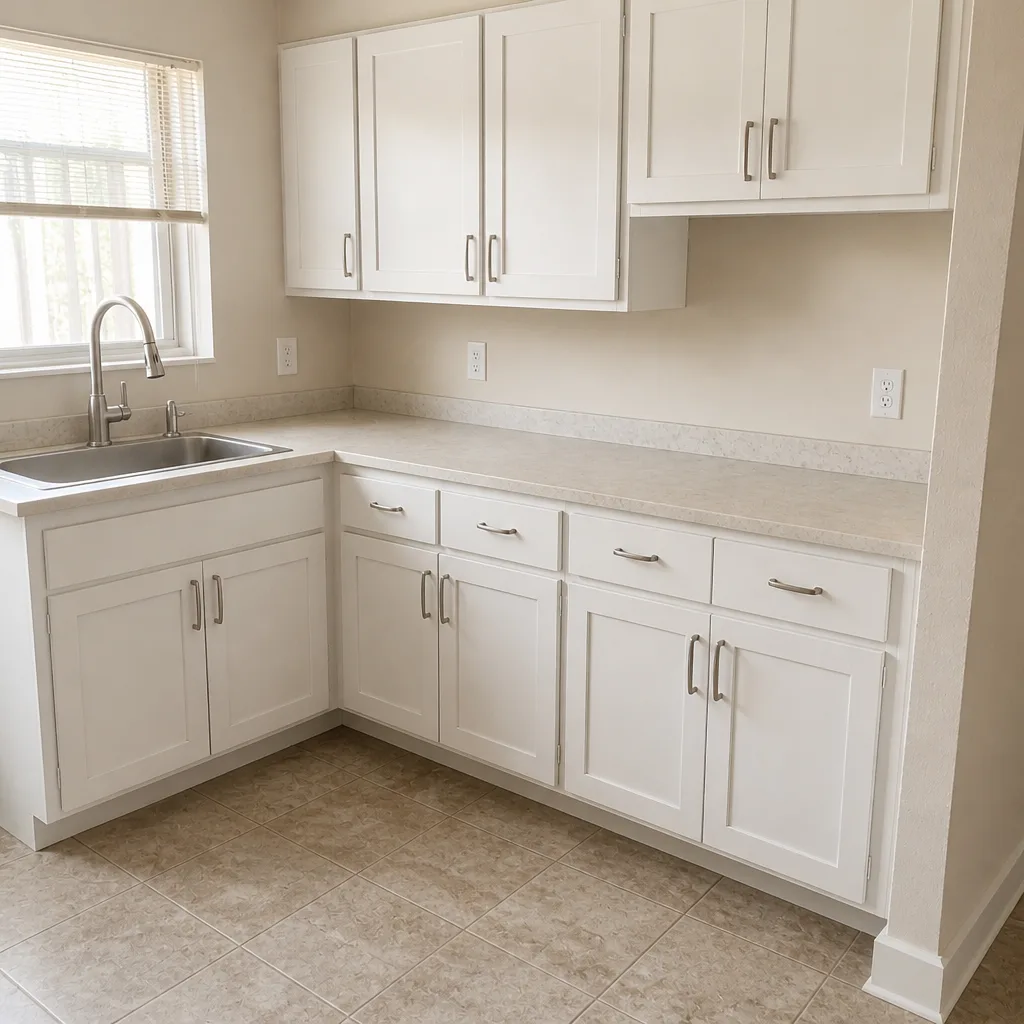 After
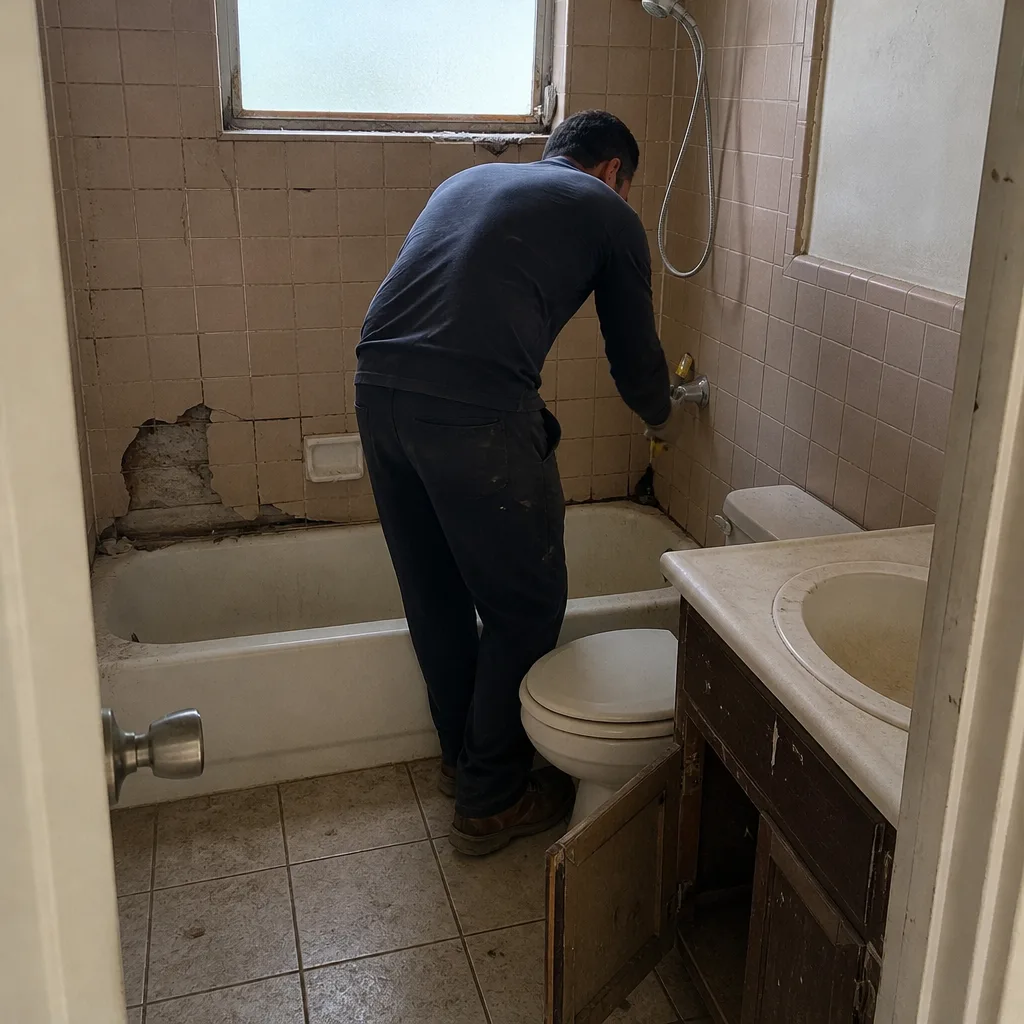 Before
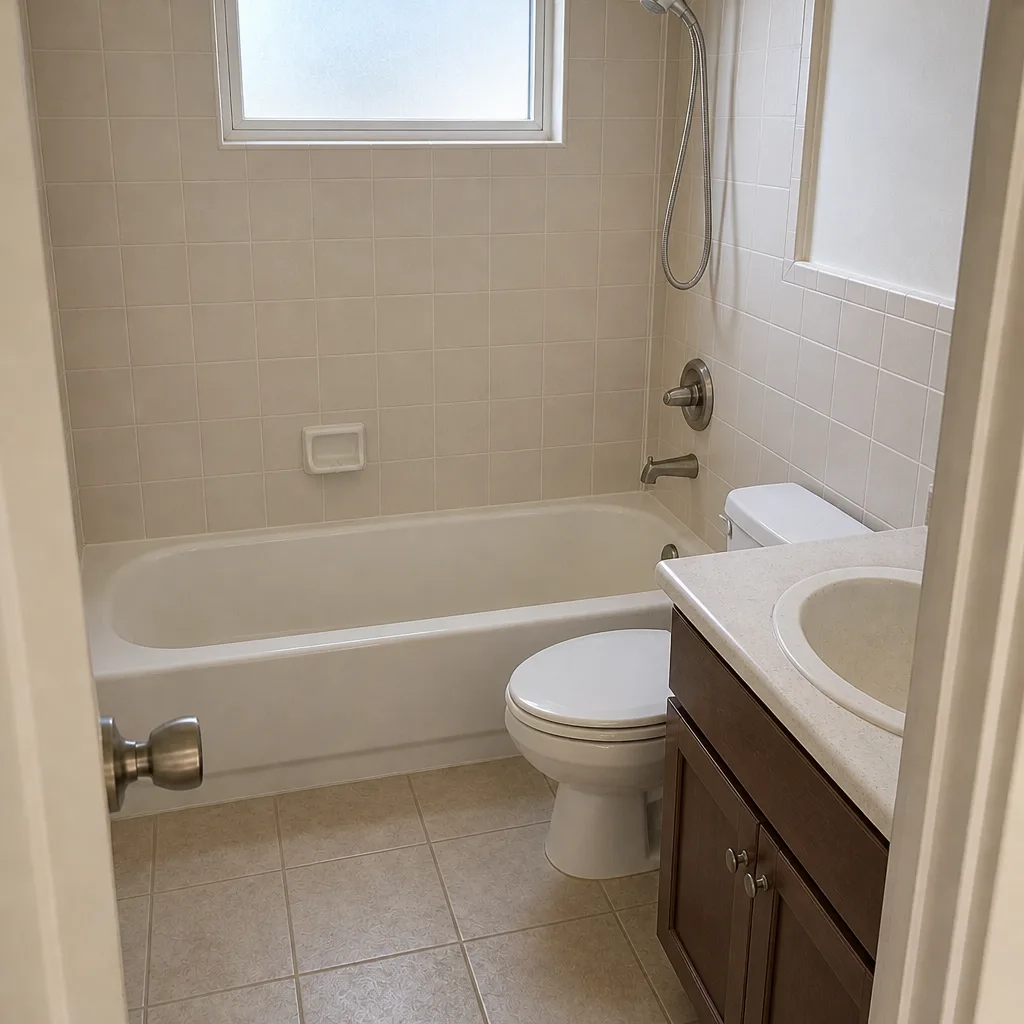 After
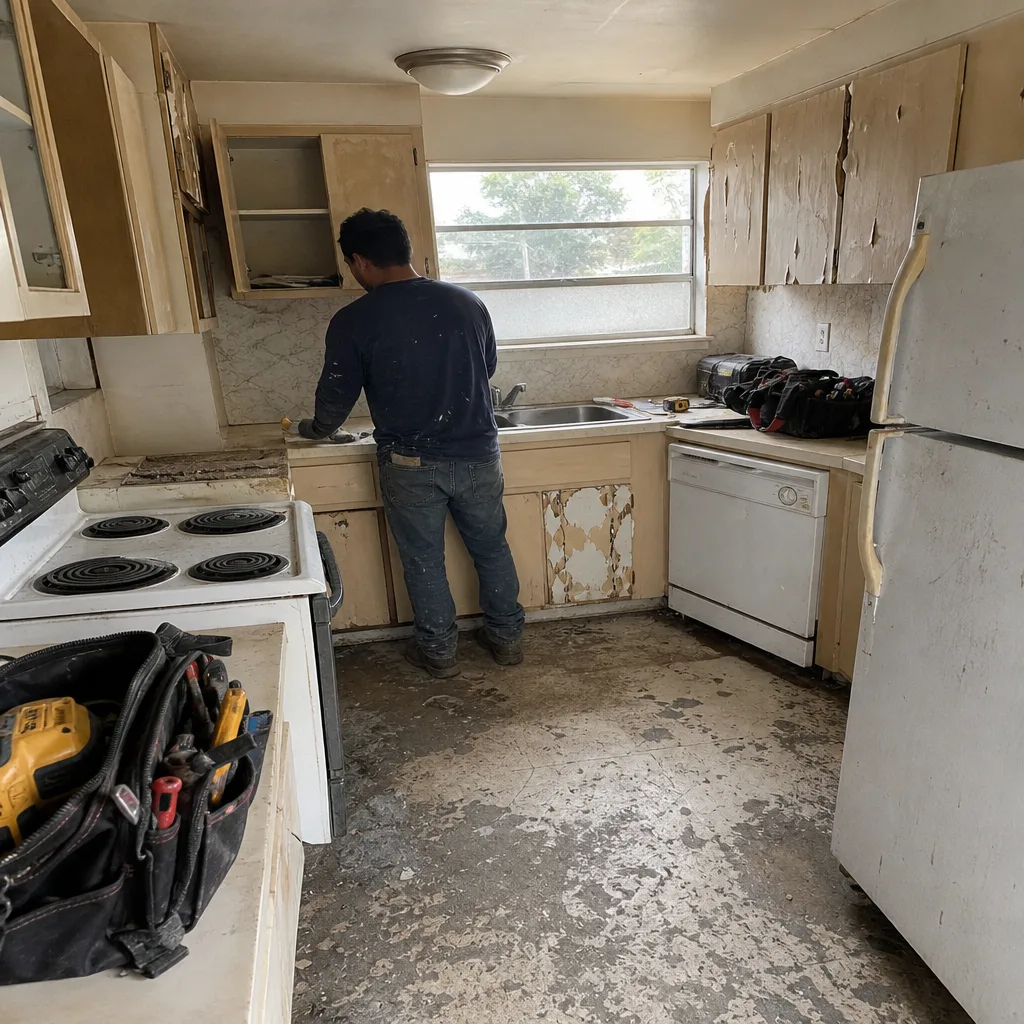 Before
 After
Frequently Asked Questions

Yes, under Florida Statute 489.103, if the property is your primary residence and you intend to occupy it as your own contractor of record. The exemption lets you act as the general contractor and hire licensed subcontractors for electrical, plumbing, and mechanical work, but it does not let you perform those licensed trade tasks yourself, and it restricts your ability to sell the property within one year of completion. Call (844) 320-5198 if you’d like a licensed contractor’s read on your specific scope before you pull a permit.
The legally safe DIY list in Miami Gardens is finish work: interior non-load-bearing partitions, trim and finish carpentry, painting, cabinet installation, and tile work after the rough-in inspection passes. Anything structural, anything electrical, anything plumbing, and anything that changes the roof or the gas line belongs to licensed trades. If you’re unsure which list a task falls on, that’s exactly the question a free estimate answers. Call (844) 320-5198.
Mostly no. The FHA 203(k), Fannie Mae HomeStyle, and VA renovation loans are structured around a licensed general contractor who signs the draw schedule and completion certificate, and most construction-to-permanent lenders decline owner-builder files outright. A few allow it with a larger contingency escrow, typically 10 to 15 percent above construction cost. If you’re financing the project, plan for a licensed contractor. Call (844) 320-5198 to see what a Rowan written estimate looks like for your lender package.
A Miami Gardens ADU typically runs from $180 to $320 per square foot for site-built construction, with a delivered-and-installed prefab module from Abodu, Cover, Dvele, or Mighty Buildings often landing in the $120,000 to $220,000 range before site work, foundation, and utility connections. The site work – trenching, foundation, drainage, and inspections – is where Miami Gardens budgets vary most. Call (844) 320-5198 for a written price with a flat scope and a written warranty.
You must disclose the owner-builder status in the sales contract and get the buyer’s written acknowledgment if the sale happens within one year of completion. After one year, the disclosure requirement lifts, but some lenders and title insurers still ask about the permit history for the addition or ADU, and some homeowner’s insurance carriers charge a premium for owner-built structures. A clean permit history with signed inspections is the documentation that answers all of those questions. If you’re trying to close out a project, call (844) 320-5198.
Yes, for everything except the finish scope. Under Florida law and the Miami-Dade Building Code, the foundation, framing, roof-to-structure connections, electrical service, and plumbing for an ADU all require licensed trades, and the ADU is inspected as a separate structure against the High-Velocity Hurricane Zone requirements. Even prefab manufacturers who market “turnkey” modules depend on a licensed local contractor for the site work, foundation, and utility connections. Call (844) 320-5198 to review a prefab ADU quote against the site work it doesn’t include.
The Bottom Line
Florida’s owner-builder exemption is real, and it’s narrower than most homeowners expect. On an addition or ADU, the safe DIY zone is finish work – paint, trim, cabinets, tile after inspection, non-load-bearing partitions. Everything structural, everything electrical, everything plumbing, and everything attached to the roof belongs to a licensed trade under Florida Statute 489.103. Add in the one-year resale restriction, the lender stance on owner-builder files, and the Miami-Dade wind zone requirements, and the calculus tilts toward hiring a licensed contractor for the frame-up-and-rough-in portion almost every time. Choose the DIY path only where the law, the lender, and your insurance carrier all agree. Where they don’t, the written numbers are worth more than the savings.
Call Rowan Construction Group at (844) 320-5198 for a free estimate on your Miami Gardens addition or ADU.
Written by the team at Rowan Construction Group Miami Gardens.