Last updated November 18, 2026

Free written scope consultation - allowances, timeline, and change-order rules on paper before a single trade is scheduled
Driveway & Pavers Maintenance Schedule: What to Do and When
The standard “seal every two years” advice was written for the Mid-Atlantic climate. In Miami Gardens, where the summer UV index routinely hits 11 and rainfall tops 60 inches a year, two years between sealings is one year too late. The wet season from June through October does more damage to a paver driveway in five months than the other seven combined, and the maintenance window that actually matters is the two weeks after the last major storm. This guide builds a maintenance schedule around Miami Gardens’ real climate calendar, names the sealer chemistries that survive South Florida sun, and puts a dollar estimate next to every annual task so you can budget instead of react. By the end you’ll know what to check each month, what to hire out, and what to ignore.
Quick Answer
A paver driveway in Miami Gardens needs sealing every 12 to 18 months, not every two years, because South Florida UV and 60-plus inches of annual rain break down sealers faster than the national average. Clean and re-sand joints with polymeric sand after the wet season ends in October, inspect edge restraints every spring, and budget roughly $400 to $900 a year for routine maintenance tasks on a standard two-car driveway. Anything beyond cleaning, sanding, and re-sealing is a job for a professional.
Styles & brands we work with
- Kitchen remodeling
- Bathroom remodeling
- Home additions & ADU
- Roofing
- Windows & doors
- Driveway & pavers
- Fence
Table of Contents
- Why Miami Gardens Runs on a Different Calendar
- The Month-by-Month Maintenance Calendar
- Which Sealer Chemistry Survives South Florida Sun
- Re-Sanding Joints After the Wet Season: The Exact Sequence
- The Annual Edge Restraint Inspection
- What Each Maintenance Task Costs in Miami Gardens
- The Two-Week Window After a Major Storm
- When Maintenance Turns Into Repair
Why Miami Gardens Runs on a Different Calendar
National paver maintenance guides are written for a climate with four seasons and a freeze-thaw cycle. Miami Gardens has two seasons: wet and dry. The wet season runs roughly June through October and delivers the bulk of the city’s annual rainfall in afternoon downpours that can drop an inch in forty minutes. The dry season from November through May brings lower humidity, stronger sustained sun, and the highest UV index of the year in late spring.
That split changes what fails first. Up north, the enemy is frost heave pushing pavers up and out. Here, it’s water getting under the sand joints, polymeric sand washing out at the low points, and UV breaking down the sealer film. We’ve seen driveways in the Andover Lakes and Scott Lake areas where a single summer of deferred re-sanding left joints so open that weeds came through within a month. The pavers themselves were fine. The joint system had failed.
Soil expansion is our version of frost heave. The heavy clay and sandy loam mixes under many Miami Gardens driveways swell when saturated and shrink as they dry, and across a wet season that cycling can work the edge restraints loose. That’s why the annual edge inspection matters here: not for frost, but for the slow loosening that lets a whole section shift. If you catch it in spring, you re-spike and reset. If you wait three years, you’re pulling pavers and rebuilding the base.
The practical takeaway: run your maintenance calendar off Miami Gardens’ wet and dry seasons, not off a generic spring-and-fall schedule. The tasks are the same. The timing and the frequency are not.
The Month-by-Month Maintenance Calendar
Here is the calendar we’d hand a homeowner with a paver driveway in Miami Gardens. It assumes a standard two-car driveway, already sealed, with polymeric sand in good condition at the start of the year.
- January – February (dry season, coolest weeks): Best window to re-seal if your sealer is due. Temperatures are moderate, rain is light, and the sealer cures without a downpour landing on it. Inspect the whole surface in daylight and mark any rocking pavers or cracked joints with chalk.
- March – April (sun intensifies): Check sealer sheen at the sun-facing end of the driveway, which ages first. Herbicide the joint lines that catch the most seed. Sweep regularly; dry-season dust plus the first spring rain turns into a mud film that clogs joints.
- May (pre-wet-season): Last good window before the rains. Re-sand any thin joints and confirm edge restraints are tight before saturation season. This is the highest-value month on the calendar for Miami Gardens.
- June – October (wet season): Watch, don’t seal. After each major downpour, check the low spot where water ponds and confirm it drains within an hour. Clear any leaf and yard debris from drainage paths. Sealing in the wet season is a waste; the sealer hasn’t cured before the next storm.
- November (post-season reset): The big maintenance month. Deep-clean, re-sand with polymeric sand, and inspect. This is the two-week window after the last major storm described below.
- December (dry season, seal if needed): If your sealer failed the water-bead test, December or January is the time. Light rain, moderate temps, and a full dry-season cure window.
The pattern in one sentence: do your sealing and re-sanding in the dry season, do your watching and clearing in the wet season, and treat May and November as the two bookend maintenance months. For a broader view of how pavers fit into a driveway project, see our guide to Driveway & Pavers in Miami Gardens.
Which Sealer Chemistry Survives South Florida Sun
There are two broad families of paver sealer, and they fail in different ways under Miami Gardens conditions. Getting the chemistry right matters more than the brand name on the bucket, though the brand matter too.
Penetrating sealers (silane-siloxane): These soak into the paver and the joints rather than sitting on top. They leave no film, so they don’t peel, flake, or whiten under UV. They also don’t change the paver’s color much. The tradeoff is that they don’t give you the wet-look gloss and they wear off gradually, so you re-apply on a schedule rather than a re-coat when they fail. Silane-siloxane penetrants are the better choice for driveways in direct sun, and we recommend them for most south-facing driveways in Miami Gardens.
Film-forming sealers (acrylic): These sit on the surface and give that gloss. They block UV and water well for the first year, but under a UV index of 11 a film can yellow, haze, or peel within 12 to 18 months. If the film is compromised, the paver underneath has a thin, peeling coating that’s harder to strip than re-sealing was to apply. Acrylics can work, but only with rigorous re-coating and a clear (not glossy) formulation.
You’ll find Techniseal and SRW Products sealers stocked locally and sold in trade and retail channels throughout South Florida. Both make the silane-siloxane formulations that hold up here. When you buy, check the label for the active chemistry, not just the “wet look” or “natural” marketing words on the front of the bucket. No product name replaces reading what’s in it.
A quick test you can run: splash a cup of water on the sealed surface. If it beads and rolls off, the sealer is working. If it soaks in and darkens the paver, the sealer is gone. Do the test at the sun-facing end and the shaded end; they age at different rates.
Re-Sanding Joints After the Wet Season: The Exact Sequence
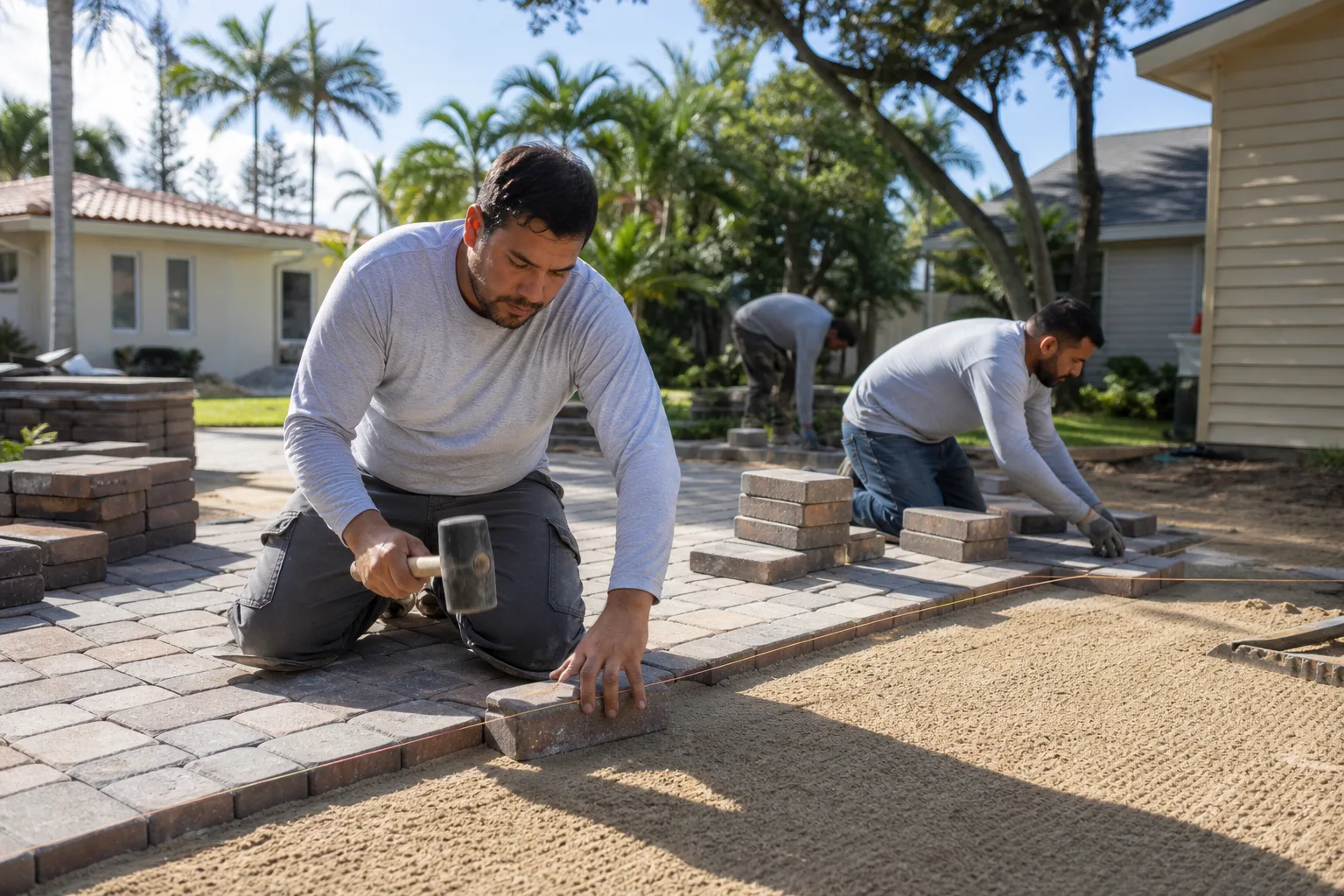
Polymeric sand is the joint sand that hardens when you wet it, locking pavers in place and blocking water and weeds. In Miami Gardens, it’s the part of the system most likely to fail, because every wet season pushes water through the joints and the low-corner sand washes out. The fix has a sequence, and doing it out of order is how people re-sand a driveway and watch it wash out by the next rain.
- Clean the joints first. Use a leaf blower or stiff broom to clear loose sand, dirt, and debris from every joint. Don’t skip this; new sand won’t bond to old dirty sand.
- Do it dry, on a dry day, with no rain in the forecast for 24 hours. Polymeric sand needs to cure before a downpour hits. In the wet season this is nearly impossible; in November and May it’s easy.
- Poured sand to the joint, not over the whole surface. Work with a small bag or a pour spout and get sand down into the joint, then sweep the excess across and back into the joints. Leaves a thin, even line flush to the paver surface.
- Compact with a plate tamper with a rubber pad. A firm, even pass compacts the sand into the joint. Don’t skip the pad, and don’t over-tamp or you’ll scuff the paver face.
- Wet it once. Precisely. A light mist, not a flood. Enough to activate the polymer, not enough to wash the sand out. A hose on a fine spray setting, a couple of passes, is usually right.
- Let it cure fully before traffic. Follow the bag instructions for cure time, and keep cars off until it’s done. This is where a rushed re-sand fails; if you drive on wet polymeric sand, you’ve lost the joint.
Our experience in Miami Gardens is that a full re-sand after the wet season, done right, gets you through the next wet season with the joint system largely intact. That’s the whole goal: keep the joints full and the water moving off the surface, and the pavers underneath last a long time.
The Annual Edge Restraint Inspection
Edge restraint is the aluminum or concrete curb that holds the pavers at the perimeter of the driveway and keeps the whole field from spreading. Outdoors, the restraint is held by long steel spikes driven into the base. Over time, soil movement, water, and vibration from the driveway flex the spikes loose and the restraint lifts. That’s the point when the pavers at the edge start to walk.
Inspect it once a year in the spring, before the wet season. Here’s what to look for:
- Lift or gap at the spike connections. Run a hand along the top of the restraint. If you feel a gap between the curb and the pavers, or the curb lifts above the paver surface, the spikes are working loose.
- Steel spikes that have backed out. Look at the spike holes along the top of the restraint. A spike that has risen above the surface is a spike that’s no longer holding. That’s the one to re-drive.
- Crushed or cracked concrete restraint at the corners. The corners take the most load. If the concrete has cracked, the section it holds is compromised and needs repair, not just re-spiking.
- Widening gaps. The line where the paver field meets the restraint should be a consistent width. Walk the whole perimeter and look for one stretch where the field has pulled away.
If the spikes are loose, the fix is to re-drive them into the base with a hammer, or in the case of an extracted spike, drive a new one slightly offset into fresh base. This is heavy work and requires a tamper, and it’s best done with a helper. For most homeowners, this is a professional call: the restraint needs the right base to drive into, and driving a spike it the wrong spot can crack the curb. If you’re already having a fence installed along the driveway line, coordinate the timing; our team handles Fence Installation in Miami Gardens, and any excavation near the edge of the pavers is worth checking before the fence posts go in.
What Each Maintenance Task Costs in Miami Gardens
These are the ranges we see for a standard two-car paver driveway in the Miami Gardens market. They’re line-item ranges for maintenance, not a full installation. The actual quote depends on square footage, paver type, and the current condition of the joints and base.
- Deep clean (pressure wash + joint prep): $150 – $350. Includes high-pressure wash and blower cleanup of joints, not the re-sand.
- Polymeric sand re-sand (full driveway): $250 – $600. Includes sand, labor, tamper, and the wetting and cure time. Ranges higher if joints are deep or the driveway is large.
- Penetrating silane-siloxane sealer application: $300 – $700. Two coats on a full driveway. Film-forming acrylic runs similar to slightly higher but is more likely to need stripping later, which is a separate charge.
- Sealer stripping (if acrylic film has failed): $300 – $800 depending on how much film remains and how intricate the paver field.
- Edge restraint re-spiking or re-drive: $150 – $400 for the exposed perimeter, depending on the restraint type and access.
- Cracked paver replacement (individual): $100 – $250 per handful of pavers, including matching and re-set, assuming matching pavers are available. This is where sourcing matters; matching an older paver color sometimes requires pulling a whole paver on the hidden side.
An annual routine maintenance budget of $400 to $900 for a standard driveway is realistic: a re-sand most years, a sealer every 12 to 18 months, and the occasional restraint or paver fix. That number is far below the cost of re-building a driveway base that was allowed to fail. If you want a written line-item number rather than a range, we’ll put it in writing before any work starts: under Clause 1 of The Haven Standard, the price is fixed and signed before a crew touches the driveway. Call (844) 320-5198 for a free estimate.
The Two-Week Window After a Major Storm
In Miami Gardens, the highest-value maintenance hours of the year are the two weeks after a major storm during the wet season. That’s not a marketing line; it’s the practical reality of how the failures happen.
After a storm, the joints are wet and the sand at the low points has partially washed. If you re-sand and re-seal in that window, while the base and the joints are still dry enough to accept material, you restore the system before the next storm compounds the damage. If you wait until November, you’ve spent the rest of the wet season with open joints and water getting under the pavers.
What to do in the window, in order:
- Clear debris within 48 hours. Leaves and yard debris slow the drainage and can sit as a wet mat on the surface, keeping the paver under the debris saturated longer.
- Check the low corners for sand washout. Aim the hose at the joint and see if the sand is sitting or escaped. If it escaped, that’s the re-sand target.
- Confirm the water drained. A pond that’s still there 24 hours after the storm is a grading problem, not a maintenance problem, and it’s the one thing on this list that needs a professional look.
- Re-sand and seal, on a dry day, within the next week or two. This is the exact sequence in the section above. Get it in before the next storm, and you’ll have done the highest-value maintenance of the year.
If you’re adding on to the driveway or the house in the same season, the storm window collides with construction schedules. That’s a scheduling conversation worth having early. Our team coordinates driveway maintenance with larger projects including Home Additions & ADU in Miami Gardens, and we’d rather plan around the wet season than fight it.
When Maintenance Turns Into Repair
Not every problem is maintenance. A few conditions mean the base or the structure has failed and no amount of re-sanding or sealing will fix it. We’ve seen all of these in Miami Gardens driveways, and recognizing them early saves money.
- Pavers that rock underfoot. A single rocking paver is a lifted paver. A field of them means the base has settled unevenly or the original compaction was inadequate. Re-set is the fix, and that’s a repair.
- Persistent ponding. Water that sits for hours after a storm is a grade problem. The paver field is sloped wrong or the drainage path is blocked at the soil level. Re-settlement and re-grading are professional work.
- Subsidence at the edge. If the pavers near the edge settle below the restraint line, the base there is failing. Re-spiking the restraint won’t help; the base needs to be rebuilt in that section.
- Popping or lifting at a section joint. A raised line across the driveway, usually after heavy rain, is base movement. Look for it and don’t ignore it.
- Sealer that has turned milky white or peeled in sheets. That’s a film-forming acrylic that’s failed. The fix is a full strip and reapplication of a penetrating sealer; re-coating over a failed film makes it worse.
The rule of thumb: if the pavers themselves are intact and the joints are the issue, it’s maintenance. If the pavers move, lift, or the water pools, it’s repair, and it needs a professional on site to look at the base. Don’t let a repair-sized problem hide under repeated re-sanding; it won’t fix itself.
Common Mistakes to Avoid
- Sealing in the wet season. June through October is the wrong time. The sealer can’t cure before the next afternoon downpour lands on it, and you end up with a milky or peeling film that costs more to strip than it cost to apply.
- Re-sanding without cleaning the joints first. New polymeric sand won’t bond to old dirty sand, and it’ll wash out with the first heavy rain. Clean first, then sand.
- Skipping the water-bead test and re-sealing on the calendar instead. Your driveway in Miami Gardens may need a re-seal at 12 months, not 18, if it’s in direct afternoon sun. The calendar is a guide; the water-bead test is the actual signal.
- Ignoring the edge restraints. A loose edge is the start of a section shift. Re-spike in the spring and you reset the section for the cost of a few spikes. Wait, and the fix includes re-setting pavers.
- Using the wrong sealer chemistry for South Florida sun. A film-forming acrylic that works in Maryland can haze yellow here within 18 months. Ask for silane-siloxane for a sun-facing driveway.
- Pressure washing too hard. High pressure can lift the polymeric sand out of the joints, which is the opposite of maintenance. Use a low, even pass and keep the nozzle moving.
- Treating a base problem as a maintenance problem. If pavers rock or water ponds, re-sanding and sealing are hiding the issue, not fixing it. Get it looked at.
See the difference
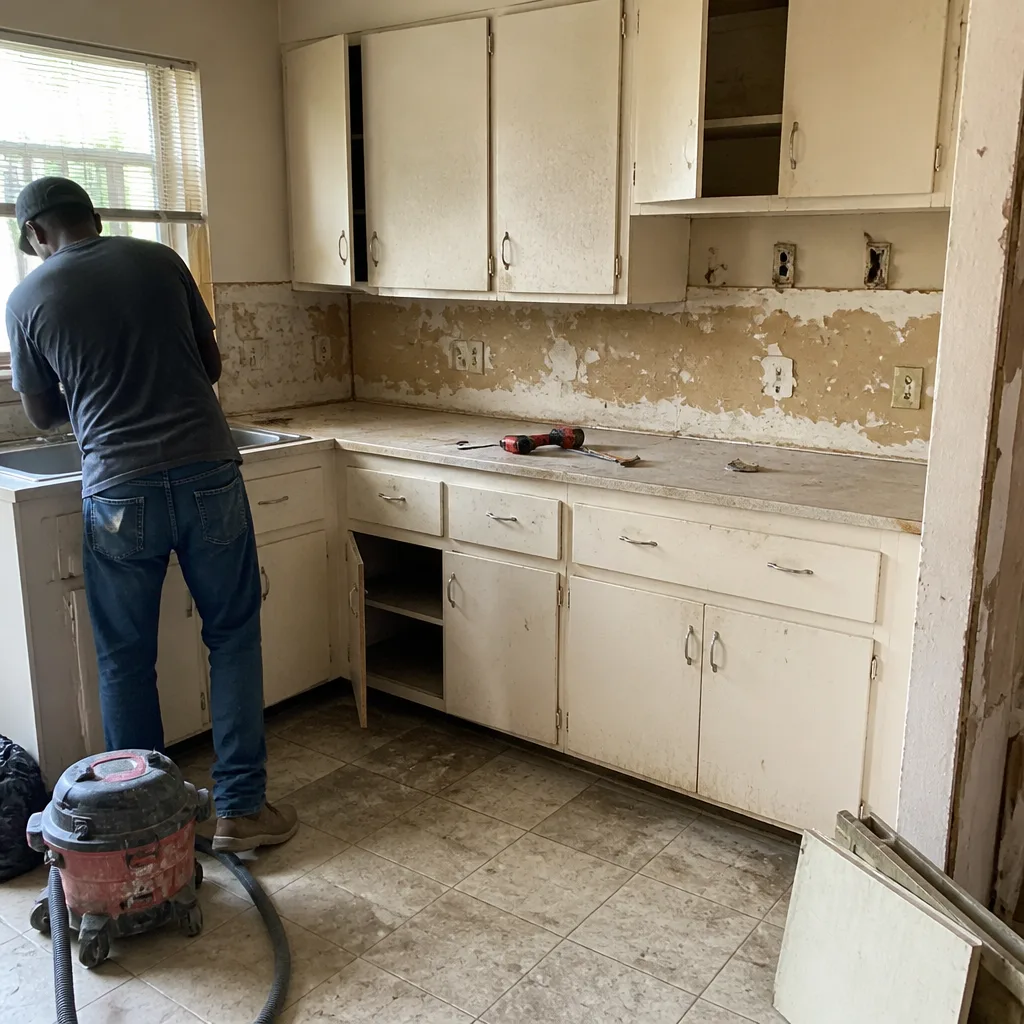 Before
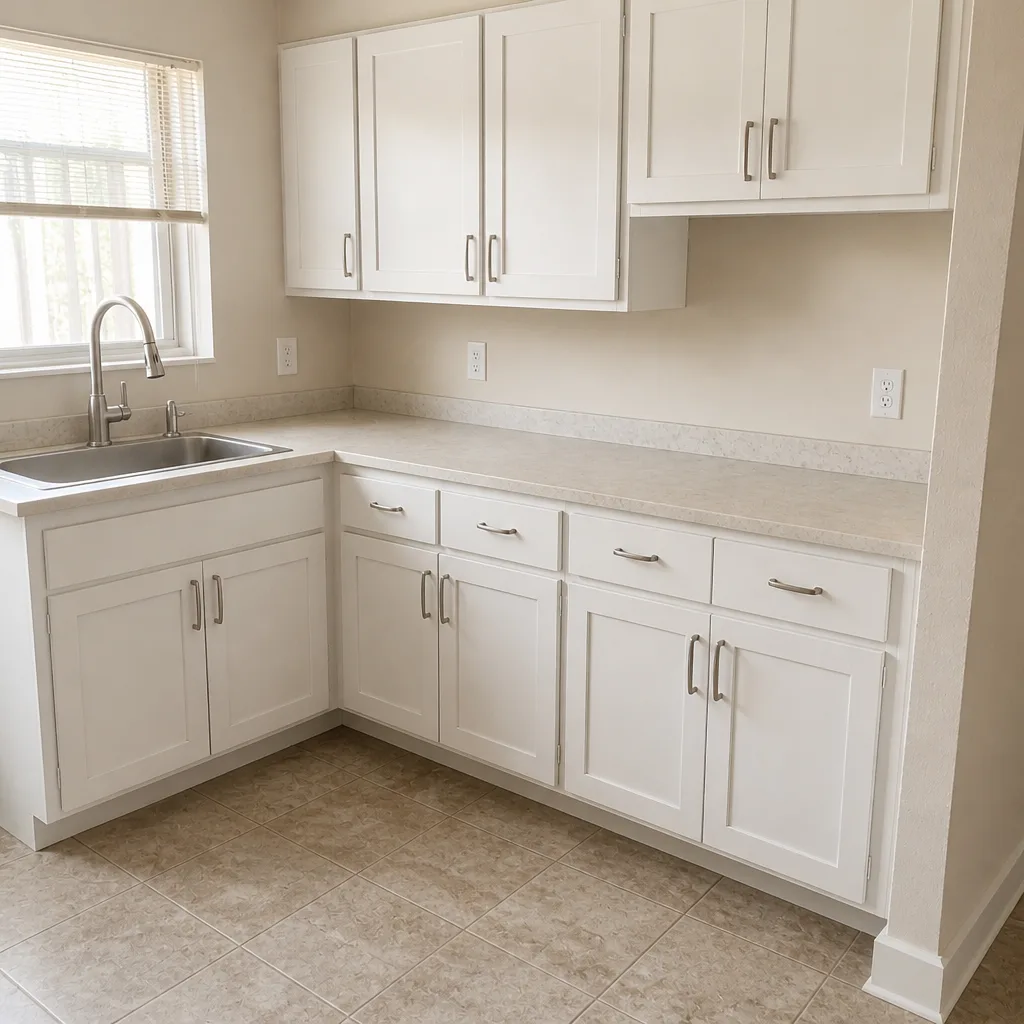 After
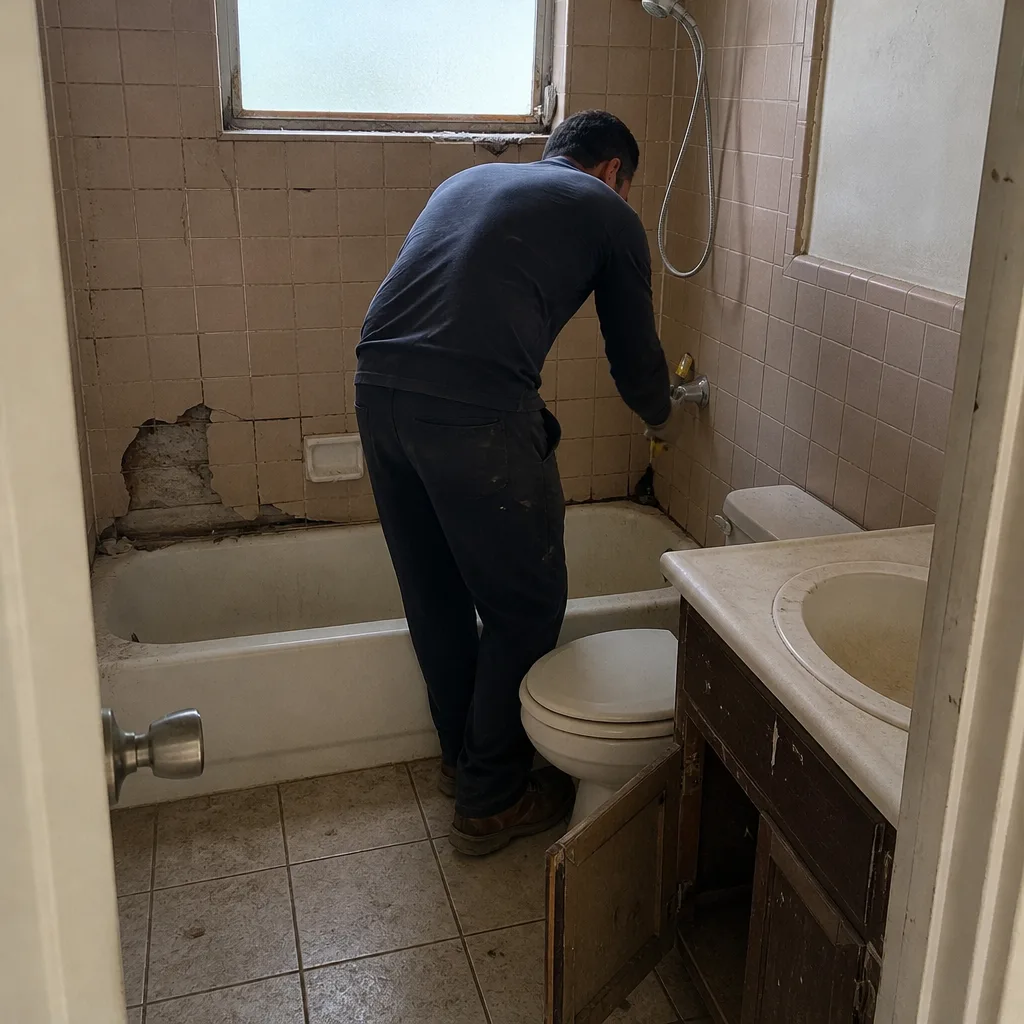 Before
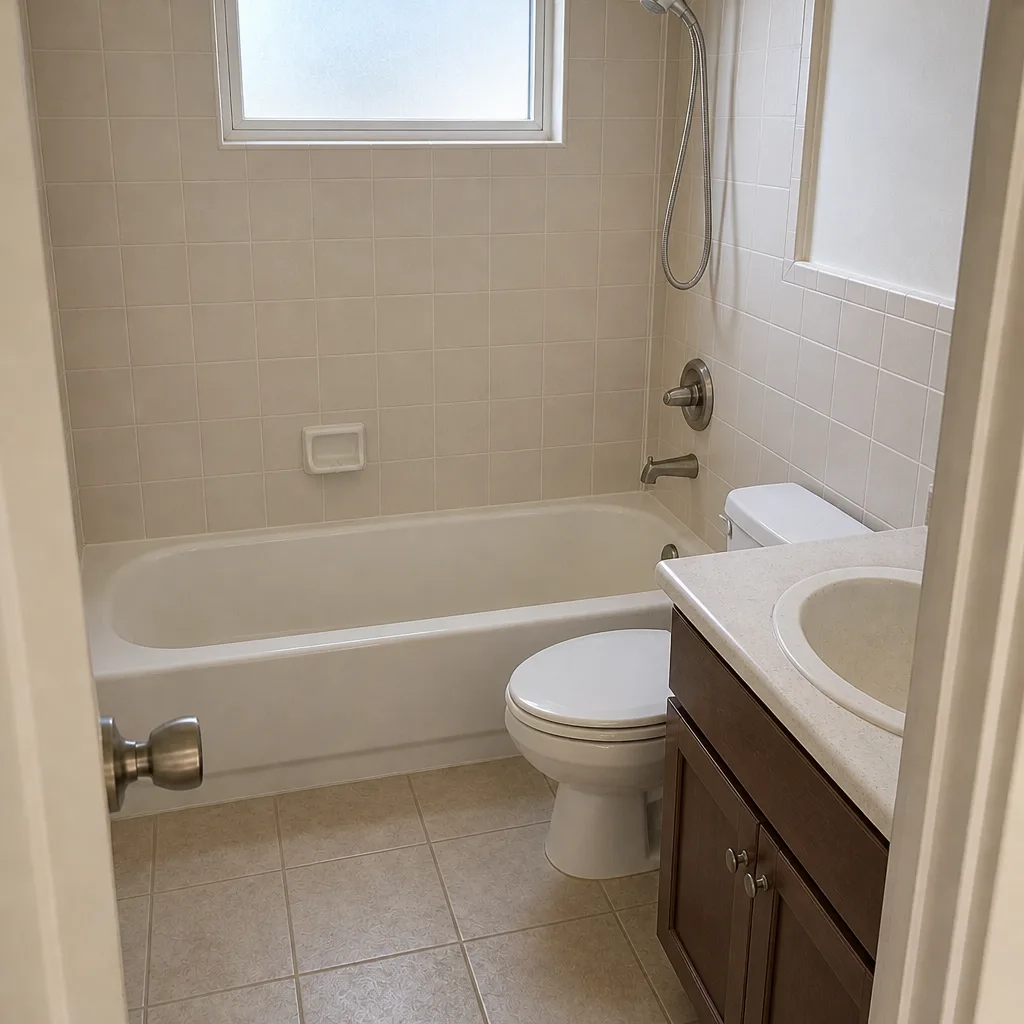 After
 Before
 After
When to Call a Professional
Call a professional when the pavers move, lift, or pond; when the edge restraint has separated from the field; when the sealer film has failed and needs stripping; or when you want a documented maintenance plan rather than a calendar. Most homeowners can clean and inspect a driveway, and some can re-sand, but edge restraint re-spiking, base repair, and sealer stripping are professional work. Our technicians have up to 19 years of experience, and every crew is background-checked and uniformed, with a live person answering calls 24/7. Every visit includes a documented photo record as a standard deliverable, so you get evidence of what was found and what was done, not a phone promise. Under The Haven Standard, the price is written before any work starts, and no change proceeds without a signed change order. We also offer a free second opinion on any written estimate: bring a competitor’s quote and we’ll review it line by line at no charge. Rowan Construction Group Miami Gardens offers free estimates in Miami Gardens; call (844) 320-5198. For the broader picture of driveway and paver work in the city, start at the Rowan Construction Group Miami Gardens home.
Frequently Asked Questions
Every 12 to 18 months, not every two years. The high UV and 60-plus inches of annual rainfall here break down sealer faster than the national average. Test with a cup of water: if it beads and rolls off, the sealer is working; if it soaks in and darkens the paver, it’s time. Call (844) 320-5198 for a free written estimate on sealing.
Between November and April, when rain is lighter and temperatures are moderate. June through October is the wet season and is the wrong time to seal. December and January are the best single months because the dry-season cure window is longest. Get the free estimate first; we’ll tell you honestly whether your driveway needs it this season.
Polymeric sand, for a driveway that faces the wet season. It hardens and resists washout where regular sand won’t. The key is doing the re-sand correctly: clean joints, dry conditions, pour, compact with a rubber pad, mist, and cure before traffic. Call (844) 320-5198 for a line-item quote on a full re-sand.
Because the joints aren’t full after the wet season, and each rain pushes more sand out if the joint was never re-filled. The fix is a proper re-sand in November, after the wet season ends, done in the right sequence. If your joints wash out even after a correct re-sand, the base drainage may be an issue and worth a professional look. Estimates are free: (844) 320-5198.
Budget roughly $400 to $900 a year for routine maintenance on a standard two-car driveway, depending on whether it’s a re-sand year, a sealer year, or both. Full line-item pricing is listed in the cost section above. Call (844) 320-5198 for an exact written quote rather than a range.
You can seal your own pavers, but the technique matters more than the product, and a wet-season application or a heavy spray on polymeric sand will fail regardless of the sealer’s quality. If the driveway is in direct afternoon sun and has been sealed before, a professional strip-and-re-seal is often the better spend. Call (844) 320-5198 to get a free written estimate and compare.
The Bottom Line
The maintenance schedule that works in Miami Gardens is built around the wet season, not around a generic spring-and-fall calendar. Seal every 12 to 18 months with a silane-siloxane penetrating sealer, re-sand the joints with polymeric sand in November after the rains, inspect edge restraints every spring, and watch for ponding and rocking pavers as signals that a maintenance task has become a repair. Budget $400 to $900 a year, and you’ll get well ahead of the driveway that gets re-sanded once every few years by a homeowner reacting to a problem. That’s a written plan, priced in dollars, before anyone picks up a tool.
Written by the team at Rowan Construction Group Miami Gardens.