Last updated November 18, 2026



Free written scope consultation - allowances, timeline, and change-order rules on paper before a single trade is scheduled
Bathroom Remodeling Warning Signs Every Homeowner Should Know
A bathroom remodel estimate that lists “tile work” as a single line item, with no square footage, no material brand, and no labor rate, is not an estimate. It’s a placeholder, and it legally leaves the contractor free to charge whatever the finished job ends up costing. We’ve reviewed hundreds of signed contracts across Miami Gardens, and the pattern holds: the projects that blow their budgets almost always showed the warning signs in the paperwork months before the first tile was set. This guide walks through the documentation failures and pre-construction signals that predict cost overruns, with the dollar figures attached, so you can spot trouble while it’s still a page in your hand.
Quick Answer
The biggest bathroom remodeling warning signs appear before demolition: a vague scope of work, an unsigned change order process, missing trade-specific licensing, or a deposit over 30% upfront. A contractor who won’t put square footage, brand names, labor rates, and a flat price in writing before work starts is telling you how the rest of the project will go. In Miami Gardens, where 1960s and 1970s housing stock adds hidden structural costs, the paperwork is where you catch most problems.
Styles & brands we work with
- Kitchen remodeling
- Bathroom remodeling
- Home additions & ADU
- Roofing
- Windows & doors
- Driveway & pavers
- Fence
Table of Contents
- What a Legitimate Scope of Work Must Include
- The Unsigned Change Order Trap
- Hidden Structural Costs: Subfloor, Efflorescence, and What They Add
- Verifying Licenses on Every Trade
- Payment Schedule Red Flags in Florida
- Miami Gardens Climate and Why It Matters to Your Budget
- Reading the Number: What a Bathroom Should Actually Cost
What a Legitimate Scope of Work Must Include
A written scope is the single document that decides whether you have a fixed-price project or a blank check. Vague language like “remove existing tile and install new” is technically legal in Florida. It obligates the contractor to install something, but not a specific product, at a specific rate, with a specific waste factor. When the finished square footage creeps, or when the material upgrade lands without notice, the contractor isn’t breaking the agreement – the agreement gave them room.
Here’s what we look for when a customer brings us a quote for review as a free second opinion. A legitimate scope names, in writing:
- Square footage and linear footage per trade. Tile in square feet, backer board in square feet, waterproofing membrane by product name, cabinetry by unit count, plumbing rough-in by fixture count.
- Material brand and model number. “Vanity” is a placeholder. “KraftMaid 36-inch vanity, Ashland door style, painted finish” is a spec you can price.
- Labor rate separate from material cost, or a single flat price with the labor cost disclosed. Either structure works if the numbers are visible.
- Waste factor. 10% is normal for tile. 5% usually means the contractor is padding the material line.
- Exclusions. A proper scope lists what the contractor is not doing: moving plumbing, reframing, replacing subfloor beyond a certain threshold.
- Written warranty and completion criteria. How do you know the job is done, and what does the contractor promise in writing after closing?
In our experience, a one-page estimate with line items under eight words each is a warning sign in itself. Under Clause 1 of The Haven Standard, our written price and written scope arrive before any work begins on every trade – kitchen to Home Additions & ADU in Miami Gardens – and that’s not decorative. A scope you can read line by line is a scope you can hold someone to.
The Unsigned Change Order Trap
The most expensive words in a bathroom remodel are “just go ahead and do it.” A verbal approval for an adjustment mid-project is not a contract modification. It’s a he said/she said dispute waiting until invoice time. We’ve seen this play out dozens of times across Miami Gardens, and the pattern is consistent: the contractor frames the addition as small, the homeowner nods, and six weeks later the final invoice arrives with several thousand dollars attached to line items the homeowner never saw in writing.
Concrete example from a typical Miami Gardens bathroom project. A customer hired a contractor at $18,400 for a 60-square-foot hall bath. During tile demo the contractor found rotted subfloor around the toilet flange – a real condition, not invented. Contractor verbally told the homeowner, “We’ll need to fix this, it’ll run a bit more.” No number. No signature. Final invoice: $26,900. The extra $8,500 included subfloor replacement plus unrelated items: vanity upgrade, extra GFCI outlet, and a “miscellaneous materials” line that no one had ever priced. The homeowner had recourse only if they wanted to spend more than the increase on an attorney.
How to protect yourself, in numbered order:
- Demand every change in writing before any work on the change proceeds. No exceptions.
- Get a fixed number, not a range, and confirm the new total in the change order document.
- Sign and date the change order. Keep one copy yourself.
- Accept nothing verbally. If the contractor says “I’ll figure out the cost later,” the answer is no work starts until it’s figured out now.
Our discipline is exactly that: no work proceeds on a change until the change order is signed. It’s the reason our projects finish within a few percent of the agreed price, and it’s the difference between a project that closes clean and one that ends in a dispute.
Hidden Structural Costs: Subfloor, Efflorescence, and What They Add
A bathroom is the wettest room in the house, and in Miami Gardens the humidity and seasonal rain load accelerate what any wet room experiences over decades. Two structural findings show up again and again in older bathrooms here, and both arrive with a dollar figure attached. Knowing what to look for – and what it typically costs – is the difference between a shock invoice and a line item you expected.
Soft subfloor around the toilet base
Press on the floor with the heel of your hand at the toilet base. Any give, any softness, any bounce, and you have water damage. The toilet wax ring fails first, usually within 10-15 years, and the leak tracks into the subfloor without ever showing up on the top surface. In our experience, this is nearly universal in Miami Gardens bathrooms built before 1985.
Cost to repair, in writing, in this market: $600 to $1,600 for a small area of plywood or cement board replacement, or $2,400 to $4,200 if the joist tails are also compromised and require sistering. A contractor who doesn’t mention this check during estimating hasn’t looked, and you’ll be paying for the discovery mid-project.
Efflorescence on tile walls
Efflorescence is the white, chalky mineral deposit that creeps out of grout lines and along tile edges. It means water is moving through the wall assembly, usually from a failed shower pan or a missing waterproofing membrane behind the tub surround. It is not cosmetic. It announces that the substrate behind the tile is wet, which means the cement board, the studs, or both are compromised.
Typical remediation in a Miami Gardens bathroom: $1,800 to $3,500 to remove affected tile, replace cement board and studs as needed, install a new liquid-applied or sheet membrane (Schluter Kerdi is the standard we install), and re-tile. Skipping the membrane the first time is what causes this – it’s not a Miami Gardens quirk, it’s a materials decision worth verifying in the original scope.
Cast iron drain lines
A third finding worth knowing about in Miami Gardens homes: original cast iron drains, common in 1955-1975 construction, corrode from the inside. When a plumber opens the wall for the rough-in, they often find the line is one pour away from failure. Budget $1,200 to $3,800 if the scope needs to include a drain replacement during the remodel; doing it later means opening the new tile again.
Verifying Licenses on Every Trade
Florida licenses trades separately, and a bathroom remodel typically involves three: a plumbing contractor, an electrical contractor, and a tile or general contractor. A single license does not cover all three. If the contractor shows you one license and says it covers the job, ask which license type and check it against the state database – this is a two-minute verification, not a leap of faith.
Here’s how to check a Florida contractor license in under two minutes:
- Open the Florida Department of Business and Professional Regulation license lookup at myfloridalicense.com.
- Search by individual name or by business name. Both should return results if the license is legitimate.
- Verify the license type matches the work: “Certified Plumbing Contractor” for plumbing, “Certified Electrical Contractor” for electrical, “Certified General Contractor” or “Certified Building Contractor” for the full remodel.
- Confirm status is “Active” and the expiration date is current.
- Confirm the business name on the license matches the business name on your contract. A license held by a company that isn’t the one signing your contract is not covering your job.
Any plumber or electrician arriving at your Miami Gardens home for a permitted bathroom job should be able to hand you a license number that matches an active DBPR record. Under The Haven Standard our crews are background-checked and uniformed, and every crew member is verified before arrival – but the homeowner should still verify. It takes two minutes.
This is also why we pull permits on every bathroom remodel. A permitted job triggers a county inspection, which is another layer of verification the homeowner gets for free.
Payment Schedule Red Flags in Florida
Any contractor requesting more than 30% of the total upfront on a residential bathroom remodel warrants closer scrutiny under Florida Statute 489. Florida law treats construction deposits carefully, and while 10% to 30% upfront is standard for material and mobilization, a deposit request above that threshold on a $20,000 project means the contractor is funding other jobs from your money, or has no working capital of their own.
Warning signs in a payment schedule:
- More than 30% at signing. Ask why. If the answer involves the contractor’s cash flow, walk.
- “Balance due at substantial completion” with no milestone breakdown in between. You want payments tied to specific deliverables, not calendar dates.
- Final payment released before final inspection. Hold back at least 10% until the county inspection passes and you have walked the finished room with a punch list in hand.
- Cash-only. Not always a red flag, but combined with any of the above it usually is.
- No written warranty tied to final payment. If payment clears before warranty paperwork is delivered, you’ve lost your leverage for the 365-Day Done Right Promise window and for any other warranty.
Our payment schedule ties releases to physical milestones and holds the last payment until the county inspection card is signed off and you’ve received the documented photo record of the finished work. The photo record isn’t optional with us: it’s the standard deliverable on every visit, so you have evidence of what was found and what was done, not just what you remember being told.
Miami Gardens Climate and Why It Matters to Your Budget
Bathrooms here live under conditions that most national remodeling guides don’t account for. Miami Gardens sits on the coastal ridge with a wet season that dumps four to six inches of rain in a bad week from June through September, and an average relative humidity above 70% most of the year. That climate loads every bathroom in three ways that show up in your remodel budget.
- Faster waterproofing failure. A shower membrane that would last 20 years in a dry climate can fail in 10-12 years here if it was installed with a cheap vapor barrier. When a contractor quotes waterproofing without naming the product, ask for the name. Schluter Kerdi and RedGard are the two we spec most; both are appropriate for this climate, thin plastic sheeting over greenboard is not.
- Exterior wall moisture. Miami Gardens homes built in the 1960s and 1970s often have hollow-block exterior walls with stucco finish. Any bathroom on an exterior wall carries a hidden moisture path from the stucco through the block, which is why we always allow for cavity inspection on exterior-wall bathrooms during demo.
- Hurricane-rated exhaust. Bathroom exhaust fans must vent to the exterior, and in Miami-Dade the vent termination and hood should meet wind-driven rain standards. A fan ventilating into the attic is a common find, and it’s a low-cost fix ($250-$450) that prevents a much larger problem down the line.
See the full stretch of services we install across this climate on our Rowan Construction Group Miami Gardens home page, including the exterior work (fencing, pavers, additions) that complements a bathroom remodel on the same property.
Reading the Number: What a Bathroom Should Actually Cost
Bathroom remodeling cost in Miami Gardens for a full hall bath, quoted properly with written scope, runs $19,500 to $32,000 for a standard 40-60 square foot job with quality tile, a mid-grade vanity (KraftMaid or equivalent), and standard Kohler or Toto fixtures. Primary bathrooms in the 80-120 square foot range run $34,000 to $62,000. These are flat-price ranges with written scope, not estimates that shift when the demo reveals surprises.
The line-item breakdown you should see in a legitimate quote:
- Demo and disposal: $1,200-$2,400
- Plumbing rough-in and final (per fixture): $450-$900 each
- Electrical rough-in and final (per circuit): $350-$750
- Subfloor repair allowance: $600-$1,600 typical
- Waterproofing membrane: $400-$900 material plus install
- Tile installation: $14-$26 per square foot, depending on tile size and pattern
- Cabinetry: $1,400-$4,800 depending on size and door style
- Countertop (Cambria or Caesarstone quartz): $850-$2,200
- Fixtures (Kohler/Toto): $1,200-$3,800
- Paint and finish: $600-$1,400
Any quote within these ranges with a written scope and signed change order discipline is worth taking seriously. A quote significantly below is a quote that will grow. A quote significantly above with no line-item explanation is a quote that hasn’t been built from the spec.
The surrounding work matters too. If your project involves exterior components, review the specifications for Driveway & Pavers in Miami Gardens and Fence Installation in Miami Gardens with the same written-scope scrutiny. The bathroom is where most homeowners first learn what a proper scope of work looks like.
Common Mistakes to Avoid
- Accepting “allowances” without a number. An allowance of $2,000 for tile doesn’t tell you if that’s 40 square feet of porcelain or 40 of marble. Either way, the overage lands on you. Demand a specific material with a specific square footage.
- Signing a contract that names no finish schedule. Miami Gardens bathrooms often need upgraded exhaust and hurricane-rated components – if the contract doesn’t name them, they aren’t in the price.
- Paying more than 30% upfront. Florida Statute 489 gives you grounds to look closely at larger deposits. Contractors who take 50% at signing are financing the job from your checkbook.
- Ignoring the paper trail from a previous owner. If the bathroom was remodeled in 2012 and you don’t have the scope, assume the waterproofing and subfloor were done at the minimum standard of that era and budget accordingly.
- Accepting a verbal change approval. Every addition goes in writing before any work proceeds, every time. This single discipline prevents most disputes.
- Skipping the permit because “it’s a small job.” A permitted remodel gets a county inspection that catches problems a non-permitted job leaves in the wall. Permits on a Miami Gardens hall bath typically cost $350-$900 and are worth every dollar.
- Choosing on price alone without a second opinion on the written quote. Bring a competitor’s written estimate to any contractor and ask them to walk it line by line. If the answer is “looks fine,” ask more questions.
See the difference
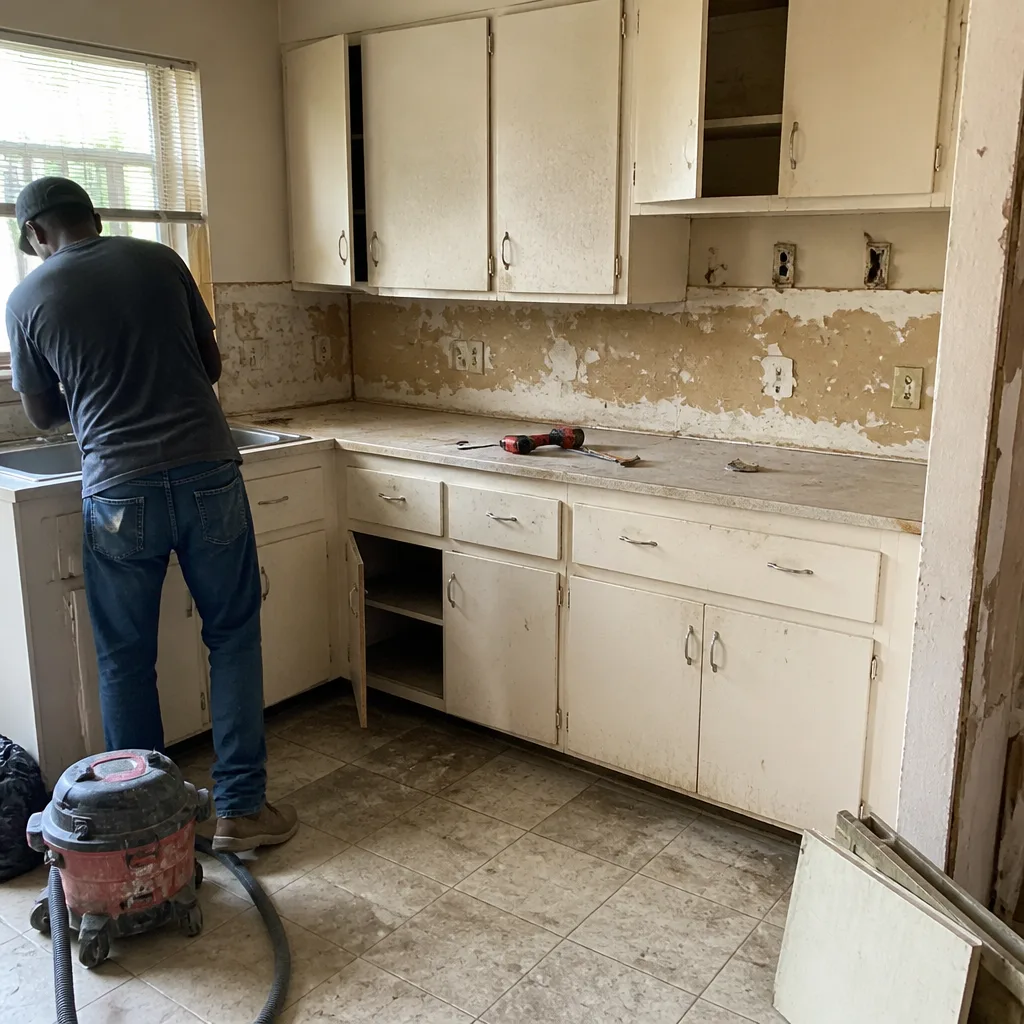 Before
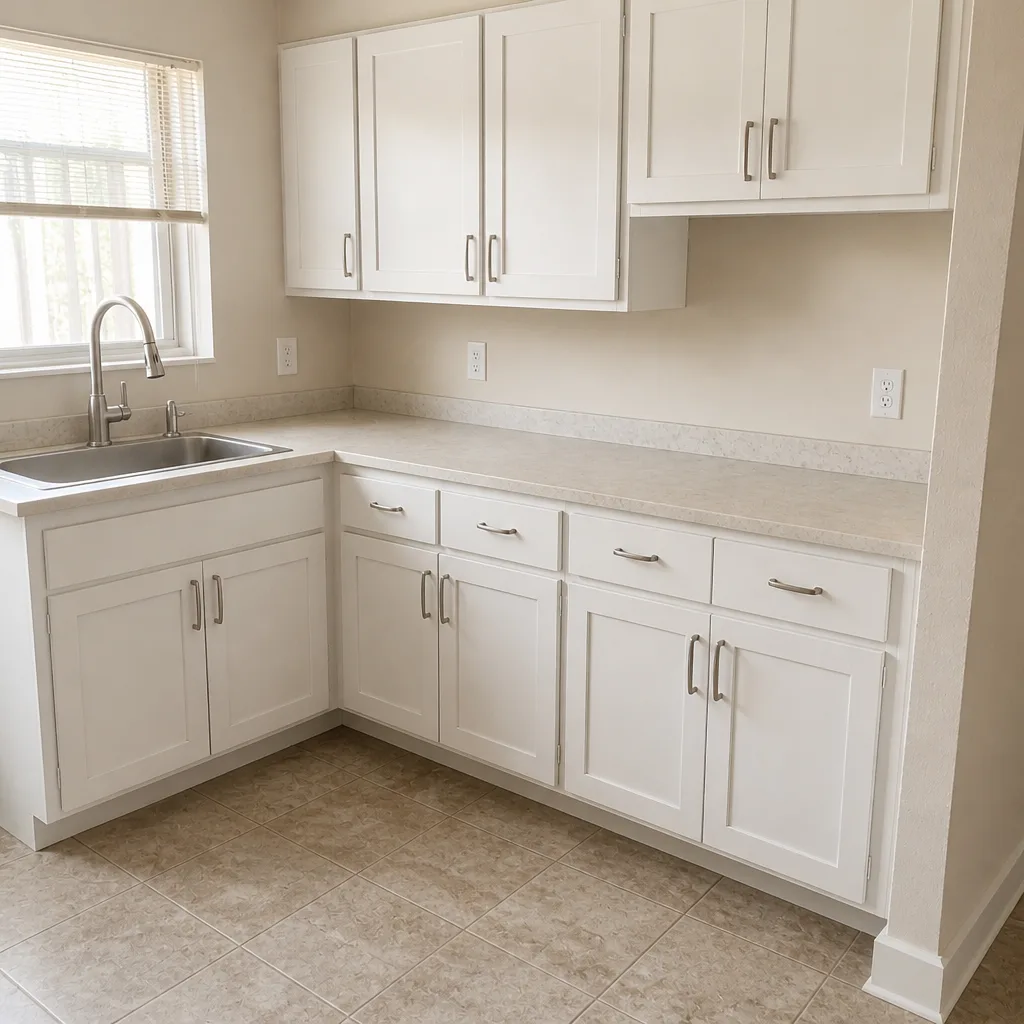 After
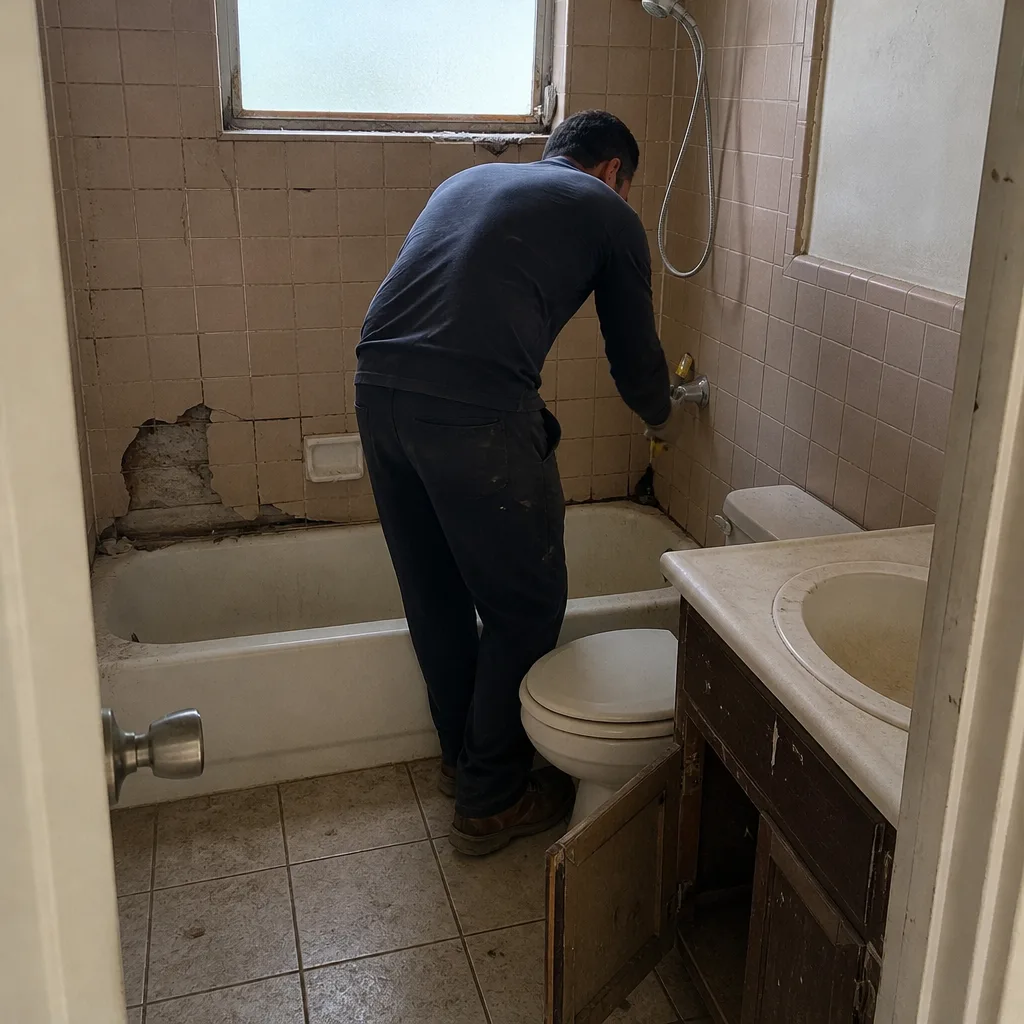 Before
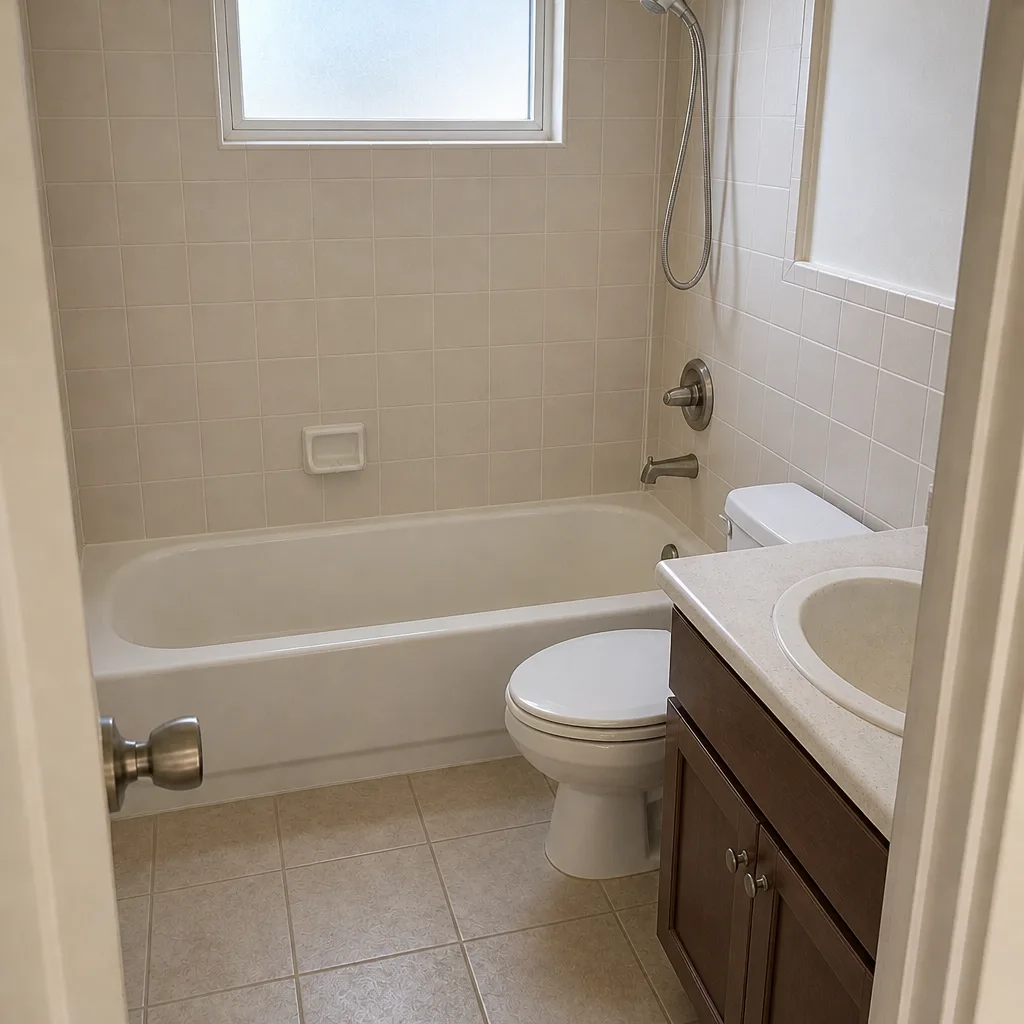 After
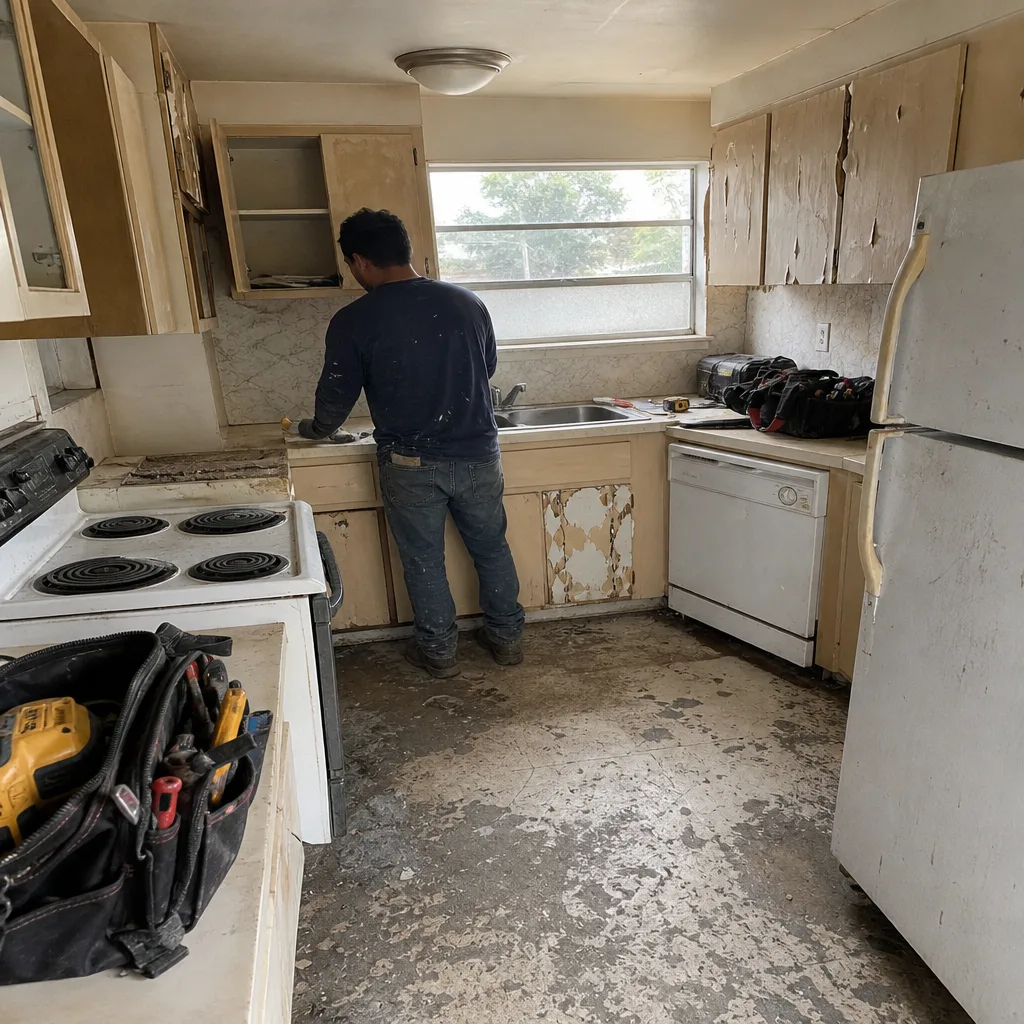 Before
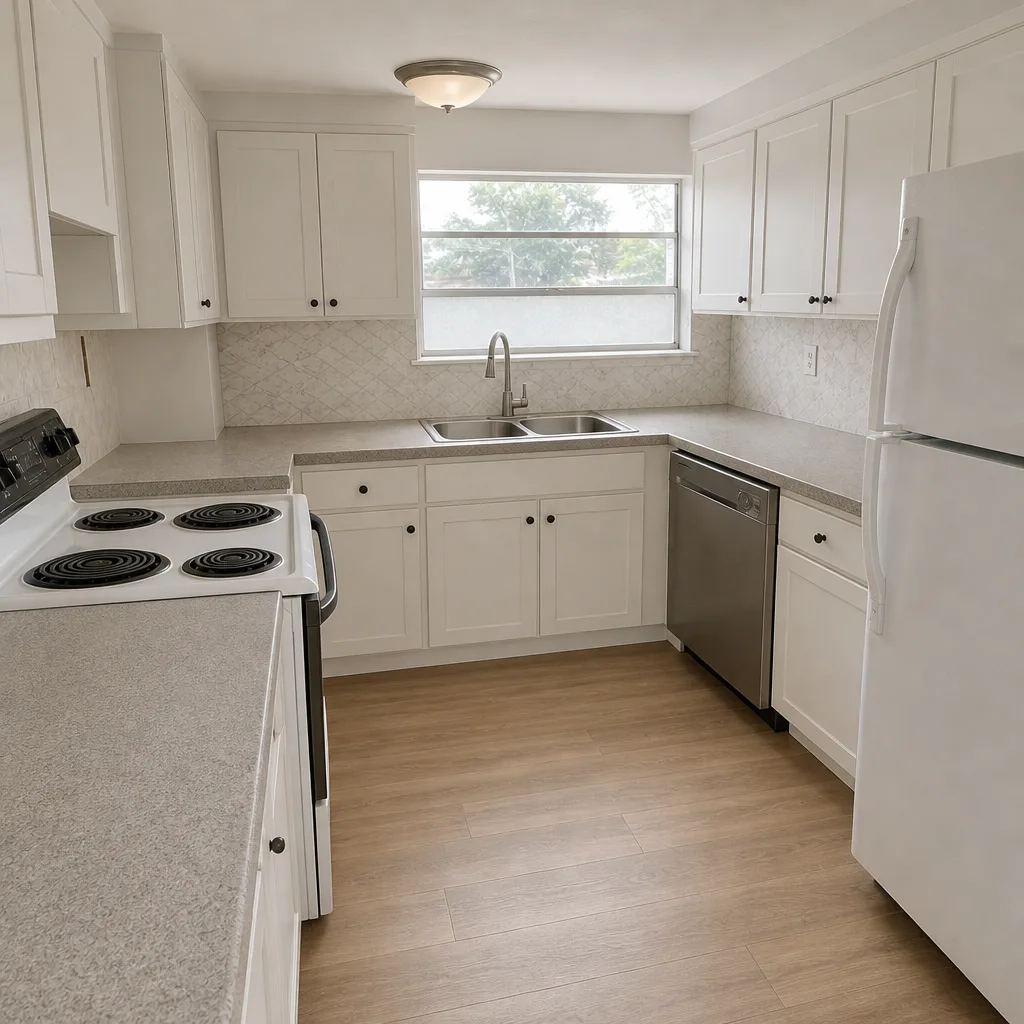 After
When to Call a Professional
Some warning signs you can read on your own. But these should trigger a professional estimate before you sign anything: a bathroom with soft subfloor around the toilet base, any visible efflorescence on tile or grout, a contractor whose written scope omits square footage or brand names, a deposit above 30%, or a quote that arrives as a single line item with no breakdown. Any one of these on its own isn’t fatal, but two together usually means the project will close at a materially higher number than the one you agreed to. Rowan Construction Group Miami Gardens offers free estimates in Miami Gardens and a free second opinion on any written estimate you’ve received. Call (844) 320-5198 to schedule yours. Our technicians have up to 19 years of experience, and every estimate arrives as a flat written price with a written scope and a written warranty before work begins.
Frequently Asked Questions
A full hall bath in Miami Gardens with written scope runs $19,500 to $32,000. Primary bathrooms in the 80-120 square foot range run $34,000 to $62,000. Hidden structural costs (subfloor, cast iron drain, efflorescence remediation) can add $2,400 to $9,600 depending on findings, which is why the pre-construction inspection in the scope matters. Call (844) 320-5198 for a written quote built from your specific bathroom.
No. A contract that doesn’t name brands, models, and square footage is a contract that legally allows substitution. Tile work without a brand is tile work at whatever the contractor chooses to install, and “vanity” without a manufacturer or door style is a placeholder you’re agreeing to be surprised by. Ask for a full written scope before signing.
An unsigned change order is any change to a project that was verbally approved but not put in writing with a fixed price and both parties’ signatures. It is a warning sign because it exposes you to charges at the contractor’s discretion later. Our discipline under Clause 1 of The Haven Standard is that no work proceeds on a change until the change order is signed – and that’s the difference between a $19,000 bathroom and a $27,000 surprise.
Yes. Plumbing, electrical, and general contracting each require separate Florida licenses under DBPR. Verify each one at myfloridalicense.com in under two minutes: search by name, confirm license type matches the work, confirm active status, and confirm the business name matches your contract. Any trade that can’t produce a matching license is a warning sign.
10% to 30% upfront is standard. Anything above 30% warrants closer scrutiny under Florida Statute 489 and usually signals a contractor whose cash flow depends on incoming deposits. Hold the final 10% until county inspection passes, the documented photo record is delivered, and you’ve walked the finished room with a punch list.
Check three things: the subfloor around the toilet base with the heel of your hand for softness, grout lines and tile edges for white chalky efflorescence, and the exhaust fan for whether it vents to the exterior. In Miami Gardens housing built before 1985, one of these three is a finding on nearly every project. Tell the contractor to inspect for all three during estimating, in writing.
The Bottom Line
Most bathroom remodeling disasters start on the paperwork, not the jobsite. A scope without square footage, brand names, and labor rates leaves the door open to charges you didn’t agree to. An unsigned change order process converts a mid-project discovery into a surprise invoice. A missing trade license or a deposit above 30% tells you the contractor’s own house isn’t in order. Verify the license, demand the written scope, sign nothing verbally, and check the subfloor and efflorescence before signing. That’s the discipline that keeps a Miami Gardens bathroom project within a few percent of the agreed number. Call (844) 320-5198 for a free estimate, no-hassle upfront pricing, and a free second opinion on any written quote you’ve already received.
Written by the team at Rowan Construction Group Miami Gardens.