Last updated November 18, 2026


Free written scope consultation - allowances, timeline, and change-order rules on paper before a single trade is scheduled
Home Additions & ADU Warning Signs Every Homeowner Should Know
If a contractor submits plans to Miami-Dade without a Florida-licensed structural engineer’s stamp on the drawings, the permit will be rejected, and the homeowner typically finds out six weeks after submission, not six days. That gap between paying and finding out is where most addition budgets bleed. The warning signs that a project is sliding toward cost overruns, structural defects, or permit problems follow a fairly predictable sequence, and nearly all of them appear before the foundation is poured. Knowing the sequence lets you intervene at the phase where intervention is cheapest. This guide walks through the Florida-specific red flags we look for at each stage, from Miami Gardens lots with tight setbacks to the inspection sign-offs not everybody actually calls for.
Quick Answer
Most home addition and ADU problems in Miami Gardens start before construction: missing structural engineering stamps, missing energy compliance calculations, missing survey documentation, and deposits above Florida’s 10% legal cap. The rest show up mid-build as skipped inspections, materials that don’t match the approved plans, missing change orders, and stucco going up over framing that hasn’t been inspected. Each one leaves a signature you can spot.
Styles & brands we work with
- Kitchen remodeling
- Bathroom remodeling
- Home additions & ADU
- Roofing
- Windows & doors
- Driveway & pavers
- Fence
Table of Contents
- Pre-Construction Warning Signs in Florida
- The Deposit Structure Warning Sign
- Mid-Construction Warning Signs You Can Verify
- The Documentation Gap: Change Orders and Approved Permit Sets
- Structural Warning Signs You Can See Without Tools
- ADU-Specific Issues in Miami Gardens
- When to Call a Professional
- Frequently Asked Questions
Pre-Construction Warning Signs in Florida
The cheapest moment to stop a bad project is before drawings go to the building department. Miami-Dade County is one of the more rigorous permitting jurisdictions in the state, and Florida Building Code has specific requirements that a contractor working in other markets may simply not know. In our experience across Miami Gardens, three documents get skipped more often than any others:
- A structural engineer’s sealed drawings. An addition with new load-bearing walls, a second story, or a detached ADU needs engineering, not just architectural drawings. A licensed Florida structural engineer stamps the framing and foundation plans. Without that stamp, the plans get rejected at intake, and the resubmission clock usually runs four to six weeks.
- An energy code compliance calculation. Residential additions and ADUs must meet Florida Building Code Chapter 13, which requires a Manual J load calculation and a Manual S sizing report, plus a completed energy compliance form. A contractor who’s never mentioned the term “Manual J” is telling you something about their process.
- A current survey showing existing setbacks. Miami Gardens has lots with grandfathered footprints, non-conforming side yards, and easements that don’t appear on the plat. You need a surveyor’s certified drawing that shows what’s there now and where the new footprint sits relative to property lines. Without it, approval is a guessing game, and the guess usually fails.
Ask for all three before signing anything. A contractor who has them ready will produce them within a day. One who doesn’t will say “we’ll get to that” and you’ll be the one waiting.
The Deposit Structure Warning Sign
Florida law caps how much a contractor can collect before starting work on any project over $2,500. Under Florida Statute 489.126, the maximum is 10% of the contract price, plus the cost of any special-order materials if you agree to them in writing. Anyone demanding 30%, 40%, or 50% upfront is violating the statute. That’s the legal side. The risk side is worse: upfront-heavy deposits are the leading indicator of a cash-flow problem, and cash-flow problems are what turn small projects into disappearing contractors.
The deposit structure to expect on a typical addition or ADU:
- 10% or less at signing, plus documented special-order material deposits for items like windows or cabinets with a written invoice from the supplier.
- Draw schedule tied to inspections, not calendar dates. Foundations get paid after footing inspection. Rough framing gets paid after framing inspection. Nothing gets paid in advance of visible progress.
- Final payment held until certificate of occupancy, or, on a smaller addition, until the final inspection passes and the punch list is closed.
A schedule that pays the contractor a lump sum at “50% complete” with no inspection checkpoint is not a schedule. It’s a wish. Under Clause 1 of the Haven Standard, we write the price before anyone picks up a tool, and we write the draw schedule the same way: on paper, tied to verification.
Mid-Construction Warning Signs You Can Verify
Once the permit’s been issued, the signals get quieter but more consequential. You can check each of these yourself, on the job site, without any tools.
- Inspections being skipped or self-certified. Florida allows Private Provider inspections in some jurisdictions, and they’re legitimate when properly executed, but a contractor who skips the county inspector entirely and calls it “self-certified” without a Private Provider’s written report on file is bypassing a check that protects you. Ask to see the inspection records. The county’s online portal shows every scheduled and completed inspection for your permit number.
- Materials delivered that don’t match the approved plans. Check every delivery against the plans. Window brand and glazing rating, lumber grade, concrete PSI, hurricane strap model: all of it is specified. If St. Augustine grass-patterned shingles show up when the approved set calls for GAF Timberline HDZ, stop and ask. If KraftMaid cabinets arrive when the plans and contract specify Wellborn, that’s not a cosmetic switch; it’s a substitution that changes what you paid for.
- Subcontractors who can’t produce a license number. Every trade on your job should have a state or county license they can name on request. Electricians, plumbers, HVAC crews, and stucco contractors all carry them. A subcontractor who says “we work under the general’s license” is not licensed for the specialty work they’re doing, and that creates real liability for you.
Mid-construction verification is the single highest-leverage habit on any project. Fifteen minutes a week with your phone pointed at the work-in-progress stops problems before they get buried behind drywall.
The Documentation Gap: Change Orders and Approved Permit Sets
Two documents should be physically present at all times during construction, and their absence is a warning sign on its own.
The current approved permit set. Florida law requires the approved permitted plans to be on-site and available for inspection by the building official. If the crew can’t produce a set, the county can stop work. More importantly, without the set on-site, nobody knows what was approved versus what’s actually being built, and the difference is where change orders come from.
Signed change orders for scope changes. Every change to the scope, whether it’s a moved window, a beefed-up beam, or upgraded countertops, needs a written change order signed by the homeowner before the change is executed. Ask the contractor to produce one for any change already made. If they can’t, you’ve already started paying for work that isn’t documented, and the price you agreed to is no longer the price you’ll pay. The reason Rowan’s projects have stayed within a few percent of the agreed cost across 4,000-plus jobs is a boring one: no work proceeds on a change until the change order is signed. Not a text message, not a phone call, not a verbal OK. A signed document.
If you already have a contractor’s written estimate in hand and it isn’t clear on this, bring it by. We’ll review it line by line, at no charge. Compare it against the process described on our Rowan Construction Group Miami Gardens home page, which lays out what a documented project looks like from the first walk-through to the final photo record.
Structural Warning Signs You Can See Without Tools
You don’t need to be an engineer to spot the three most serious structural problems. You do need to look at the right moments.
- Formwork removed too early. Concrete for footings and slabs needs to cure. The standard reference for structural concrete gaining design strength is 28 days, and Florida Building Code doesn’t allow removing formwork or applying load before the specified strength is verified. If forms come off the day after the pour and framing starts the next morning, ask to see the cylinder break report from the testing lab. If there isn’t one, that’s not a shortcut. That’s a cracked slab waiting to happen, and it’s a real problem in Miami Gardens where the water table is high and soil moves during the rainy season.
- Missing hurricane straps or clips. Florida’s wind code requires specific connectors between rafters, trusses, and top plates. You can inspect these from the attic before drywall goes up. Look at each rafter-to-wall connection. If you see nails only and no metal strap or clip, stop the job and call the inspector. This is the single most common structural defect we get called to correct on work other contractors started.
- Stucco over framing that hasn’t passed rough-in. Stucco is a permanent weather barrier. Once applied, it hides everything underneath. If stucco is going up and the rough-in inspection (framing, MEP, sheathing, flashing, weep screed) hasn’t passed, you have a project that will conceal problems permanently. In Miami Gardens specifically, this is also a moisture trap: our summer rain pattern will find its way behind stucco that’s applied before the underlying assembly has been inspected and dry.
Each of these conditions exists before the concrete sets or the drywall goes up. You can see all three at the phase where fixing them costs hundreds, not thousands.
ADU-Specific Issues in Miami Gardens
ADUs (accessory dwelling units) are the segment of the construction market most homeowners know least about, and the one where warning signs escalate fastest. An ADU in Miami Gardens typically means a detached structure with its own electrical service, plumbing rough-in, and sometimes its own meter, which pulls in more permitting steps than a simple room addition.
The warnings we watch for here specifically:
- No conversation about lot coverage, setbacks, or impervious surface limits. Miami-Dade limits total impervious area on a residential lot, and an ADU with its own footprint, driveway approach, and patio eats into that budget fast. A contractor who hasn’t pulled a current survey and calculated impervious coverage is guessing.
- No plan for utility tie-ins. An ADU needs its own electrical sub-panel or service, water and sewer connections that satisfy Miami-Dade Water and Sewer, and a documentable path for the FPL service. If your contractor can’t describe the sequence in two sentences, they haven’t done it before.
- Claims that a “detached guest house” doesn’t need its own permit. It does. Anything with a bathroom, kitchen, or sleeping area is a dwelling under the code, whether you call it an ADU, a guest house, an in-law suite, or a casita. Anyone suggesting otherwise is either misinformed or interested in avoiding inspection. For the deeper version of how ADUs are planned and permitted, see our Home Additions & ADU in Miami Gardens guide.
The honesty signal here is simple: the contractor should bring up permitting before you bring it up.
See the difference
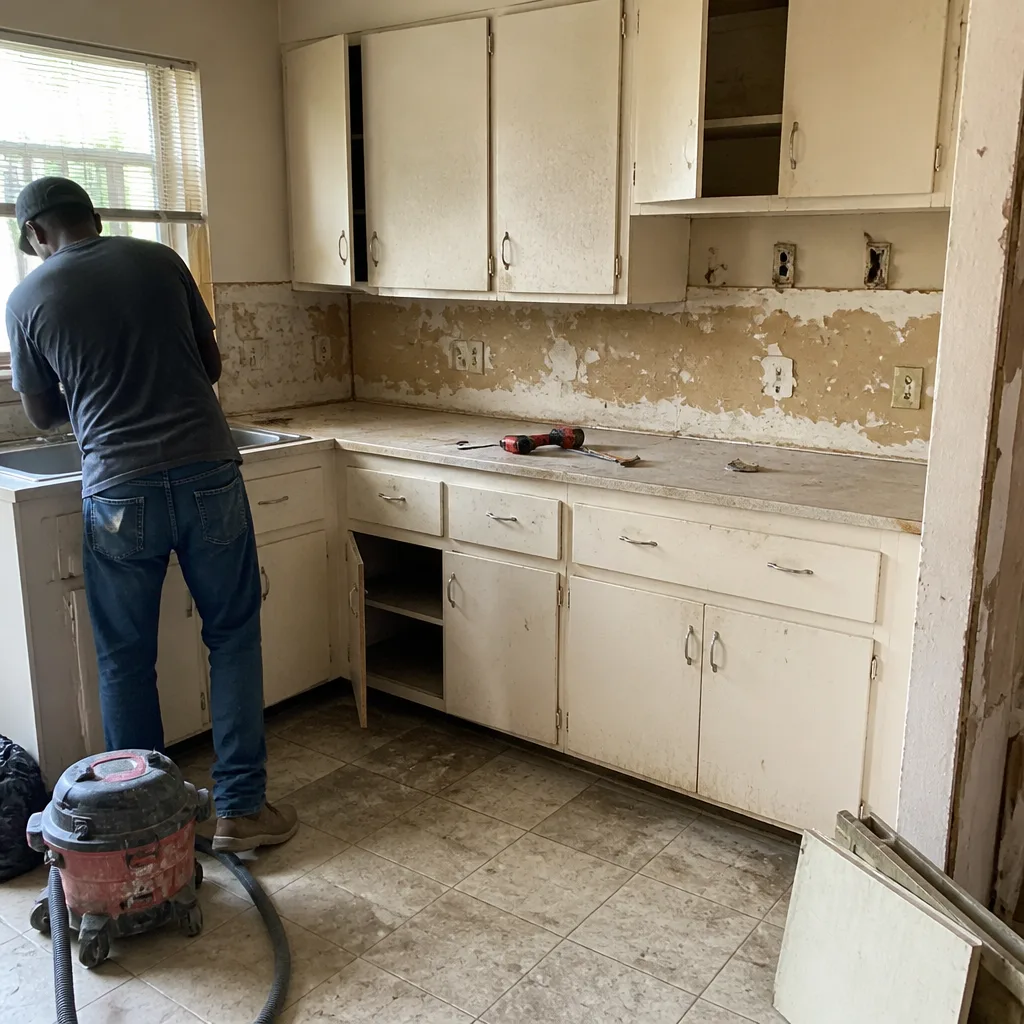 Before
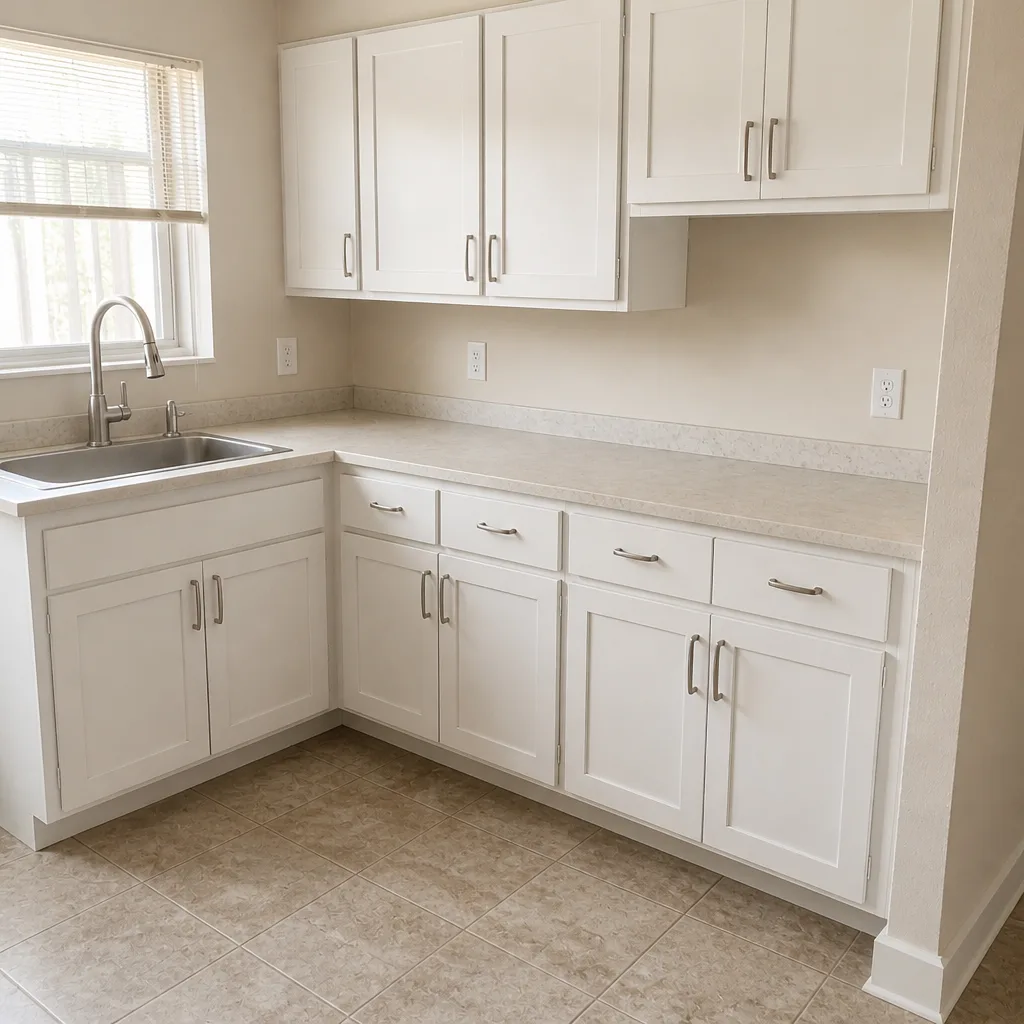 After
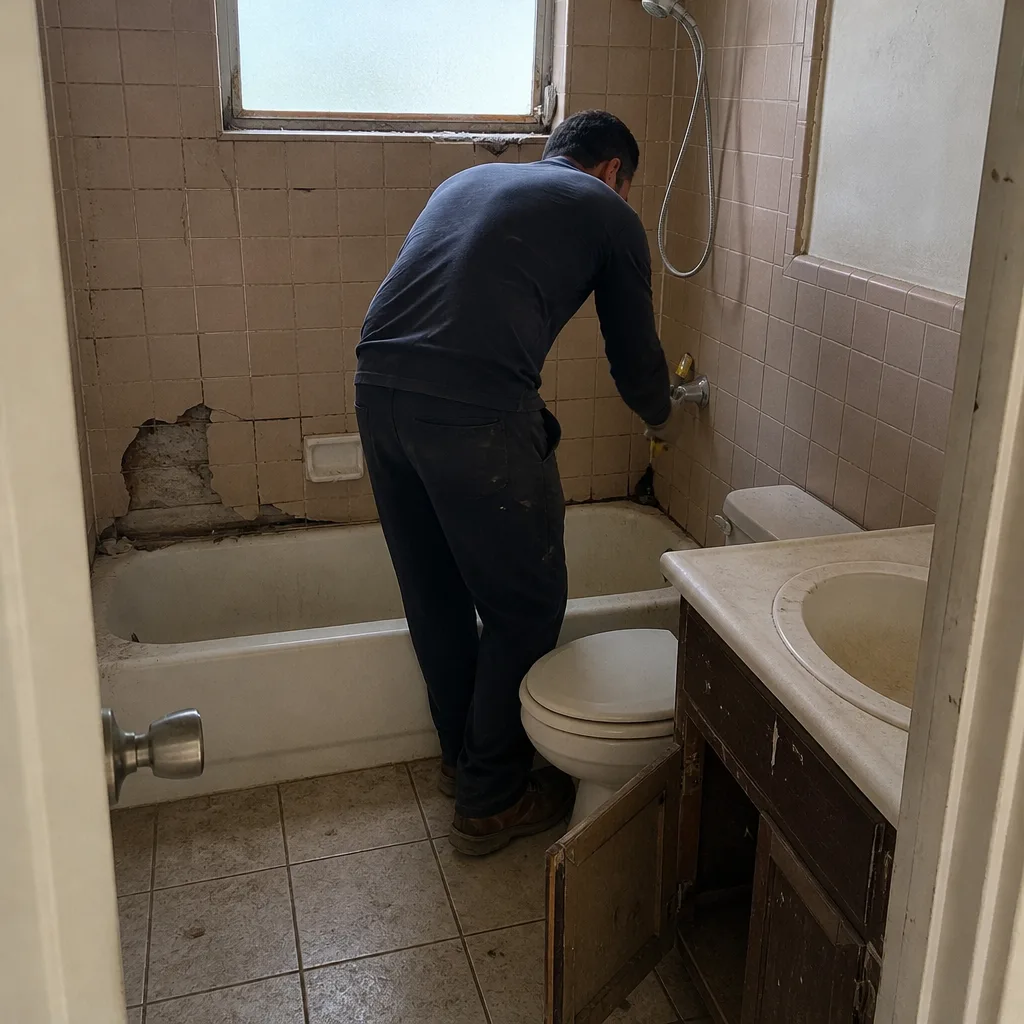 Before
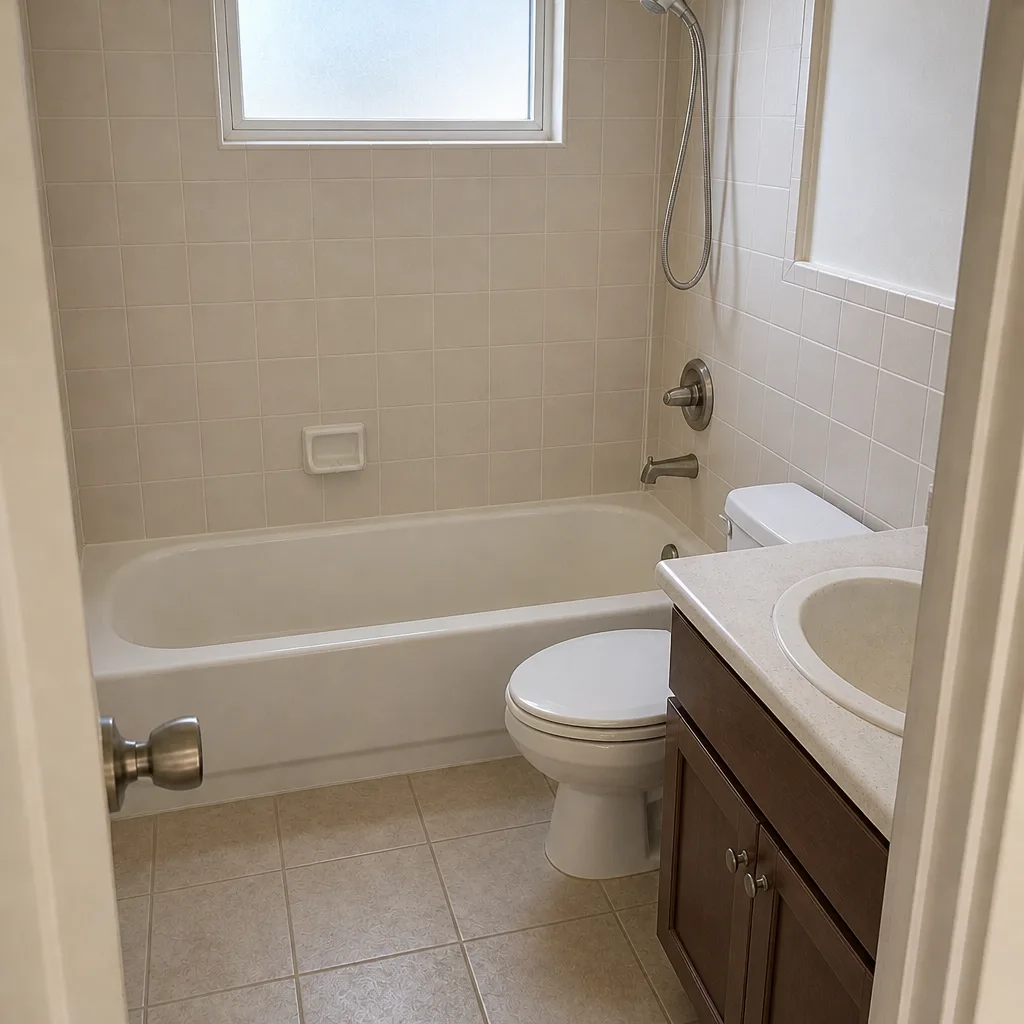 After
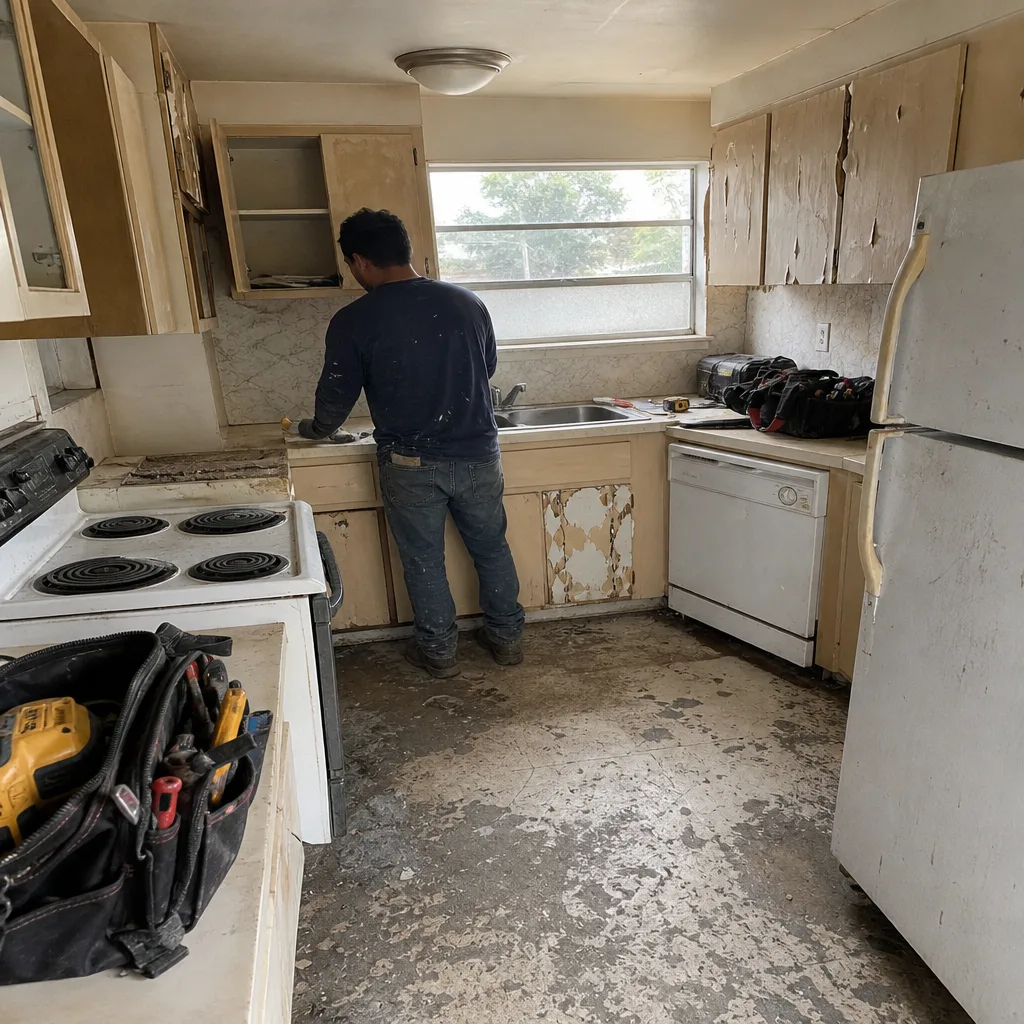 Before
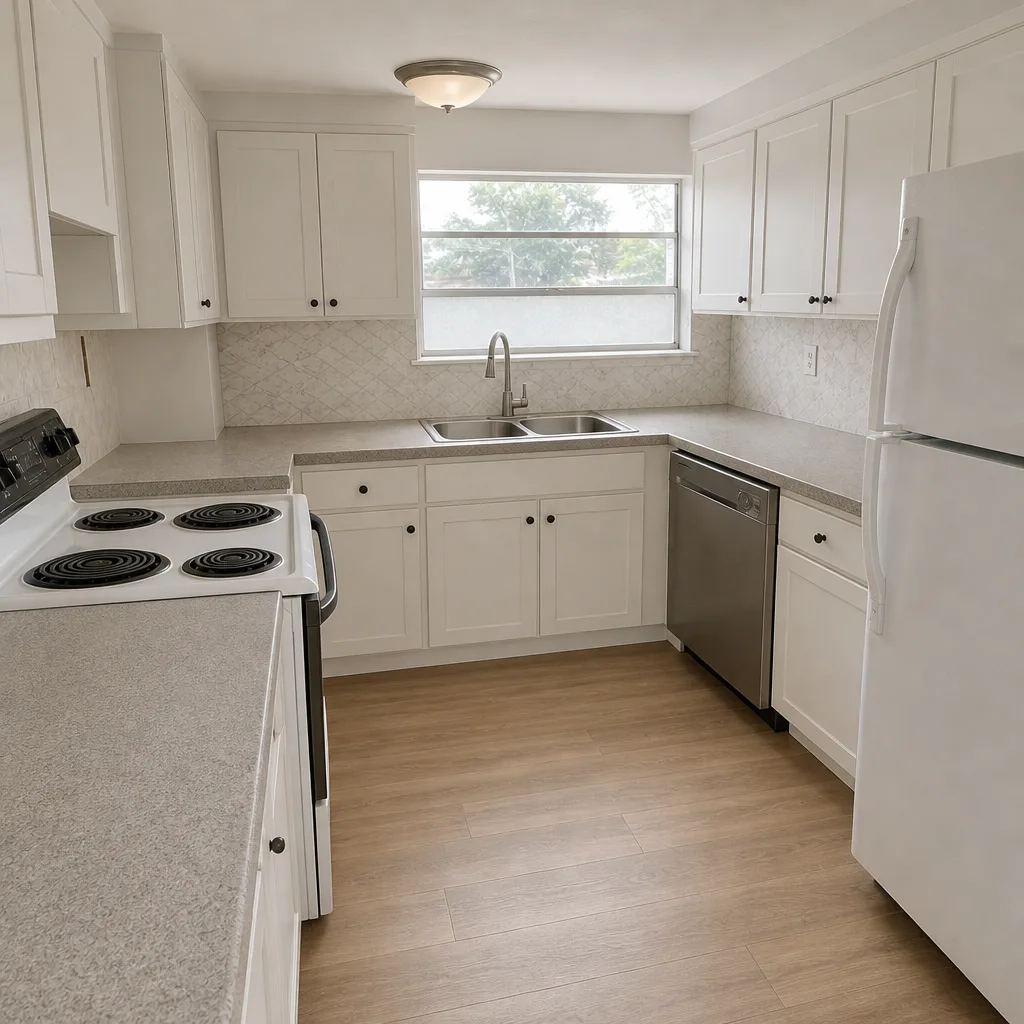 After
Common Mistakes to Avoid
- Signing before the surveyor’s certified drawing exists. Without written confirmation of existing setbacks, an approval can come through and still be wrong. Many Miami Gardens lots have side yards that are non-conforming or grandfathered, and a plan that ignores that history gets flagged late, after demolition has already happened.
- Treating “we’ll self-certify the inspection” as a courtesy. A Private Provider inspection is legal only when it produces a written report on file with the building department and only for the scope the Private Provider is licensed for. If you can’t see the report, the inspection didn’t happen. Pay for an independent one.
- Paying materials deposits without a supplier invoice. A deposit for special-order items like windows or custom cabinets is legitimate. It should always include a written supplier invoice showing the exact item and the deposit paid. An invoice-less materials deposit is a loan to your contractor, and it doesn’t obligate them to give you the materials.
- Accepting material substitutions without a signed change order. If a James Hardie siding spec is swapped for a lower-tier fiber cement product without a change order and an adjustment to the price, you’ve overpaid and you’ll find out at resale when the appraiser downgrades the finish.
- Skipping the photo documentation habit. Take a photo of the foundation before the slab goes down, of the framing before the drywall, of the electrical before the close-in inspection, and of the attic straps before the insulation. Those photos are the difference between a warranty claim you can win and one you can’t.
- Trusting the final walk-through instead of the inspection records. The county’s online permit portal shows every scheduled inspection, every cancellation, every failed item, and every sign-off. Pull that record yourself on a Friday afternoon. It answers in five minutes what a walk-through can’t answer at all.
- Assuming a contractor’s own warranty replaces the inspection. The 365-Day Done Right Promise, and any comparable written warranty, only covers what the contractor agrees to make right. It doesn’t create a code-compliant structure if an inspection was skipped. Verify the inspection first.
When to Call a Professional
Some problems you can correct with your own eyes and a phone call to the county. Others need a licensed eye that knows Florida code. Call a professional immediately if you see any of the following: formwork removed and framing started within a few days of a slab pour; stucco going up before the rough-in inspection has passed; a deposit request over the 10% cap; a contractor who can’t produce the current approved permit set on request; or a change already made without a signed change order in your files. Each of these is a stop-work situation, and each one gets more expensive every day it continues. Rowan Construction Group Miami Gardens offers free estimates in Miami Gardens, and we’ll also review a written estimate you’re evaluating right now, at no charge, line by line. Call (844) 320-5198. Our technicians have up to 19 years of experience, and every visit includes a documented photo record of what we found and what needs to happen. If the project is currently with another contractor and you want a second opinion before you sign a change order, that’s exactly the call we take.
Frequently Asked Questions
Asking for more than a 10% deposit before work starts. Florida law caps initial deposits on projects over $2,500 at 10%, so any demand for 30% to 50% upfront is both a violation and a cash-flow warning. Call (844) 320-5198 to review any deposit schedule you’ve been handed.
Yes. Every Florida permit has a public record through the issuing building department, and Miami-Dade County’s online portal shows every scheduled, completed, failed, and cancelled inspection for your permit number. Check it weekly during construction, and if the record doesn’t match what your contractor has told you, ask why in writing.
Yes, in nearly every case. A detached ADU involves new foundations, new load paths, and its own utility service, and Miami-Dade requires sealed structural drawings for those elements. If your contractor’s plan set doesn’t include a Florida-licensed structural engineer’s stamp, the permit application will be rejected at the intake stage.
An energy compliance calculation that demonstrates the addition meets the residential energy code: a Manual J load calculation, a Manual S equipment sizing report if HVAC is being extended or added, and a completed compliance form submitted with the permit. A contractor who can’t produce one hasn’t done enough additions in Florida to be trusted with yours.
Typical ranges in the current Miami Gardens market run roughly $220 to $340 per square foot for a conditioned addition, and $180 to $290 per square foot for a detached ADU, before site-specific costs. A well-run project finishes within a few percent of the agreed written price; anything over 10% usually means weak change-order discipline, not a market surprise. Call (844) 320-5198 for a specific written range.
The current approved permit set, printed and posted, and a signed change order for any change already made. Florida law requires the approved plans to be available on-site for the building official. If either document is missing, stop the job and ask.
The Bottom Line
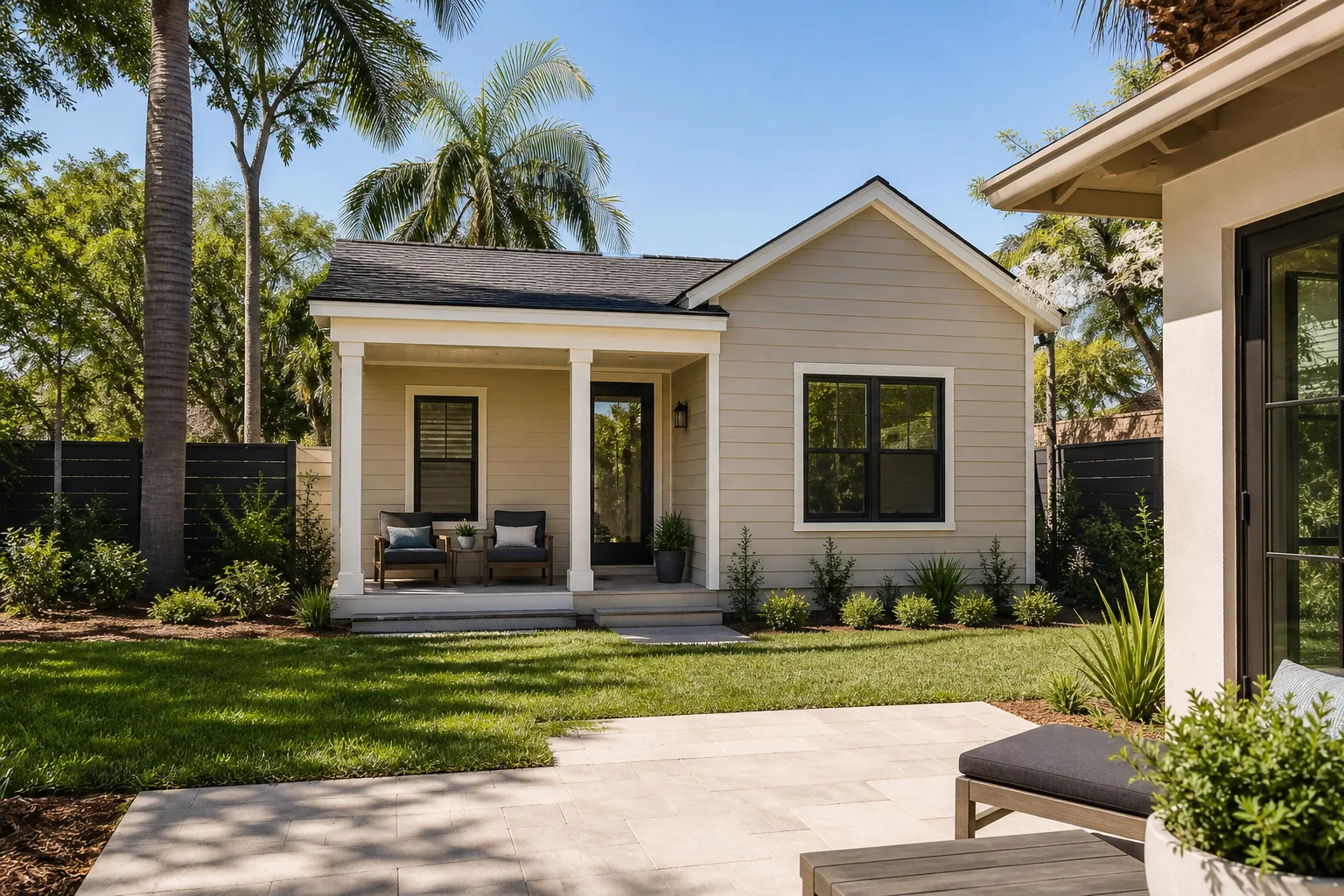
The warning signs on an addition or ADU project follow a sequence, and the sequence is on your side. Pre-construction problems (no engineering stamp, no energy compliance, no survey) show up as slow permits. Deposit and documentation problems show up as overruns. Structural problems show up as cracks and wind damage you’ll inherit. Every one of them has a check you can perform yourself, and none require opening a wall. If you’re in the middle of an addition or ADU project in Miami Gardens and something feels off, the free estimate we offer is also a free second look. If your project runs into adjacent work while it’s being sorted out, our trade-specific pages on Driveway & Pavers in Miami Gardens and Fence Installation in Miami Gardens lay out what a documented job on those scopes looks like, and both follow the same standard.
Ready to get a written price before anyone picks up a tool? Call (844) 320-5198 to schedule your free estimate with Rowan Construction Group Miami Gardens. Every project starts with a written price, a written scope, and a written warranty, backed by the 365-Day Done Right Promise and The Haven Standard. If you already have an estimate in hand from another contractor, bring it: we’ll review it line by line, at no charge.
Written by the team at Rowan Construction Group Miami Gardens.