Last updated November 18, 2026


Free written scope consultation - allowances, timeline, and change-order rules on paper before a single trade is scheduled
The Complete Fence Installation Guide for Miami Gardens Homeowners
Miami-Dade County requires fences to meet a 175 mph wind load standard under the Florida Building Code High-Velocity Hurricane Zone designation – a code tier that rules out several commonly advertised fence panel systems and mandates post embedment depths that most DIY guides never mention. That single number changes almost everything about how a fence gets built here: the panel you can buy, the spacing of the posts, the depth of the concrete footings, and the paperwork you file before anyone digs. In this guide we walk through the Miami Gardens permit process from the application backward, name the actual code sections you can look up yourself, put 2024 installed prices on the page in dollars, and explain which systems are Miami-Dade NOA-approved and which are not.
Quick Answer
A residential fence in Miami Gardens needs a Miami-Dade County building permit, must be designed for a 175 mph wind load, must sit behind the property line at the setback your zoning district requires, and needs HOA architectural approval before the county will accept the application. Plan for roughly three to six weeks from submission to permit issuance, and budget $18 to $90 per linear foot installed depending on material – wood at the low end, CBS concrete block at the high end.
Styles & brands we work with
- Kitchen remodeling
- Bathroom remodeling
- Home additions & ADU
- Roofing
- Windows & doors
- Driveway & pavers
- Fence
Table of Contents
- What Miami-Dade Code Actually Requires of a Fence
- Setback Rules by Fence Type and Lot Position
- Wind Load Requirements by Height and Material
- Which Fence Systems Are Miami-Dade NOA-Approved
- What Fence Installation Costs in Miami Gardens in 2024
- The Permit Application Checklist, Step by Step
- Post Embedment Depth by Soil Type and Fence Height
- Common Mistakes to Avoid
What Miami-Dade Code Actually Requires of a Fence
Three documents govern a fence in Miami Gardens, and knowing which one applies to which question saves weeks. The Florida Building Code, 8th Edition (2023), Chapter 16 covers structural loads and is the source of the 175 mph design wind speed for Miami-Dade’s High-Velocity Hurricane Zone. The Miami-Dade County Code of Ordinances, Chapter 33, covers zoning – height, setback, and location on the lot. Your HOA’s declarations cover appearance, and in Miami Gardens they carry real weight because several communities here have architectural review boards that meet monthly or quarterly.
A fence is legally a structure in Miami-Dade, not a decoration. That means it gets permitted, inspected, and closed out like a structure. Two inspections are typical: one after the posts and footings are set and before panels go up, and a final inspection once the gate hardware and panels are complete. Skipping the footing inspection is the most common reason a fence fails final, because the inspector cannot see embedment depth once concrete is poured and panels are hung.
Height limits in Miami-Dade residential zoning generally cap a rear or side yard fence at 6 feet and a front yard fence at 4 feet, but the exact figure depends on your zoning district. Lots in the MD-1 and RU-1 districts around Miami Gardens have slightly different front yard allowances, and corner lots carry an additional sight-triangle restriction at the intersection. Pull your property’s zoning designation from the county’s online GIS before you order material – a 6-foot panel that has to be cut down to 4 feet in the front yard is money you do not get back.
For homeowners planning a larger exterior project that includes the driveway approach, our guide to Driveway & Pavers in Miami Gardens covers how the apron, swale, and fence line need to be coordinated so the permit drawings agree with each other.
Setback Rules by Fence Type and Lot Position
Setback is where most fence plans die, and it splits along two axes: solid versus open fence, and where on the lot the fence runs. A solid fence (wood, vinyl, CBS) blocks sight and wind; an open fence (aluminum picket, wrought iron, chain link) lets both through. Miami-Dade treats them differently in the front yard because of sight lines at driveways and corners.
- Rear property line, solid fence: typically set back 0 to 6 inches from the property line depending on district, with the finished face toward the neighbor. Verify against your survey.
- Side yard, solid fence: same as rear in most RU-1 and MD-1 lots, but a side yard that fronts a street on a corner lot is treated as a front yard.
- Front yard, solid fence: generally not permitted forward of the front building line in Miami-Dade residential districts, and where allowed, held to 4 feet in height.
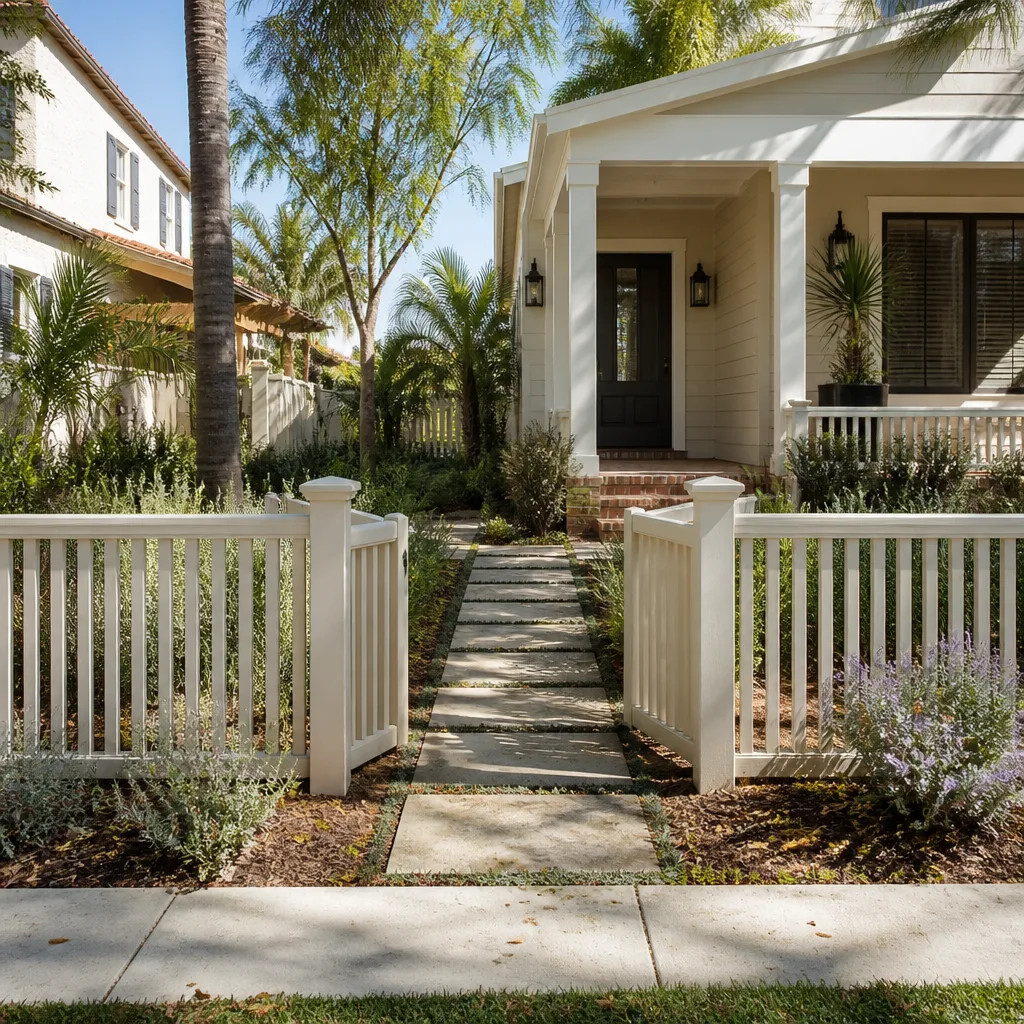
- Front yard, open fence (aluminum picket): usually permitted up to 4 feet at the property line, subject to a sight triangle at driveways and intersections.
- Corner lot sight triangle: the triangular area at the intersection of two streets is kept clear of solid fencing above roughly 30 inches so drivers can see cross traffic.
The code section homeowners can verify directly is Miami-Dade County Code Chapter 33, which sets the zoning regulations, read together with the Florida Building Code for the structural side. The practical move is to call the Miami-Dade County Department of Regulatory and Economic Resources before you buy anything and ask two questions: what is my zoning designation, and what is the front building line? Those two answers tell you where your fence can legally sit and how tall it can be. On a lot near the Palmetto Expressway frontage roads or along the NW 27th Avenue corridor, the front yard rules get tighter because of the visibility standards that run along major arterials.
Wind Load Requirements by Height and Material
The 175 mph design wind speed is the number that separates a real Miami-Dade fence from a national catalog product. A solid 6-foot privacy fence in a 175 mph zone acts like a sail. The load it transfers to each post rises with the square of wind speed, which is why post spacing here is tighter than what a generic guide shows and why the concrete footing has to be deeper and wider than a northern installation.
What the wind load does to your fence, in plain terms:
- A solid 6-foot wood or vinyl privacy fence needs posts set at 6 feet on center or closer, not the 8 feet common in low-wind markets.
- A 4-foot solid fence catches roughly half the wind area of a 6-foot panel and can often run posts at 8 feet on center with a smaller footing.
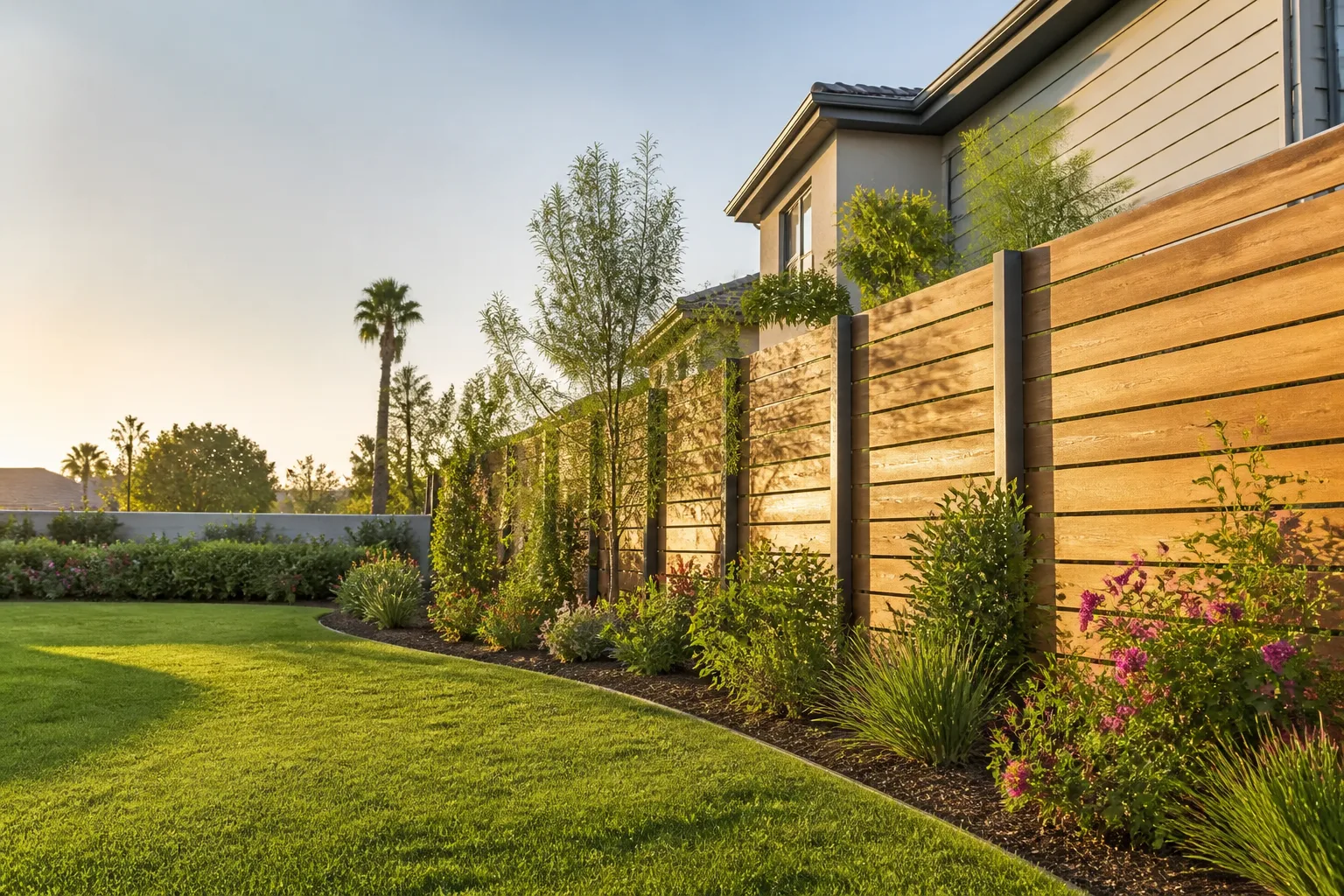
- An open aluminum picket fence at 4 feet with 4-inch picket spacing sheds most of the wind and is the least demanding structurally – which is why it is the standard front-yard choice here.
- CBS concrete block walls must be engineered, not just stacked. The wall needs a reinforced bond beam at the top, vertical rebar in the cells, and a footing sized to the wall height, all shown on a sealed drawing.
The Florida Building Code High-Velocity Hurricane Zone designation covers Miami-Dade and Broward and requires products with a Miami-Dade Notice of Acceptance, or a Florida Product Approval, for the systems that have one. If a fence company hands you a spec sheet with no NOA or product approval number on it, that product has not been evaluated for this wind zone. Full stop.
Which Fence Systems Are Miami-Dade NOA-Approved
Not every vinyl fence sold in South Florida is approved for a 175 mph wind zone, and the gap is not cosmetic. A NOA – Notice of Acceptance – is Miami-Dade’s product approval, issued after the manufacturer submits test data showing the assembled system meets the wind load. It is issued to a specific product line, a specific post, and a specific embedment. Change any of those and the approval does not travel with it.
In our experience pulling permits in Miami Gardens, the picture looks like this:
- Aluminum ornamental and picket systems from established manufacturers generally carry a Miami-Dade NOA. Ask for the number and the approved installation detail, not just the catalog page.
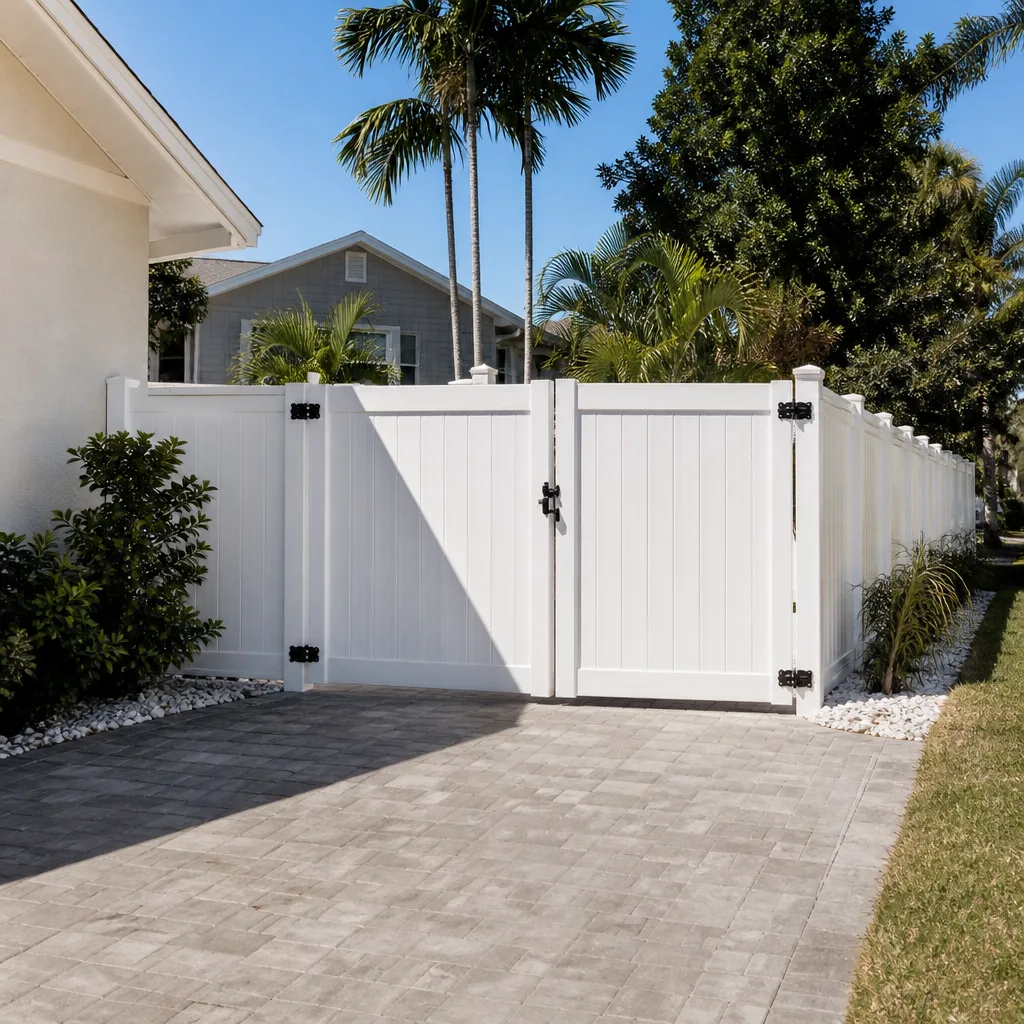
- Vinyl privacy systems are the mixed bag. Some manufacturers have NOA-approved lines with reinforced posts and specific footing details; many of the cheaper panel kits sold online do not. A vinyl panel that passes in Georgia has not been evaluated for 175 mph.
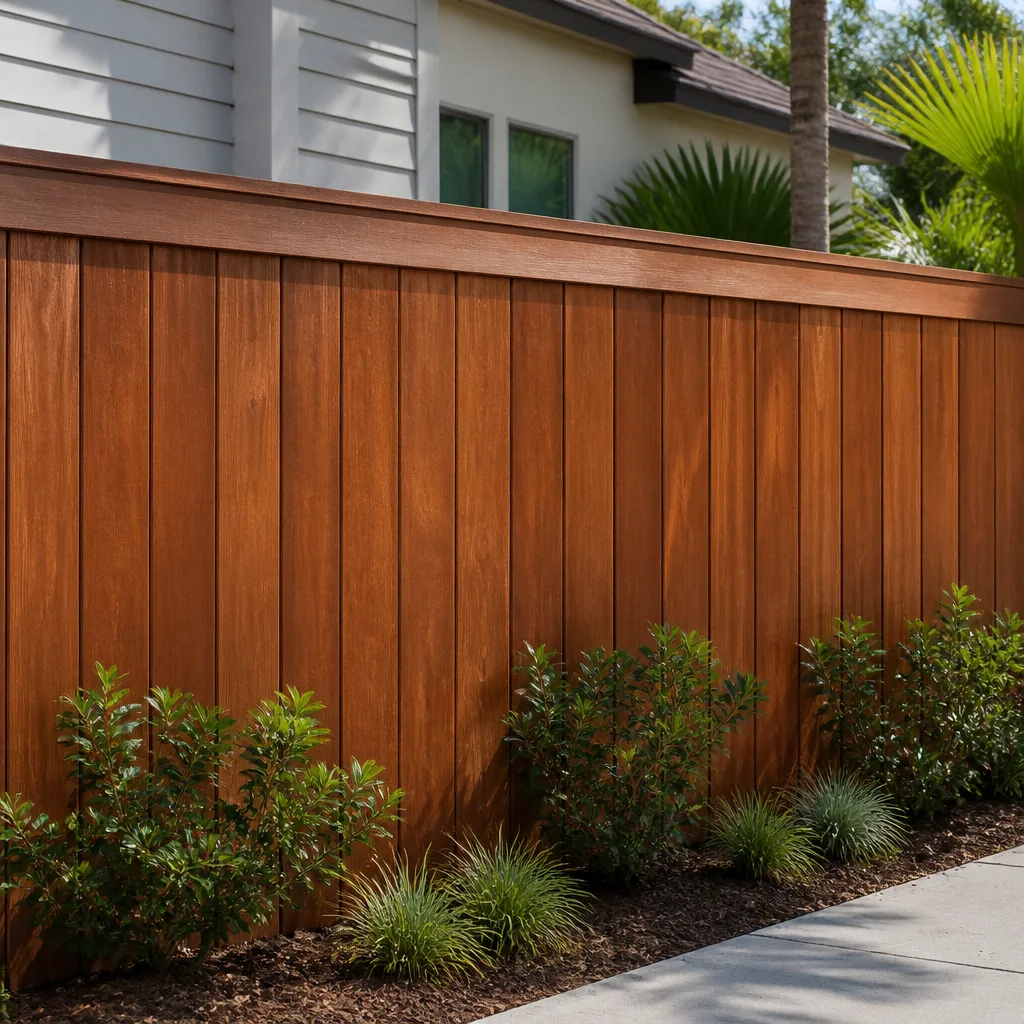
- Wood fences are usually permitted on an engineered or prescriptive basis rather than a product NOA, because the material is not a manufactured system. The permit drawing shows the post size, species, and embedment.
- CBS block walls require a sealed engineering drawing. There is no off-the-shelf approval – every wall gets designed.
If you are comparing estimates, ask each contractor for the NOA number on the product they propose. A company that cannot produce it in writing is proposing a system the county may not accept, and that becomes your problem at inspection. Our Fence Installation in Miami Gardens page lists the approved systems we install and the documentation that comes with each.
What Fence Installation Costs in Miami Gardens in 2024
Fence pricing in Miami Gardens runs higher than the national average because of the footing depth, the wind-rated systems, and the permit. Here is what we are seeing for installed work in 2024, materials and labor included, per linear foot:
- Aluminum (ornamental, powder-coated): $28 to $45 per linear foot. The spread covers height, picket spacing, and gate count.
- Vinyl (NOA-approved privacy systems): $22 to $38 per linear foot.
- Wood (pressure-treated pine, 6-foot privacy): $18 to $30 per linear foot. Cedar and composite run higher.
- CBS concrete block (engineered, stuccoed): $55 to $90 per linear foot. Engineered drawings and the reinforced bond beam drive the high end.
A few line items that surprise homeowners, so budget for them:
- Gate: $250 to $900 depending on width, material, and self-closing hardware.
- Permit fee: varies with linear footage and valuation; a typical residential fence permit in Miami-Dade runs in the low hundreds of dollars.
- Survey: $300 to $600 if you do not have a current one. You need it to prove the fence sits on your side of the line.
- Removal of an existing fence: $3 to $6 per linear foot, more if concrete footings have to be broken out.
A typical 150-linear-foot rear and side yard wood fence in Miami Gardens lands around $3,000 to $4,500 installed before permitting and gates. The same run in NOA-approved vinyl is closer to $4,000 to $5,700, and in CBS block it steps up above $8,000. Every one of those numbers should appear on a written, line-item quote with the footage, post spacing, and embedment spelled out before you sign. That is the standard we hold ourselves to, and it is what you should demand from anyone bidding your fence.
The Permit Application Checklist, Step by Step
Here is the sequence that gets a residential fence permit through Miami-Dade County with the fewest trips back to the counter. Following it in order matters – submitting before HOA approval is the single most common cause of a rejected application.
- Get a current survey. The drawing must show the property lines, the proposed fence line, and the setbacks to each line.
- Confirm your zoning designation and front building line with the county before you draw anything.
- Get HOA architectural approval in writing if your community has an architectural review board. The county will not accept the application without it. Miami Gardens has several communities with active review boards, and their meeting schedules add one to eight weeks to the timeline.
- Prepare the site plan drawing showing fence location, height, material, and gate positions, drawn to scale against the survey.
- Attach the product approval – the Miami-Dade NOA number for a manufactured system, or a sealed engineering drawing for a CBS wall.
- Include the post embedment detail showing post size, spacing, footing diameter, and depth.
- Submit and pay the fee to the Department of Regulatory and Economic Resources, and track the review online.
- Call for the footing inspection after posts are set and before panels go up, then call for final inspection at completion.
Typical review timelines run two to four weeks for a straightforward application with complete drawings, and longer if the county comes back with comments or if the HOA approval is late. Build that into your schedule – if you are coordinating the fence alongside a larger project like an addition, our guide to Home Additions & ADU in Miami Gardens explains how to sequence permits so the trades do not step on each other.
Post Embedment Depth by Soil Type and Fence Height
This is the part national guides skip entirely, and it is the part that keeps your fence standing through a hurricane. In Miami Gardens, the soil under most lots is sandy fill over oolitic limestone – the same limestone that makes trenching slow and makes a shallow footing a waste of concrete. The contractor’s rule of thumb for a wind-rated fence is that embedment depth runs one-third to one-half the above-grade post height, adjusted for soil and wind load.
What that translates to in practice for South Florida sandy fill:
- 4-foot fence, open picket: 24 to 30 inches of embedment, an 8 to 10 inch diameter footing.
- 4-foot fence, solid: 30 to 36 inches of embedment, a 10 to 12 inch footing.
- 6-foot fence, solid, posts at 6 feet on center: 36 to 42 inches of embedment, a 12 inch footing, with the post base set below the limestone shelf.
- CBS block wall: a continuous reinforced footing sized by the engineer, typically 12 to 18 inches wide and set below grade, with vertical rebar tied into the wall.
Two field conditions change the number. First, if you hit the limestone shelf within a foot of the surface, the footing has to be widened rather than just deepened because you cannot drill past it economically. Second, if the lot drains poorly – common on the low-lying blocks near Snake Creek and the canal banks – the footing has to sit deep enough to stay below the seasonal high water table, or the post will rot at the base regardless of how the top looks. We see post rot most often at the base, not the top, on Miami Gardens fences that were set shallow in wet soil.
Concrete should be poured to the top of the post hole and sloped away from the post so water does not pool at the base. Let it cure before the panels go on. A post set in freshly poured concrete and immediately loaded with a fence panel will lean within a season.
Common Mistakes to Avoid
- Skipping the survey. Building a fence an inch over the property line is a dispute you cannot win and cannot fix without tearing it down. Get the survey and set the stakes before the first hole.
- Submitting the permit before HOA approval. Resubmitting an application that was rejected for a missing architectural approval resets the review clock and adds weeks.
- Buying a vinyl panel with no NOA. A fence panel without a Miami-Dade Notice of Acceptance or product approval is not evaluated for 175 mph winds. The permit review will catch it, but only after you have paid for material.
- Setting posts 8 feet on center in a solid fence. Standard in low-wind markets, too wide here. A 6-foot solid fence in the 175 mph zone wants 6 feet on center or closer.
- Pouring concrete before the footing inspection. The inspector cannot verify embedment depth once it is buried, and the fence will fail final. Call for the inspection with the holes open.
- Forgetting the sight triangle on a corner lot. A 6-foot solid fence at a corner intersection blocks cross-traffic visibility and will be flagged. Keep the triangle at the corner open and low.
- Hanging panels on green concrete. Concrete needs to cure before it carries the fence load. Load it immediately and the post leans, and the fix is starting over.
See the difference
 Before
 After
 Before
 After
 Before
 After
When to Call a Professional
Some fences you can genuinely handle yourself: a low front-yard picket run, a short section on a flat lot with good soil, a repair to a gate that will not latch. The moment the wind load, the engineering, or the permit gets involved, the math changes. A solid 6-foot privacy fence, a CBS block wall, anything on a corner lot with a sight triangle, anything where the soil hits limestone within a foot, and anything that requires an NOA number on the permit drawing – those are jobs where a mistake is not a cosmetic problem, it is a failed inspection or a fence that leans after the first storm. A fence is also a heavy, awkward structure to set without a crew, and the risk of a post falling on someone is real. Rowan Construction Group Miami Gardens offers free estimates in Miami Gardens – call (844) 320-5198. We will bring the NOA documentation, show you the embedment detail, and hand you a written line-item price before any work starts, with the 365-Day Done Right Promise printed on the page.
Frequently Asked Questions
Yes. Miami-Dade County requires a building permit for a residential fence, and the application needs a survey, a site plan, the product approval or sealed drawing, and written HOA approval before the county accepts it. Skipping the permit risks a stop-work order and a fence that has to come down.
An open aluminum picket fence at 4 feet is the most forgiving structurally because it sheds wind, while a solid 6-foot fence needs closer post spacing and deeper footings to meet the load. For privacy in a 175 mph zone, choose a NOA-approved vinyl system or an engineered CBS wall rather than a generic panel kit.
A complete application reviews in two to four weeks, longer if the county issues comments or your HOA approval is late. Build time adds another one to three days of installation for a typical 150-foot run.
Installed cost runs $18 to $30 per linear foot for wood, $22 to $38 for NOA-approved vinyl, $28 to $45 for aluminum, and $55 to $90 for engineered CBS block, with gates and permitting extra. Call (844) 320-5198 for an exact quote – estimates are free.
A 6-foot solid fence typically needs 36 to 42 inches of embedment in South Florida sandy fill, with a 12-inch footing, and a 4-foot open fence needs 24 to 30 inches. Limestone shelf and seasonal high water table both affect the final number, so the depth gets confirmed on site before any concrete is poured.
Not without a signed change order. Under Clause 1 of The Haven Standard, the price is written before anyone starts, and no work proceeds on a change until the change order is signed – which is why projects finish within a few percent of the number the customer agreed to. That is the discipline that has kept our projects on budget across 4,000-plus jobs.
The Bottom Line
A Miami Gardens fence is a permitted, wind-rated structure, not a weekend decoration. The 175 mph design wind speed under the Florida Building Code High-Velocity Hurricane Zone determines the panel you can buy, the post spacing, and the footing depth – and none of it is negotiable at inspection. Get your survey, confirm your zoning and front building line, get HOA approval in writing before you submit, and demand the NOA number on any manufactured system. Budget $18 to $90 per linear foot depending on material, and insist on a written line-item quote before work starts. Call (844) 320-5198 to schedule your free estimate and see what a documented, permit-ready fence plan looks like from Rowan Construction Group Miami Gardens – the local crew behind Rowan Construction Group Miami Gardens home.
Written by the team at Rowan Construction Group Miami Gardens.