Last updated November 18, 2026

Free written scope consultation - allowances, timeline, and change-order rules on paper before a single trade is scheduled
The Complete Driveway & Pavers Guide for Miami Gardens Homeowners
Miami Gardens sits on limestone-based fill soil that can shift 3-5% in volume between the dry season and the summer rains. Most paver salespeople never mention that number. Most homeowners learn it the hard way, about three years in, when the driveway crowns at the middle, water pools against the garage slab, and the joints start pumping sand every time it storms. Choosing a driveway surface here isn’t primarily an aesthetic decision – it’s a drainage and load-bearing engineering decision. This guide works backward from Miami-Dade’s soil conditions, storm codes, and permit triggers to show you which paver systems actually hold up, what they cost in real dollars, and how to read a contractor’s base specification before you sign anything.
Quick Answer
Driveway pavers in Miami Gardens typically run $9-$18 per square foot installed, depending on material and site conditions, and almost every failure we see traces back to base preparation rather than the paver itself. A proper base here means compacted limerock to a specified depth, uniform bedding sand, and mechanical edge restraint – and any quote that skips those details is a quote for a future repair. Driveway replacements over 500 square feet generally require a Miami-Dade County permit, and drainage pitch is the single most common reason an inspection fails.
Styles & brands we work with
- Kitchen remodeling
- Bathroom remodeling
- Home additions & ADU
- Roofing
- Windows & doors
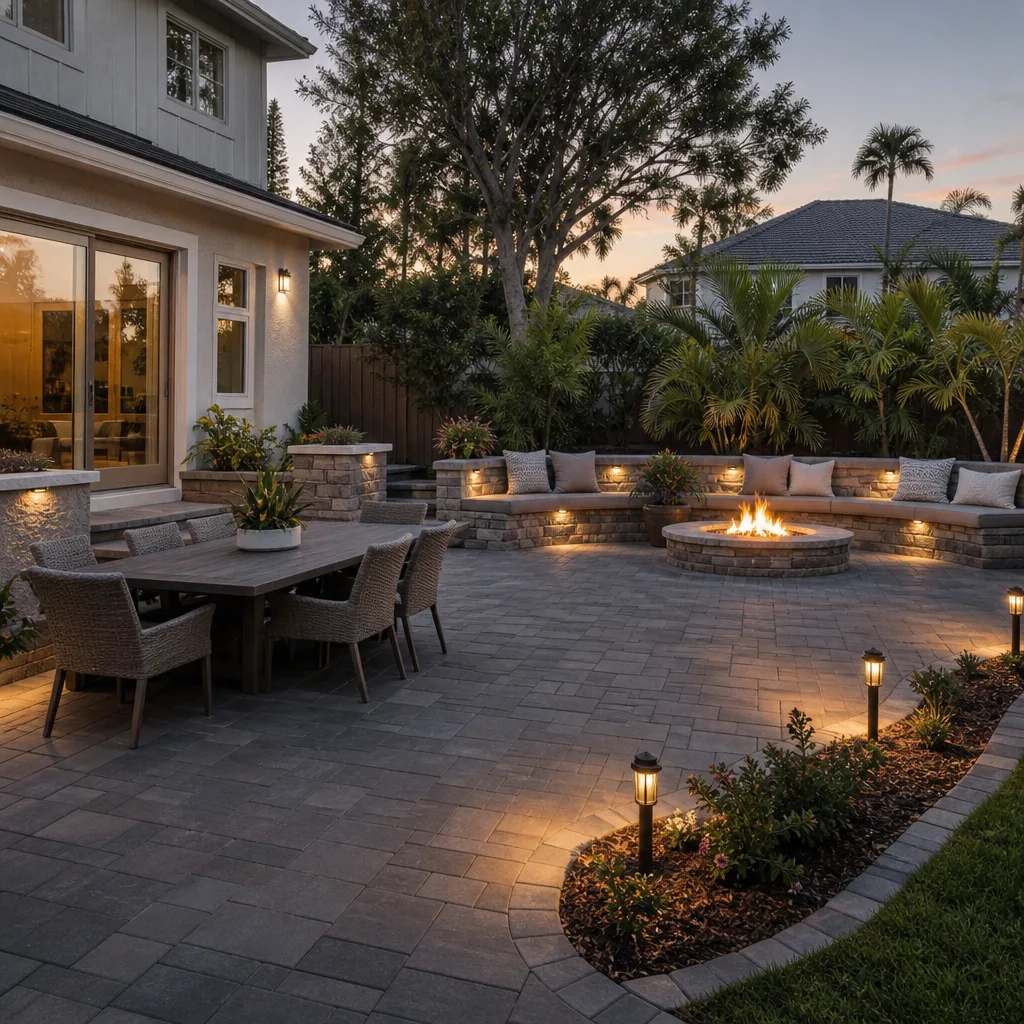
- Driveway & pavers
- Fence
Table of Contents
- Why Miami Gardens Soil Changes the Rules for Every Driveway
- Concrete Pavers vs. Travertine vs. Permeable Interlocking Pavers
- What Driveway Pavers Actually Cost in Miami Gardens
- What a Proper Base Specification Looks Like in Writing
- Driveway Pitch and Drainage Compliance
- Miami-Dade County Permits for Driveway Replacement
- The Installation Process, Step by Step
- Maintenance and the Year-Three Reality Check
Why Miami Gardens Soil Changes the Rules for Every Driveway
Miami-Dade County sits on oolitic limestone, and much of the fill used in residential lots across Miami Gardens is a mix of crushed limerock and sandy soil that behaves differently than the clay-heavy ground in other parts of the state. The practical consequence is volume change. During the wet season, from roughly June through October, that fill can swell by 3-5% – and when it dries out again, it settles. A driveway base that was compacted to standard depth but never tested for moisture content will move with it. That’s why we see so many crowned, rutted driveways in neighborhoods like Andover and Lake Lucerne that were laid over an under-compacted subgrade.
South of Miami Gardens, closer to the Redland, the soil profile runs heavier in organic material and clay, which changes how much excavation is required. In Miami Gardens, the more common issue is the opposite: soil that drains too quickly during the dry season and doesn’t hold compaction well unless it’s been properly watered and rolled in lifts. A crew that shows up in July and compacts the base in one pass over dry limerock is not giving you the same driveway as a crew that compacted in three-inch lifts at optimum moisture.
What “Expansive Soil” Actually Means for Your Driveway
When geotechnical engineers refer to expansive soil, they mean soil that gains and loses volume with moisture. In Miami Gardens, the risk is less severe than the classic clay profiles you’d find in Texas, but it’s real enough that the Florida Building Code and Miami-Dade product approval requirements assume it. What it means practically is three things:
- Base depth is not a suggestion. A typical residential driveway in Miami Gardens requires six inches of compacted limerock beneath the pavers, sometimes more if the soil test is poor.
- Compaction must be verified, not assumed. Ask your contractor whether they use a plate compactor in lifts or a roller, and whether they test moisture content of the limerock.
- Drainage has to be designed in, not left to gravity. Water that sits under a driveway in Miami Gardens will find a way into the base and undo the compaction over time.
Concrete Pavers vs. Travertine vs. Permeable Interlocking Pavers
There are three paver families worth considering for a Miami Gardens driveway: manufactured concrete pavers, natural travertine, and permeable interlocking concrete pavers. Each has a legitimate use, and each has a condition where we’d steer a homeowner away from it.
Concrete Pavers
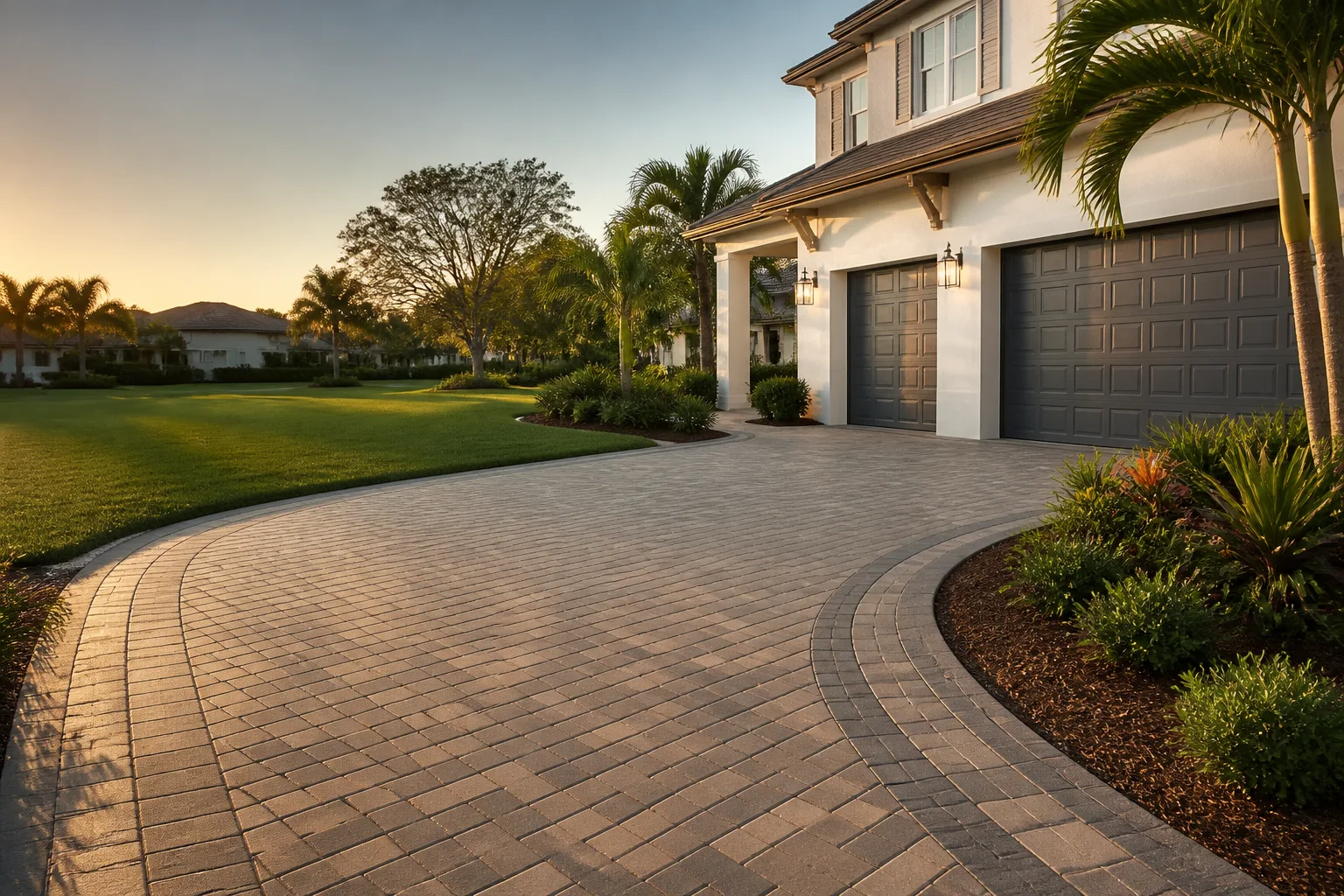
Interlocking concrete pavers from manufacturers like Belgard and Pavestone are the standard choice for most Miami Gardens driveways. They’re rated around 8,000 psi compressive strength, they hold color well under South Florida UV, and they can be lifted and reset if a utility line ever needs repair underneath. The joints between them flex with minor soil movement rather than cracking, which is exactly the behavior you want on limestone fill. Belgard’s Catalina and Bergerac lines are both widely specified here; Pavestone’s Tremron line is a lower-cost alternative that holds up fine on a residential driveway.
Travertine
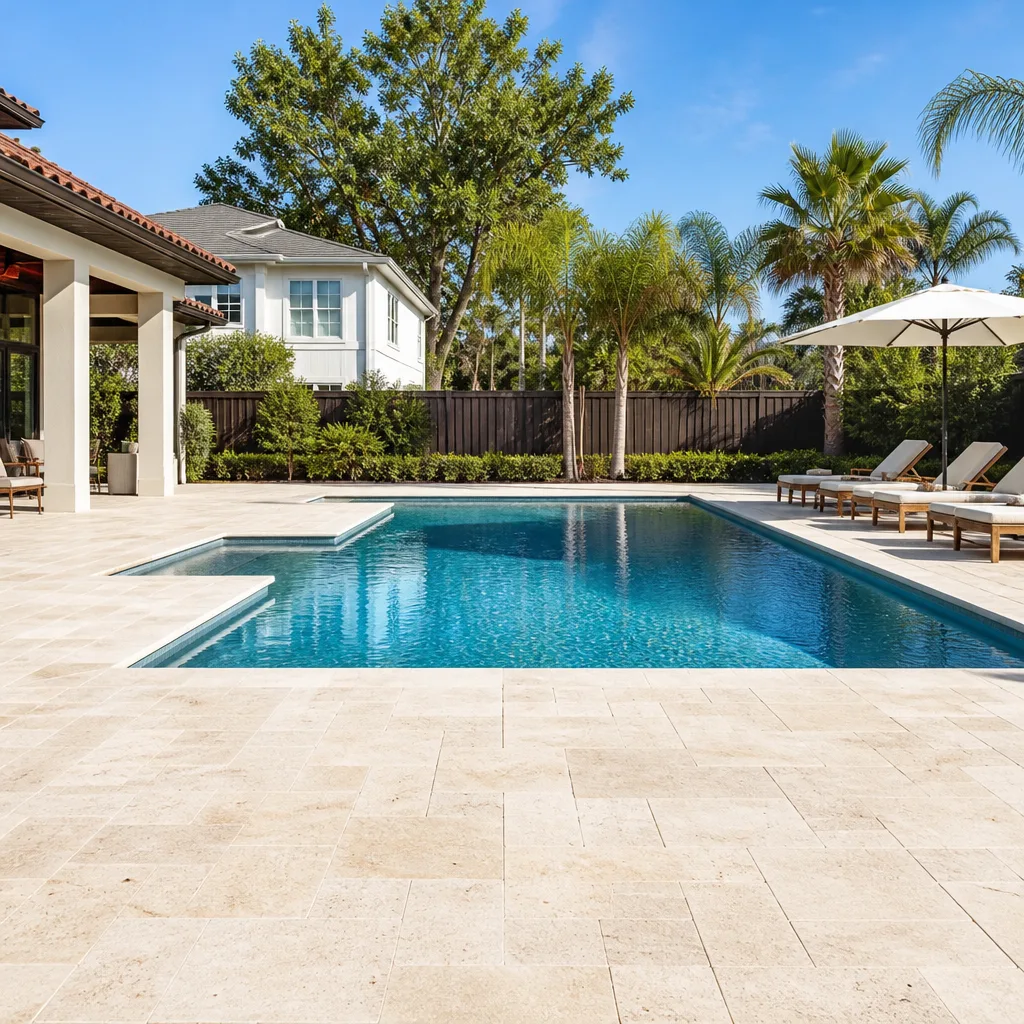
Travertine looks fantastic and stays cooler underfoot than concrete, which matters on a Miami Gardens driveway that gets eight hours of direct sun. The catch is that travertine – even the filled and honed varieties – is softer than concrete pavers and can be more susceptible to staining from the iron-rich water and organic debris common in South Florida. It’s a reasonable choice for a covered porte-cochère or a driveway that doesn’t see heavy vehicle traffic, but we’d want to talk a homeowner out of it for the primary approach where a work truck parks every day.
Permeable Interlocking Pavers
Permeable pavers, specified with an open-graded aggregate base and joint stone rather than sand, allow stormwater to infiltrate directly through the surface. In Miami Gardens, this matters because the area sees intense short-duration rainfall during summer afternoons and the storm sewer system can be overwhelmed. A permeable system reduces runoff and, in some cases, can reduce the drainage engineering you need for a permit. The trade-off is that they require more maintenance – the joints need periodic vacuuming to stay open – and they cost more on the front end.
If you’re working through the broader exterior of the property, the same sourcing logic applies to fence installation in Miami Gardens. Manufacturers like Bufftech and ActiveYards are the ones we specify most often for the same reason: documented wind ratings, product approval numbers you can look up, and replacement parts available locally.
What Driveway Pavers Actually Cost in Miami Gardens
Pricing for driveway pavers in Miami Gardens in the current market breaks down roughly as follows. These are installed prices – material plus labor plus base preparation and cleanup – and they assume an accessible site with no major excavation surprises.
| System | Typical Installed Cost (per sq ft) | Notes |
|---|---|---|
| Concrete pavers (Pavestone or Belgard standard line) | $9-$14 | Most common choice; excellent value |
| Concrete pavers (premium Belgard or Unilock line) | $12-$18 | Larger formats, more color options |
| Travertine | $14-$22 | Cooler surface; softer stone; best on light-traffic drives |
| Permeable interlocking pavers | $13-$20 | Requires open-graded base; lower drainage engineering cost |
| Base preparation and excavation (typical) | $3-$6 | Varies with soil conditions and depth specified |
| Permit and plan review fees (Miami-Dade) | $250-$600 | Depends on project scope and whether drainage is engineered |
A typical two-car driveway in Miami Gardens runs 500-700 square feet. At the concrete paver prices above, that’s a project range of roughly $4,500 to $9,800 for the surface plus base and permit. Hardscape branded products such as Belgard and Unilock carry a small premium that reflects the manufacturer’s warranty and product approval documentation – which is what your contractor’s written proposal should be able to produce if asked.
When we prepare a written quote for a driveway project, the number is a flat price with a written scope and a written warranty, delivered before any work starts. No work proceeds on a change until the change order is signed. That discipline is what keeps a driveway project landing within a few percent of the agreed cost instead of spiraling as hidden conditions appear.
What a Proper Base Specification Looks Like in Writing
This is the section we wish every homeowner read before signing a contract. A base specification you can compare across contractors needs to name four things: excavation depth, limerock depth and compaction method, bedding sand thickness and material, and edge restraint type. If a quote is missing any of those, ask for them in writing before you sign.
A Base Spec You Can Hold Contractors To
- Excavation depth: Six to eight inches of subgrade removed, depending on whether the site needs to be raised to meet the garage slab.
- Compacted limerock: Six inches minimum, installed in lifts no deeper than four inches and compacted with a plate or roller at optimum moisture. Ask how the crew verifies compaction.
- Bedding sand: One inch of washed concrete sand, screeded to a uniform grade. Not masonry sand, not unwashed bank sand.
- Edge restraint: Aluminum or PVC edge restraint, spiked into the limerock, along both sides of the driveway. This is what holds the pavers from spreading outward over time. Without it, joints open.
- Geotextile fabric (optional but common in Miami Gardens): A woven fabric between the subgrade and the limerock, which prevents the limestone fill from migrating into the sandy soil during the wet season.
- Joint sand: Polymeric sand or a stabilized joint sand, swept in and compacted. This is what keeps weeds down and joints tight.
We’ve reviewed competitor quotes for homeowners in Miami Gardens where the base was described only as “properly prepared.” That’s not a specification – it’s a placeholder. A written price should always come with a written scope, and a written scope on a driveway names the base.
Driveway Pitch and Drainage Compliance
The single most common reason a Miami Gardens driveway project fails inspection has nothing to do with the pavers. It’s pitch. Miami-Dade County requires that surface water drain away from the structure, and the standard reference is a minimum slope of roughly 2% away from the building for the first ten feet, then at least 1% to the point of discharge. That means a driveway that’s perfectly flat from the garage door to the street might pass a visual check but fail the drainage review.
Pitch is also what determines whether your neighbors get water in their yard during a heavy summer storm. In Miami Gardens, where lots are often close together and the water table can run high after a wet week, a driveway that crowns in the middle – the classic sign of an under-compacted base – will push water to the edges and undermine the edge restraints over a couple of seasons. A driveway that’s properly pitched moves water off and away.
How to Check Drainage Before You Hire
- Ask the contractor what slope they plan to achieve and how they’ll verify it during construction. A rotary laser level and a story pole are the minimum.
- Confirm that the permit plans include a drainage plan, not just a surface plan. Miami-Dade typically requires this for anything over 500 square feet.
- Ask where the water will discharge. If the answer is “to the street,” verify the street has a storm drain or a swale that can handle the flow.
- If your lot already has standing water issues, ask about permeable pavers or a French drain under the driveway before you commit to a solid surface.
Miami-Dade County Permits for Driveway Replacement
Driveway replacement in Miami-Dade County generally requires a building permit when the affected area exceeds 500 square feet. The permit process requires a site plan showing the driveway footprint, a drainage plan, and – for new construction or major modifications – a product approval number for the paver system being installed. The paver manufacturer’s product approval (NOA, or Notice of Acceptance) is what proves the material meets the Florida Building Code for wind-borne debris and structural requirements.
What triggers an inspection versus a routine permit? Two things most often. First, drainage: if the slope doesn’t meet the county’s requirement, the inspector will call it out and you’ll be resubmitting plans. Second, right-of-way: if the driveway meets the street through a curb cut or swale that’s in the county right-of-way, the county may require a separate right-of-way permit and a specific apron design. In Miami Gardens neighborhoods where the front setback is short, this comes up more often than homeowners expect.
The documentation a contractor should have ready before the permit is submitted includes the paver NOA, the base specification, the drainage calculation, and the site plan. Under our own process, every project is quoted with a written flat price and written scope before work starts, and permits are pulled before any demolition. If a contractor wants to start work “while the permit is processing,” that’s a red flag. The permit is the documentation, and the documentation should come first.
The Installation Process, Step by Step
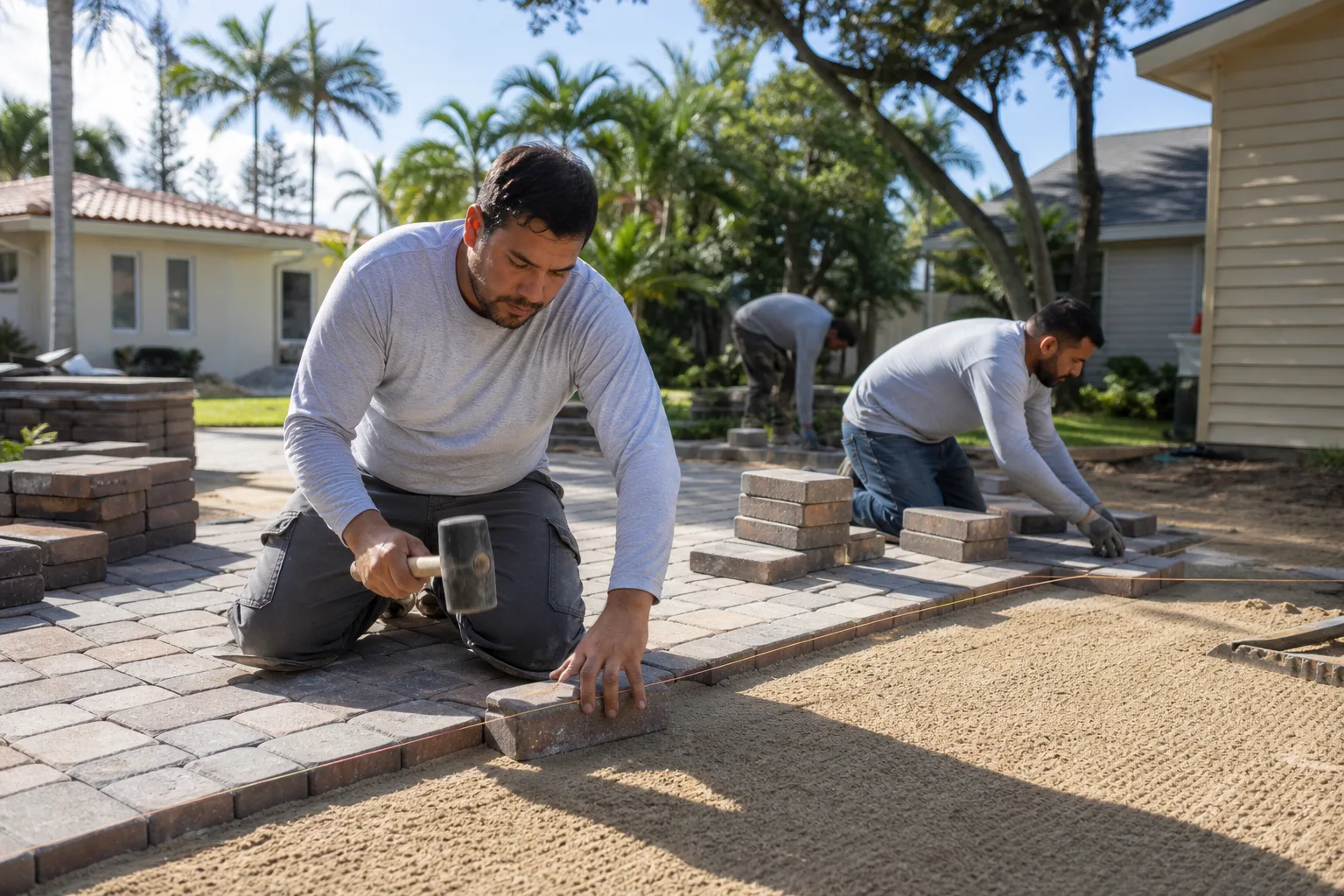
Here’s what a properly run driveway installation in Miami Gardens looks like, in sequence:
- Site evaluation and measurement (day 1). Measure the existing driveway, check the subgrade condition, identify utility locates, and confirm the drainage plan.
- Permit submission and approval (1-3 weeks). Submit site plan, drainage plan, and product approvals. Schedule the inspection once approved.
- Demolition and excavation (1-2 days). Remove the old surface and excavate to the planned subgrade depth. Haul away debris.
- Base installation and compaction (1-2 days). Install limerock in lifts, compact, verify grade with a laser level. Install geotextile if specified.
- Bedding sand and edge restraint (1 day). Screed bedding sand to a uniform one-inch layer. Set edge restraint along the perimeter.
- Paver installation (1-3 days). Lay pavers in the specified pattern, cut edges, install joint sand, compact the surface.
- Inspection and cleanup (1 day). County inspection. Final site cleanup. Deliver the photo record of the completed work.
A typical Miami Gardens driveway project runs five to eight working days on site, plus the permit timeline. Any contractor quoting a two-day turnaround on a full replacement is skipping steps. We’d rather tell you it takes a week and a half than promise a weekend and hand you a driveway that crowns by year three.
Maintenance and the Year-Three Reality Check
Most driveway failures we’re called out to look at in Miami Gardens happen at the three-year mark. That’s when the compounded effect of a base that wasn’t quite compacted enough, joint sand that washed out during the first two wet seasons, and a crown that started as a quarter-inch settles into something visible from the street. None of those issues are paver problems. They’re installation problems.
- Re-sand joints annually. Polymeric sand is durable but not permanent. Re-sanding every spring keeps joints tight and blocks weeds.
- Check edge restraint after each wet season. A loose edge restraint is the earliest sign of spreading.
- Wash away organic debris promptly. Leaves and palm fronds left on a driveway for weeks can stain the surface and hold moisture against the joints.
- Inspect after major storms. A driveway that’s been through a tropical system should be walked once the rain stops and checked for joint displacement or edge movement.
The good news is that a properly installed paver driveway in Miami Gardens should hold its grade and its appearance for twenty years or more. The bad news is that the difference between a good install and a bad one isn’t visible on day one. It’s visible at year three. That’s why the documentation matters as much as the paver brand – the written scope, the photo record, and the warranty are what you have if something’s not right.
If you’re planning exterior work alongside the driveway, the same documentation discipline applies to a home addition or ADU in Miami Gardens, where the foundation and grading decisions interact directly with driveway drainage. And when you’re ready to move from research to a written number, we’ve put together the full Driveway & Pavers in Miami Gardens service overview with a free second opinion process on any written estimate you’ve already received. Bring a competitor’s quote and we’ll review it line by line at no charge.
Common Mistakes to Avoid
- Accepting a base described only as “properly prepared.” A driveway spec that doesn’t name limerock depth, compaction method, and bedding sand type isn’t a spec. It’s a promise that has nowhere to land.
- Skipping the permit on a 600-square-foot replacement. Miami-Dade requires a permit over 500 square feet, and an unpermitted driveway can become a disclosure issue at resale. The permit cost is small compared to the problem.
- Choosing pavers before choosing a base. The paver is the visible product; the base is the system. We’ve seen travertine fail and Pavestone thrive because of what was underneath.
- Ignoring pitch because the pavers look level. A driveway that looks flat from the garage door but slopes back toward the house will pass a casual glance and fail an inspection. Pitch is what gets checked.
- Not asking how compaction is verified. A crew that compacts in lifts and uses a moisture meter is giving you a different driveway than one that doesn’t, even if the pavers are the same.
- Treating joint sand as a one-time install. Polymeric joint sand needs reapplication every couple of years in Miami Gardens because the summer rains work it out. Budget for it.
- Hiring without a written scope. A verbal estimate for a driveway is not a number you can compare or hold anyone to. The written scope and price are what turn a contractor’s visit into a project.
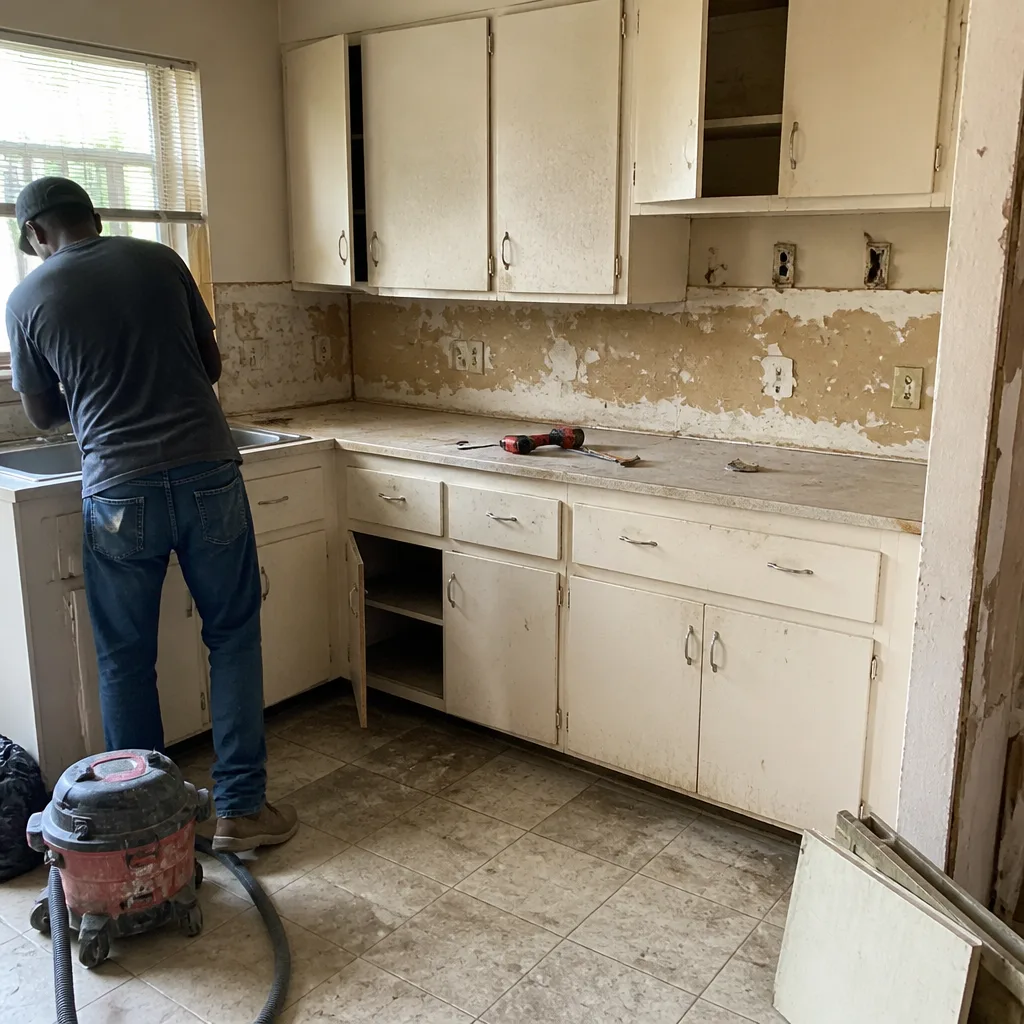
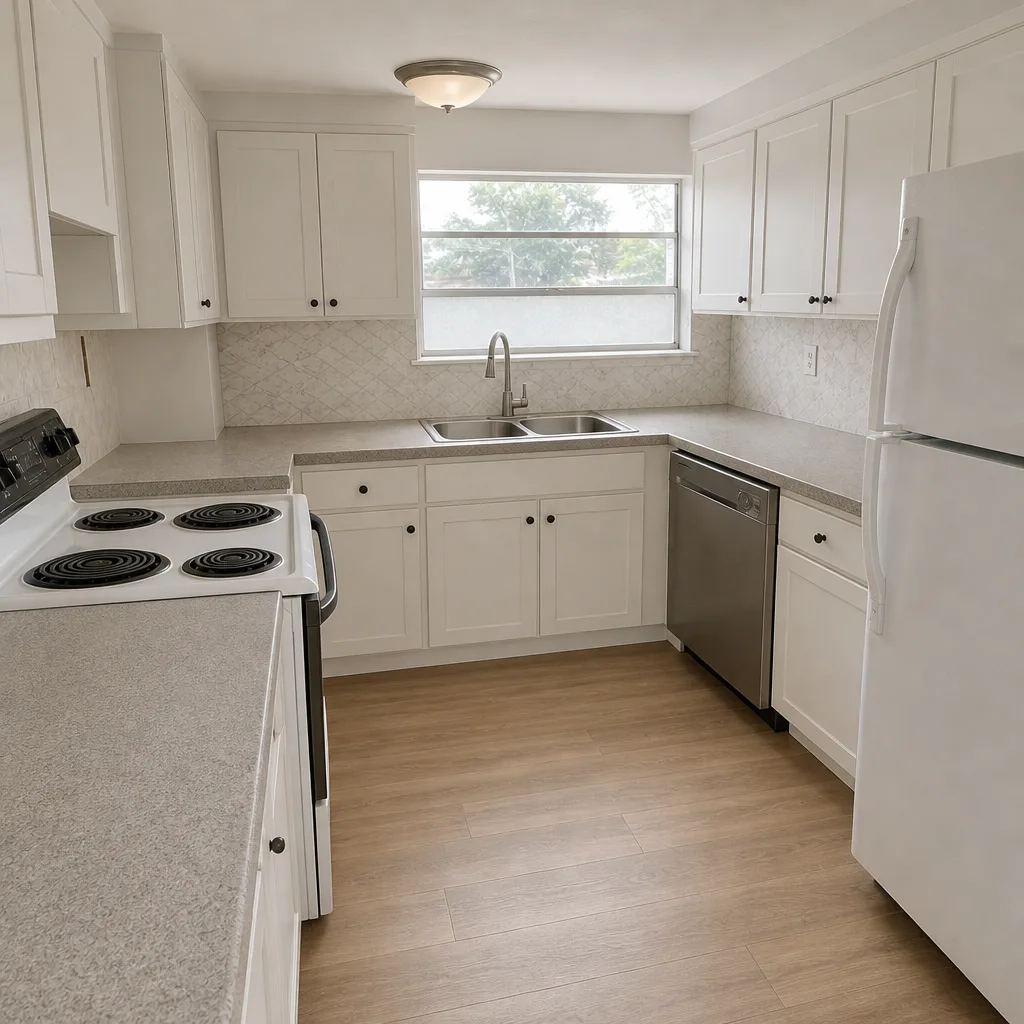
See the difference
 Before
 After
 Before
 After
 Before
 After
When to Call a Professional
Some driveway projects are cosmetic and can be handled reasonably. Others aren’t. Call a professional when the existing driveway is cracking through the slab into the subgrade, when water pools toward the garage during storms, when the pavers have visibly crowned or settled more than a quarter inch, or when the project exceeds 500 square feet and therefore requires a Miami-Dade permit. Also call when a contractor has given you a quote you’re not sure how to read – the free second opinion process exists for exactly that reason. Rowan Construction Group Miami Gardens offers free estimates in Miami Gardens – call (844) 320-5198 to schedule a site visit and get a written price before any work starts.
Frequently Asked Questions
Driveway pavers in Miami Gardens typically cost $9-$18 per square foot installed, with concrete pavers on the low end and travertine or permeable systems on the high end. A standard 500-700 square foot two-car driveway runs roughly $4,500 to $9,800 including base preparation and permit. Call (844) 320-5198 for an exact written quote on your property – estimates are free.
Yes, in most cases. Miami-Dade County requires a building permit for driveway replacement when the affected area exceeds 500 square feet, and the permit package includes a site plan, a drainage plan, and the paver manufacturer’s product approval. A licensed contractor pulls the permit and schedules the inspection. Call (844) 320-5198 if you’re not sure whether your project crosses that threshold.
A crowned driveway is almost always a base compaction issue, not a paver issue. When limerock is installed in a single deep lift rather than in compacted three- to four-inch lifts, it can’t reach proper density, and the surface moves under the seasonal soil expansion Miami Gardens sees during the wet season. The repair requires lifting the pavers, re-compacting the base, and resetting – not just replacing the pavers. Call (844) 320-5198 for an inspection if you’re seeing this.
Permeable pavers are worth it when your lot has drainage challenges – especially short front setbacks, no storm sewer, or a history of standing water. They typically cost $13-$20 per square foot installed, run about 20-30% more than standard concrete pavers, and can reduce the drainage engineering your permit requires. Call (844) 320-5198 to talk through whether your site benefits.
The brands we specify most often in Miami Gardens are Belgard, Pavestone, and Unilock, all of which publish Florida product approval documentation you can look up by product line. Trust the product approval number more than the brand name – a manufacturer’s NOA tells you the product has been tested for the Florida Building Code’s wind and structural requirements. Call (844) 320-5198 and we’ll walk you through the product approvals for any specific paver you’re considering.
Compare three things: the base specification, the permit responsibility, and the written scope. A quote that names the limerock depth, the bedding sand type, the edge restraint, and the paver NOA is a quote you can hold someone to. A quote that says “properly prepared” is not. Call (844) 320-5198 for a free second opinion on any written estimate – we’ll review it line by line at no charge.
The Bottom Line
Miami Gardens driveways fail for one reason more than any other: base preparation that wasn’t specified in writing and therefore wasn’t done to the right standard. The paver brand matters, and Belgard, Pavestone, and Unilock all make excellent products – but the base underneath is what you’re betting three years of driveway life on. Get a written scope that names limerock depth, compaction method, and edge restraint. Confirm your project crosses the permit threshold and requires a drainage plan. Compare quotes on those specifics, not just the per-square-foot number. If you want a written price and a documented photo record from a team that follows its own signed-change-order discipline, call Rowan Construction Group Miami Gardens at (844) 320-5198. Start with the Rowan Construction Group Miami Gardens home page for the full range of services, or jump straight to the free estimate – the price is written before anyone picks up a tool, every time.
Written by the team at Rowan Construction Group Miami Gardens.