Last updated November 18, 2026





Free written scope consultation - allowances, timeline, and change-order rules on paper before a single trade is scheduled
Windows & Doors Maintenance Schedule: What to Do and When
The best month to service the windows and doors on a Miami Gardens home is March. Not April, not “spring” in the generic sense. March. Here’s why the calendar most national guides publish doesn’t fit here: by March, the winter rainy season has settled, the frames have finished their cool-season contraction, and you still have roughly six weeks before June 1, when hurricane season opens and every sealant you applied has time to fully cure before wind load tests it. Miami Gardens doesn’t get a gentle spring thaw. It gets a dry-season thermal swing followed by a hard deadline. This guide lays out that sequence month by month, with the products, torque values, and documentation a Miami Gardens homeowner actually needs.
Quick Answer
In Miami Gardens, service impact windows and doors twice a year: a pre-hurricane pass in March and April (sealant refresh, hardware torque, weep hole clearing) and a post-season pass in November (glazing seal inspection, frame fastener check, threshold gasket replacement). Lubricate aluminum tracks with dry PTFE, not WD-40, and photograph everything annually for insurance and warranty records.
Styles & brands we work with
- Kitchen remodeling
- Bathroom remodeling
- Home additions & ADU
- Roofing
- Windows & doors
- Driveway & pavers
- Fence
Table of Contents
- Why the National Maintenance Calendar Fails in Miami Gardens
- Pre-Hurricane Season Checklist (March – April)
- Post-Hurricane Season Checklist (November)
- Lubrication by Hardware Type
- The Documentation Protocol
- How Maintenance Records Affect Insurance and HOA
- Where Windows and Doors Fit in the Whole-House Schedule
- Common Mistakes to Avoid
Why the National Maintenance Calendar Fails in Miami Gardens
Most published window and door schedules are written for climates with four seasons. They say “service in spring and fall.” In South Florida, “spring” lands inside peak rainy season, which means you’re applying sealant to a substrate that’s holding moisture. That’s the single most common cause of premature sealant failure we see on Miami Gardens homes, particularly on the west- and south-facing elevations where afternoon storms drive rain against the frames.
Miami Gardens has two stress events that matter more than the seasons:
- Hurricane season (June 1 to November 30). Wind-driven rain, pressure changes, and debris impact test every seal, gasket, and fastener at once.
- Dry-season thermal expansion (roughly December through February). Frame and glass expand and contract at different rates. Sealant joints that were tight in October open up by February.
Build the schedule around those two events and everything else falls into place. A home near Hard Rock Stadium, for example, sits in an exposure category that takes more wind-driven rain than a lot on the inland side of the city, and that difference shows up in how fast glazing seals degrade. We account for it when we set a service interval.
The other local factor is salt air. Miami Gardens sits close enough to the coast that airborne chloride accelerates corrosion on aluminum hardware, hinges, and fasteners. That raises the stakes on lubrication and fastener inspection. A schedule written for a landlocked climate will let a multi-point lock seize before anyone notices.
Pre-Hurricane Season Checklist (March – April)
This is the pass that matters most. Finish it by mid-April so sealants have six weeks or more to cure before June 1.
- Inspect and refresh sealants. Walk every window and door perimeter. Cut out any sealant that has cracked, pulled away, or lost adhesion, then reapply a high-performance sealant rated for Miami-Dade wind exposure. We use elastomeric and polyurethane products specified for structural movement joints, not basic painter’s caulk. The brand matters: a sealant rated for expansion and UV exposure holds far longer here than a cheap acrylic.
- Torque the multi-point lock hardware. Multi-point locks on impact doors use adjustable strike plates and shoot bolts. Check the manufacturer’s spec sheet for torque values (they typically fall in a narrow inch-pound range) and use a torque wrench, not feel. Overtorquing strips the adjustment; undertorquing lets the lock drift out of alignment under wind pressure.
- Clear weep holes. Every window frame has weep holes at the sill that drain water that gets past the exterior seal. They clog with pollen, dirt, and insect debris. Run a soft wire or a pipe cleaner through each one, flush with low-pressure water, and confirm water exits freely. A blocked weep hole is the number one cause of interior water staining we find after storms.
- Check the hinge and roller assemblies. Test every sliding door roller and casement hinge for smooth travel. Replace worn rollers now, not in June.
- Photograph everything (see the documentation section below).
If you’re planning replacement rather than service, the March window is also the right time to schedule it. Impact-rated installation is a planned project, not an emergency repair, so it should be quoted in writing with a clear scope. Our Rowan Construction Group Miami Gardens home page outlines how we structure that quote.
Post-Hurricane Season Checklist (November)
Once the season closes, the job is to catch damage before it becomes a leak or a failed wind-mitigation inspection.
- Inspect glazing seals. Look at the perimeter of every glass unit where it meets the frame. Any clouding, bubbling, or separation means the seal is failing. Catch it early and it’s a sealant repair; catch it late and the insulated glass unit has to be replaced. In Miami Gardens, we regularly see glazing seals fail on the east-facing windows first, because that’s the elevation that takes the morning sun and the onshore weather.
- Check frame fasteners. Impact frames are anchored with screws set into the rough opening. Wind pressure and thermal cycling can back them out over time. Inspect visible fasteners at the jambs and head; a loose fastener is a structural warning, not a cosmetic one. This is one to hand to a trained installer if anything looks off.
- Replace threshold gaskets. The gasket under a sliding or hinged door compresses and hardens. Plan on replacing threshold gaskets every two to three years on high-traffic doors, sooner on doors facing the weather. A hardened gasket lets water and air in and undermines the door’s wind rating.
- Test the door sweep and weatherstripping. A dollar bill dragged along the closed edge should meet resistance. If it slides out easily, the seal is gone.
- Photograph everything again for the annual record.
Lubrication by Hardware Type
Lubrication is where most homeowners do real damage without knowing it. The instinct is to grab a can of WD-40 and spray the tracks.
Don’t. WD-40 is a solvent-based penetrant, not a lubricant. On aluminum window and door tracks, especially in coastal Miami Gardens, it attracts and holds grit, and it offers no lasting protection against the chloride in the air. Grit plus moisture is what accelerates pitting and corrosion on aluminum. The right product for tracks and rollers is a dry PTFE lubricant: it goes on wet, the carrier evaporates, and it leaves a dry film that doesn’t collect dirt.
Here’s the schedule by hardware type:
- Aluminum tracks and rollers: dry PTFE lubricant every three months, or immediately after any track cleaning. Wipe out debris first.
- Multi-point locks and shoot bolts: a light application of a non-gumming lubricant on the moving parts twice a year. Don’t flood it; excess attracts dust.
- Hinges (casement and door): a few drops of light machine oil twice a year. Wipe away any excess, because oil carries grit into the pin.
- Weatherstripping and gaskets: a silicone-based protectant once a year keeps the rubber from hardening and cracking. Avoid petroleum-based products, which degrade rubber.
One rule that saves a lot of money: never lubricate a track to “fix” a stiff roller. If a roller drags after cleaning and a PTFE application, the roller is worn and needs replacing. Lubricant hides the problem for a few months and then the roller fails with the door under load.
The Documentation Protocol
A maintenance record is only as good as the evidence behind it. When a warranty claim or an insurance re-inspection depends on the condition of your windows and doors, a dated photograph does more than a description. That’s why the documented photo record is a standard deliverable on every visit we make, not an upgrade.
Here’s the protocol we recommend, and it takes about twenty minutes:
- Photograph each opening once a year, at a set date. Same month every year (November after the season closes works well). Stand square to the window or door so the picture is comparable year to year.
- Capture three detail shots per opening: the sealant joint at the sill, the glazing bead at the frame edge, and the hardware (lock, hinge, or roller).
- Photograph the weep holes after clearing them, with water visibly exiting.
- Label and store the files by date and opening. A simple folder structure by year works.
Keep the record with the same paperwork you keep for insurance. When wind mitigation comes up, you have dated proof that the opening protection was maintained, and you can support a warranty claim with evidence instead of a phone call. Under Clause 1 of the Haven Standard, the price is written before anyone starts, and that same habit of putting things in writing extends to the record you build over the life of the home.
How Maintenance Records Affect Insurance and HOA
Miami-Dade is a high-wind region, and the insurance industry knows it. Wind mitigation inspections and opening protection credits are the mechanism by which a homeowner is rewarded for impact-rated openings and documented upkeep. The credit is tied to the condition of your openings at the time of inspection. A failed seal or corroded fastener can undermine the credit even if the original installation was done correctly.
Maintained records do three things:
- Support wind mitigation re-inspections. Dated photographs of maintained openings help show the protection is intact.
- Support warranty claims. Manufacturers expect maintenance to have been performed; a dated record proves it was.
- Support HOA requirements. Many Miami Gardens HOAs require exterior openings to be maintained to a set standard. A record showing annual service answers the HOA letter before it arrives.
The specifics of what any insurer or HOA requires vary, and we won’t pretend otherwise. What we can say is that a documented maintenance record is the common denominator in every version of those requirements. Build the record, and you have the answer whichever standards apply.
Where Windows and Doors Fit in the Whole-House Schedule
Windows and doors are one piece of a house-wide maintenance rhythm. Think of the home as a single system and the annual work makes more sense.
Fencing goes up for inspection alongside the openings, because fence footings take the same storm loads. Our Fence Installation in Miami Gardens page covers that cycle, and brands like Jerith, Bufftech, and ActiveYards hold up differently in salt air, so the maintenance intervals differ by material. The same is true of the driveway and pavers, which take storm runoff and expanding soil, so surface sealing and joint sand refresh belong on the same annual calendar; see Driveway & Pavers in Miami Gardens for that schedule. And if an addition or an ADU is in your future, the new openings bring their own maintenance plan into the picture, which our Home Additions & ADU in Miami Gardens page addresses.
The rhythm is straightforward: spring for anything that opens the house to the weather, fall for anything that catches storm damage. Once that framework is in place, each trade slots into the same two annual passes.
Common Mistakes to Avoid
- Servicing in “spring” instead of March. In Miami Gardens, spring falls inside the rainy season, and sealant applied to a damp substrate fails prematurely. March is the dry-season window.
- Using WD-40 on aluminum tracks. It’s a solvent, not a lubricant, and in salt air it attracts grit that accelerates corrosion. Use dry PTFE instead.
- Ignoring weep holes. Clogged weep holes trap water behind the frame, and the first sign is interior staining after a storm. Clear them every pass.
- Replacing a roller when the problem is the track. A worn, out-of-alignment track wears out new rollers too. Fix the track before swapping hardware.
- Skipping the November glazing seal check. A failing sealed unit caught early is a reseal; caught late it’s a full insulated glass unit replacement, and that’s a much larger line item.
- Spraying lubricant and calling it maintenance. A stiff lock or hinge that’s been “freed” with lubricant may still be out of torque spec. Check the spec sheet.
- Skipping the annual photo record. Without a dated record, a warranty claim can be hard to support and an insurance re-inspection has nothing to look at.
See the difference
 Before
 After
 Before
 After
 Before
 After
When to Call a Professional
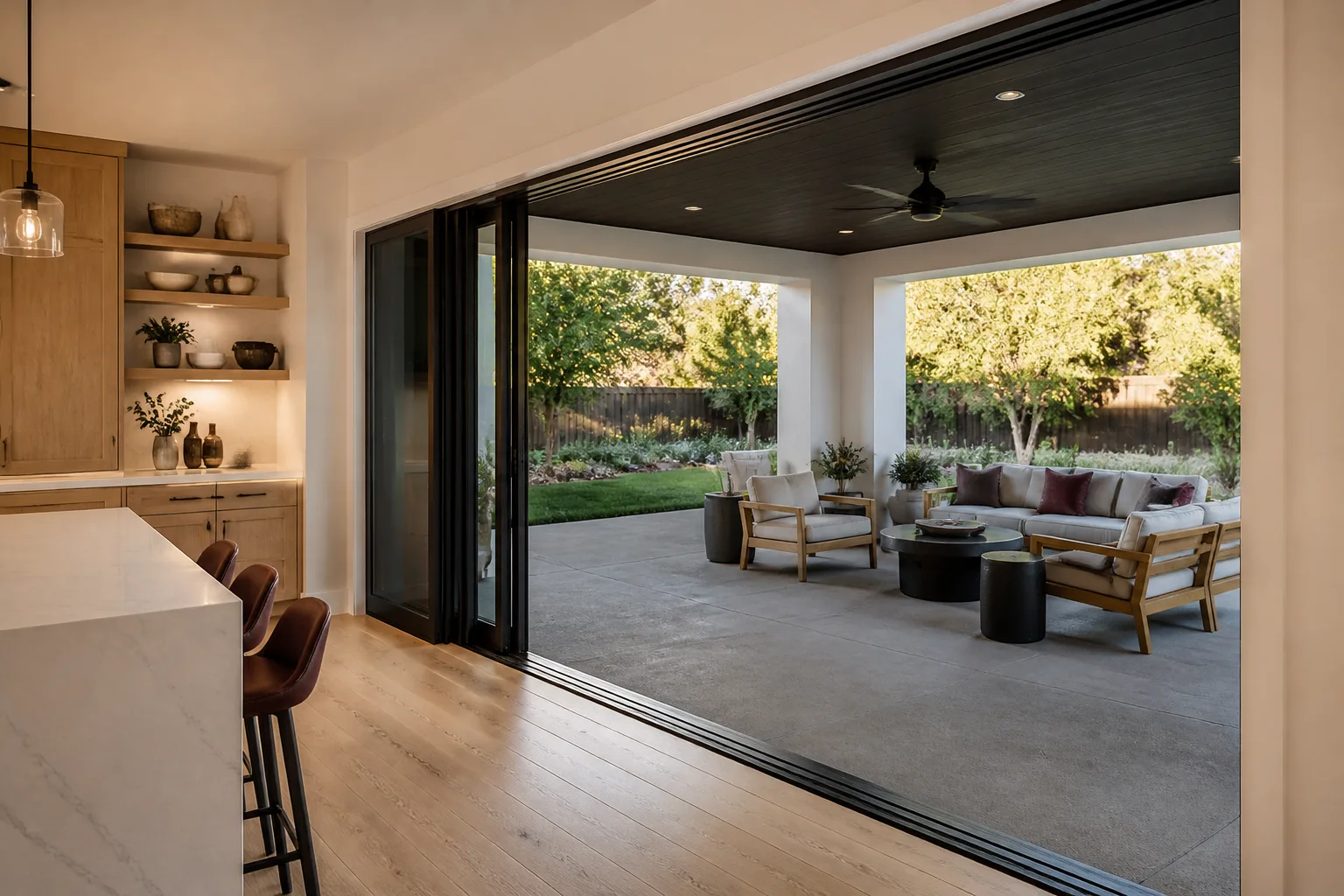
Most of this schedule is homeowner-safe: photograph surfaces, wipe tracks, check weatherstripping, clear weep holes. But some tasks involve real risk. Loose frame fasteners, glazing seals that have failed on a second-story unit, multi-point lock hardware that won’t hold torque, and anything requiring work at height should go to a trained professional. Impact glazing is heavy and unforgiving if it drops. Don’t chase a failing seal with a tube of caulk if the underlying frame has moved.
Rowan Construction Group Miami Gardens offers free estimates in Miami Gardens to assess window and door conditions, document what we find, and give you a written price before any work starts. Call (844) 320-5198 to schedule a free estimate.
Frequently Asked Questions
Twice a year: a pre-hurricane pass in March and April, and a post-hurricane pass in November. Between those two, lubricate tracks every three months and check hardware twice a year. That’s the schedule calibrated to Miami Gardens’ storm season and dry-season thermal cycling.
March. The winter rainy season has stabilized and you have six weeks or more before June 1, which lets the sealant fully cure before wind load arrives. Applying sealant during the rainy season risks trapping moisture under the bead, which is the most common cause of premature failure we see here.
Dry PTFE lubricant. It goes on wet and dries to a film that doesn’t collect grit. WD-40 is a solvent, not a lubricant, and in coastal Miami Gardens air it attracts dirt that accelerates corrosion on aluminum hardware and rollers.
Plan on every two to three years on high-traffic doors, sooner on doors facing the weather. A hardened gasket lets water and air in and undermines the door’s wind rating. Check the sweep and weatherstripping each November.
Yes, in most cases. Dated photos and service records support wind mitigation re-inspections and warranty claims, and they answer HOA requests for proof of opening maintenance. The specific requirements vary by insurer and HOA, but a documented record is the common denominator. Call (844) 320-5198 for an assessment of your openings.
Not safely on an insulated unit. A failed glazing seal usually means the sealed unit needs replacement, and impact glazing is heavy and must be set correctly to hold its rating. That’s a job for a trained professional. Call (844) 320-5198 for a written estimate.
The Bottom Line
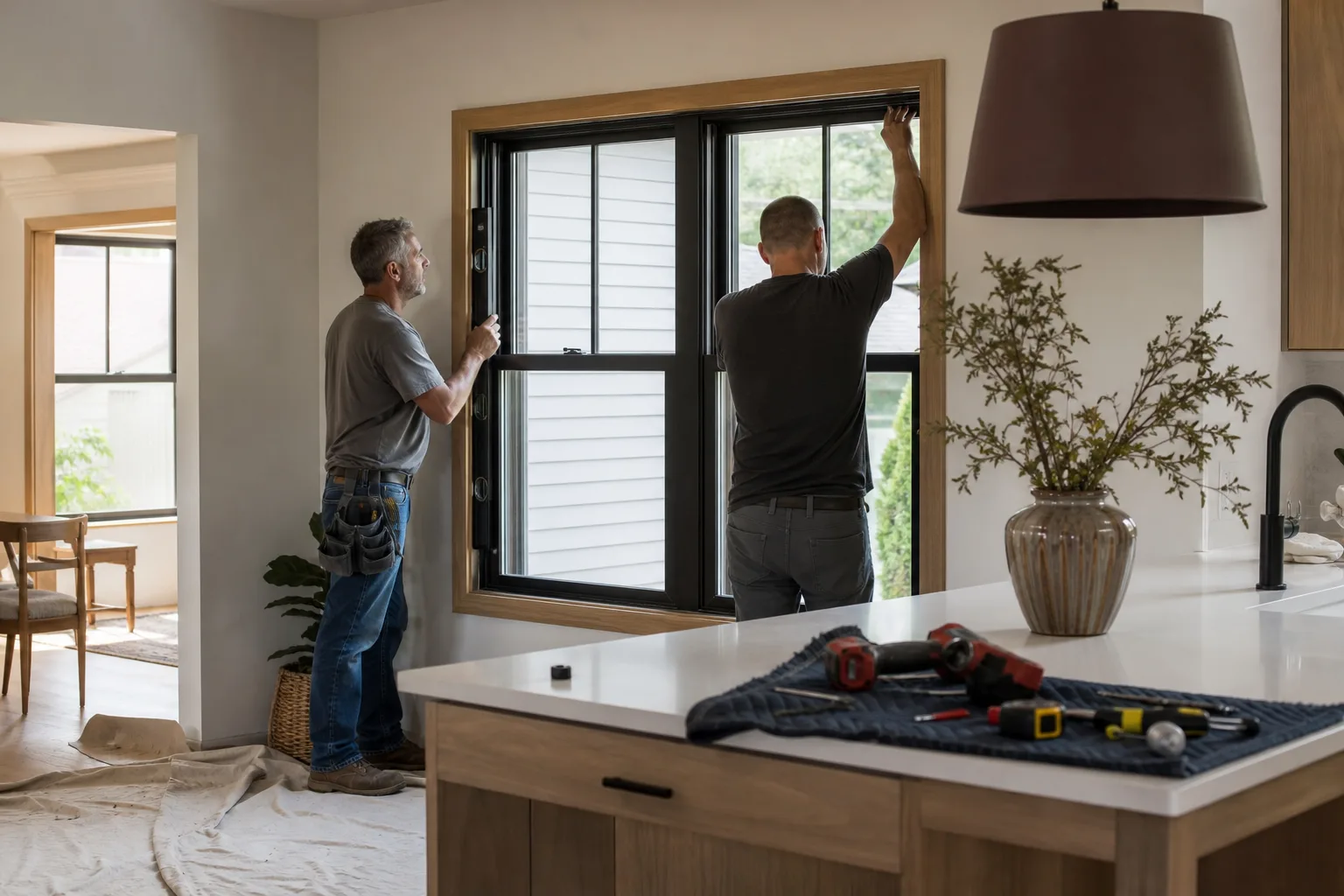
The Miami Gardens schedule isn’t the national one. Build it around the two events that actually stress your openings: hurricane season and the dry-season thermal swing. Service in March, inspect in November, lubricate aluminum hardware with dry PTFE and never WD-40, check torque values against the manufacturer, replace threshold gaskets every two to three years, and photograph everything annually. That discipline protects the openings, protects your wind mitigation credit, and gives you the record a warranty claim needs. When a task carries risk or requires a repair, get a written price before anyone starts. Call (844) 320-5198 for a free estimate.
Written by the team at Rowan Construction Group Miami Gardens.